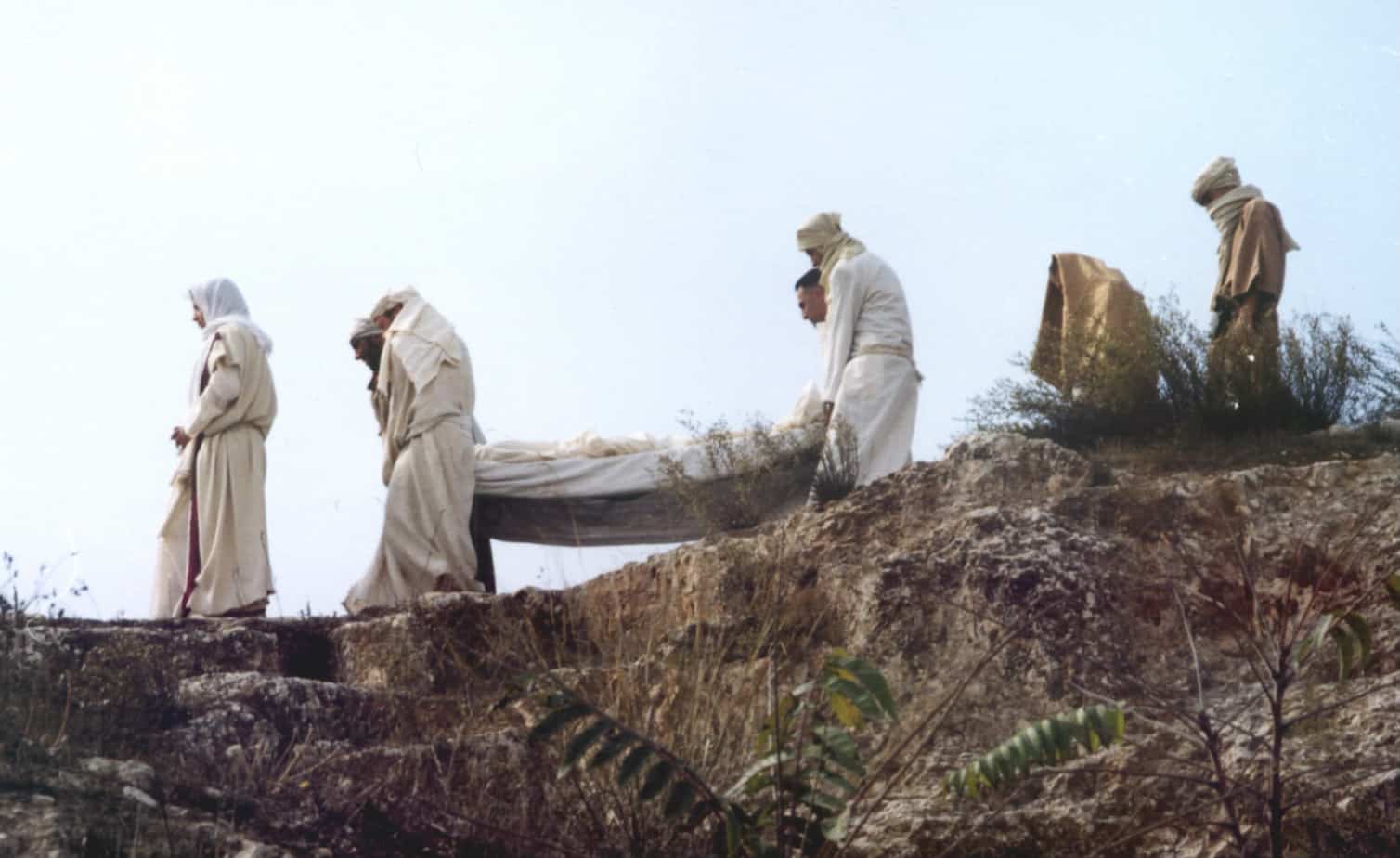
Did Jesus Christ Really Die on Friday?
Every year, millions of Christians around the world observe Good Friday as the day that Jesus Christ was crucified. It is a deeply solemn moment, marking the death of the Savior before the celebration of His resurrection on Sunday. But a question has increasingly surfaced among careful Bible readers and skeptics alike: Did Jesus really die on a Friday? Or has tradition overridden Scripture?
This is not a trivial question. It touches the reliability of biblical interpretation, the accuracy of long-held traditions, and ultimately, the integrity of the Gospel accounts themselves. When we examine the Scriptures closely, a tension appears between what is commonly taught and what the text actually says.
The traditional view is simple and familiar. Jesus was crucified on Friday afternoon, buried before sunset, remained in the tomb on Saturday, and rose early Sunday morning. This timeline is widely accepted and forms the backbone of Easter observances. However, there is a significant problem when we compare this with Jesus’ own prophecy.
In the Gospel of Matthew, Jesus says:
Matthew 12:40 (KJV)
“For as Jonas was three days and three nights in the whale’s belly; so shall the Son of man be three days and three nights in the heart of the earth.”
This statement is precise. Jesus does not say “parts of three days” or “symbolically three days.” He uses a very specific expression: three days and three nights. That phrase, in plain reading, implies a full 72-hour period.
Now consider the traditional Friday-to-Sunday timeline. If Jesus died on Friday afternoon and rose early Sunday morning, how much time is that really?
- Friday afternoon to sunset: less than one day
- Friday night: one night
- Saturday daytime: one day
- Saturday night: second night
- Early Sunday morning: resurrection
At best, this gives us two nights and one full day, plus partial segments of Friday and Sunday. That does not naturally align with three days and three nights. Something does not add up.
Some argue that Jewish idiomatic language allowed any part of a day to be counted as a whole day. While it is true that inclusive reckoning existed in Jewish culture, the phrase “three days and three nights” is much more specific than simply saying “three days.” When both days and nights are mentioned together, it strongly suggests complete cycles.
So how do we reconcile this?
A growing number of Bible students propose that Jesus was not crucified on Friday, but earlier in the week, most commonly on Wednesday or Thursday. This alternative timeline seeks to take Jesus’ words literally while still honoring the sequence of events described in the Gospels.
Let us explore one such possibility.
In John’s Gospel, we are told something very important about the day following the crucifixion:
John 19:31 (KJV)
“…for that sabbath day was an high day…”
This detail is often overlooked. The Sabbath mentioned here is not necessarily the regular weekly Sabbath (Saturday), but a high Sabbath, which refers to a special festival Sabbath tied to Passover. In the Jewish calendar, there were multiple Sabbaths in a given week during feast seasons.
This opens the door to a different understanding. If there were two Sabbaths that week, one being a special Passover Sabbath and the other the regular weekly Sabbath, then the timeline becomes more flexible and can accommodate three full days and nights.
For example, if Jesus was crucified on Wednesday:
- Wednesday before sunset: burial
- Wednesday night: first night
- Thursday (high Sabbath): first day
- Thursday night: second night
- Friday: second day
- Friday night: third night
- Saturday (weekly Sabbath): third day
- Resurrection near sunset Saturday or early Sunday
This model fits the “three days and three nights” description much more naturally.
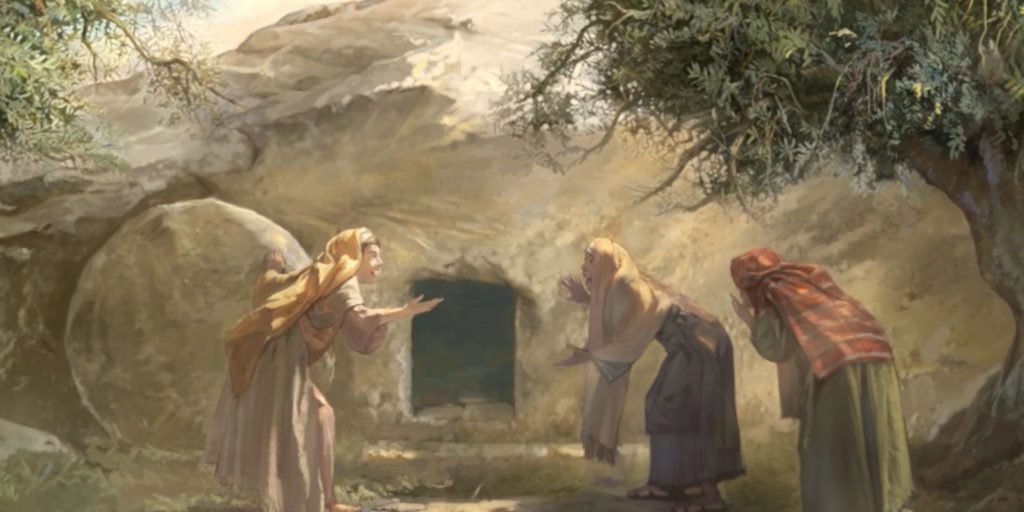
Additionally, the Gospel accounts mention women preparing spices after the Sabbath, but also resting on the Sabbath. This seems contradictory if there is only one Sabbath, but makes perfect sense if there are two.
Mark 16:1 (KJV)
“And when the sabbath was past, Mary Magdalene… had bought sweet spices…”
Luke 23:56 (KJV)
“And they returned, and prepared spices and ointments; and rested the sabbath day according to the commandment.”
In a single-Sabbath framework, these verses appear difficult to harmonize. But with two Sabbaths, the sequence becomes clear: one Sabbath passes, the women buy and prepare spices, then they rest again on the weekly Sabbath.
So why has Friday remained the dominant belief?
The answer lies largely in church tradition. Over centuries, the Friday crucifixion became embedded in Christian liturgy and teaching. It provided a clean, memorable structure for worship and remembrance. However, tradition, no matter how ancient, must always be tested against Scripture.
This does not mean that those who observe Good Friday are acting in bad faith. Many sincere believers hold this view with reverence and devotion. The question is not about sincerity, but about accuracy.
At the same time, it is important to recognize that the exact day of the crucifixion is not the central message of the Gospel. The heart of Christianity is not which day Jesus died, but that He died for sin and rose again.
1 Corinthians 15:3-4 (KJV)
“…that Christ died for our sins according to the scriptures;
And that he was buried, and that he rose again the third day…”
The resurrection remains the cornerstone. Whether one holds to Friday or an alternative timeline, the essential truth stands unchanged: the tomb is empty.
Yet, questions like this matter because they push us to examine Scripture more carefully. They challenge us to move beyond passive acceptance and into active study. They remind us that the Bible is not shallow, but deep, and often requires diligence to understand fully.
So, did Jesus really die on Friday?
The honest answer is this: the traditional Friday view is widely accepted, but a careful reading of Scripture raises serious questions about its precision. Alternative timelines, particularly those involving multiple Sabbaths, offer a compelling explanation that aligns more closely with Jesus’ own words about three days and three nights.
Each reader must weigh the evidence, search the Scriptures, and come to a conviction grounded not in tradition alone, but in the Word of God.
What remains undeniable is this: Jesus Christ truly died, was buried, and rose again in victory. And that truth is powerful enough to transform lives, regardless of which day of the week the crucifixion occurred.



No comments yet. Be the first to share your thoughts!