
Easter vs Passover: How a Biblical Feast Became a Global Holiday
Few topics in Christian history are as misunderstood, and as important, as the relationship between Passover and Easter. Many celebrate Easter without realizing that its roots are deeply anchored in one of the most powerful events recorded in Scripture: the deliverance of Israel in the book of Exodus. To understand the difference, and how one became the other, we must go back to the beginning and follow the trail through the Bible and early church history.
The Origin of Passover: God’s Deliverance
The story of Passover begins in the book of Exodus. The children of Israel were enslaved in Egypt, and God raised up Moses to deliver them. After a series of plagues, God declared the final judgment: the death of the firstborn in Egypt.
But God made a way of escape for His people.
In Exodus 12:13 (KJV), the Lord said:
“And the blood shall be to you for a token upon the houses where ye are: and when I see the blood, I will pass over you…”
This is where Passover gets its name. Each household was commanded to sacrifice a lamb without blemish, apply its blood to the doorposts, and eat the lamb in haste. When judgment came, the blood was the sign of protection.
Passover was not just a historical event. It was a divine ordinance, a memorial to be kept throughout generations:
“And this day shall be unto you for a memorial; and ye shall keep it a feast to the LORD throughout your generations…” (Exodus 12:14 KJV)
Passover, therefore, is a God-instituted feast, rooted in deliverance, sacrifice, and covenant.
The Fulfillment: Jesus Christ as the Passover Lamb
When we come into the New Testament, something profound happens. The imagery of Passover is fulfilled in the person of Jesus Christ.
The apostle Paul makes it clear:
“For even Christ our passover is sacrificed for us” (1 Corinthians 5:7 KJV)
Jesus did not die randomly or symbolically. He died during Passover, at the exact time when lambs were being sacrificed. This was not coincidence. It was divine fulfillment.
Just as the lamb in Exodus had to be without blemish, Jesus was sinless. Just as the blood of the lamb protected Israel from judgment, the blood of Christ delivers believers from sin and death.
John the Baptist recognized this immediately:
“Behold the Lamb of God, which taketh away the sin of the world” (John 1:29 KJV)
Passover pointed forward. Christ fulfilled it.
What Is Easter?
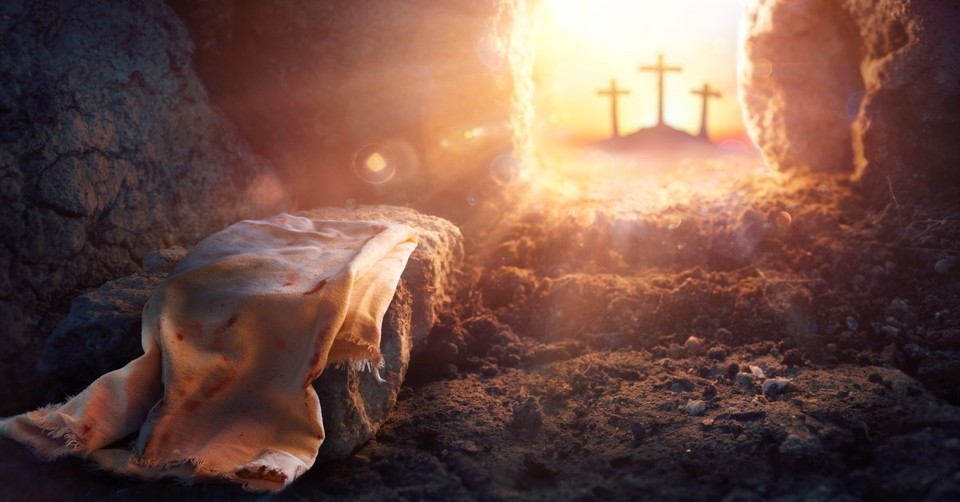
Easter, as celebrated today, is meant to commemorate the resurrection of Jesus Christ. It is the day Christians remember that Christ rose from the dead, conquering death and the grave.
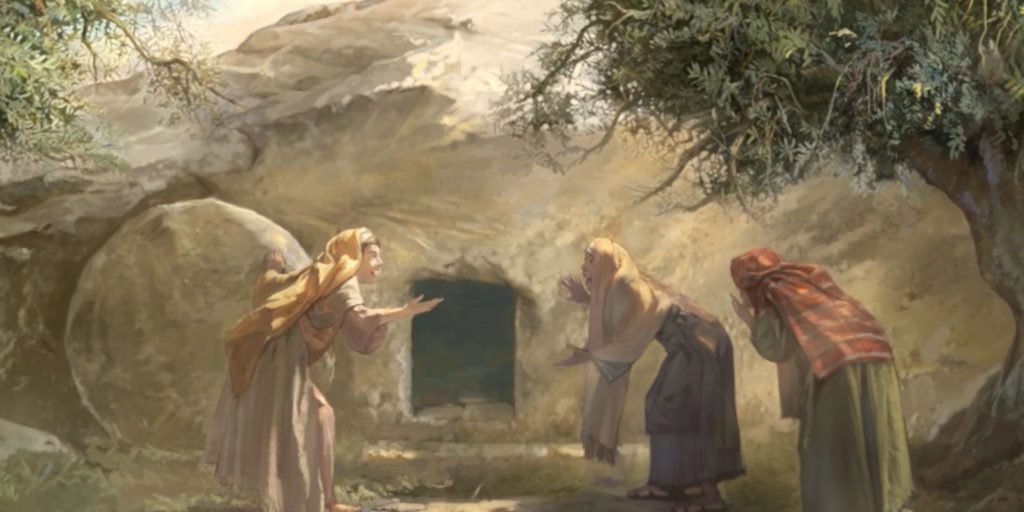
“He is not here: for he is risen, as he said…” (Matthew 28:6 KJV)
However, unlike Passover, Easter is not a feast commanded in Scripture. The apostles never instructed the church to observe a yearly resurrection festival. Instead, the early believers remembered Christ’s death and resurrection through communion and daily life.
So where did Easter come from?
How Passover Became Easter
In the earliest days of the church, many Christians, especially Jewish believers, continued to observe Passover, but with a new understanding. They saw Christ as its fulfillment and commemorated His death accordingly.
This created a practice known as Quartodecimanism, where believers observed the 14th day of Nisan, the exact date of Passover, to remember Christ’s crucifixion.
However, as Christianity spread into the Gentile world, tensions arose.
Some believers wanted to separate from Jewish customs and establish a distinct Christian identity. This led to a major shift in how the resurrection was commemorated.
The Turning Point: Council of Nicaea
In 325 AD, the Council of Nicaea played a key role in formalizing what would become Easter.
The council decided that the celebration of Christ’s resurrection would no longer be tied directly to the Jewish Passover calendar. Instead, it would be observed on a Sunday, the day associated with the resurrection.
This decision created a clear separation:
- Passover remained a biblical feast tied to Israel and the Exodus
- Easter became a church tradition focused on the resurrection
From this point forward, the connection between Passover and Christ’s death became less emphasized in mainstream Christianity.
The Influence of Culture and Tradition
As Easter developed over centuries, it absorbed cultural elements from various regions. In some cases, these additions had little to do with Scripture.
The very word “Easter” is often linked to Eostre, a spring fertility goddess. While scholars debate the extent of this connection, it is clear that many Easter traditions, such as eggs and rabbits, are not biblical symbols.
This is a major difference:
- Passover is rooted in Scripture and commanded by God
- Easter is shaped by church tradition and cultural influences
Key Differences Between Passover and Easter
1. Origin
- Passover: Instituted by God in Exodus
- Easter: Developed by the early church centuries later
2. Focus
- Passover: Deliverance from Egypt and the sacrificial lamb
- Easter: Resurrection of Christ
3. Biblical Authority
- Passover: Commanded in Scripture
- Easter: Not commanded, but traditionally observed
4. Timing
- Passover: Fixed by the Hebrew calendar
- Easter: Determined by a formula based on the spring equinox and Sunday
The Deeper Spiritual Truth
Despite the differences, there is a powerful truth that connects both.
Passover is the shadow. Christ is the substance.
“Which are a shadow of things to come; but the body is of Christ” (Colossians 2:17 KJV)
The blood on the doorposts in Exodus pointed to the blood on the cross. The lamb eaten in haste pointed to the sacrifice of Christ. The deliverance from Egypt pointed to salvation from sin.
Even the resurrection, which Easter celebrates, is not disconnected from Passover. It is the completion of what Passover began.
Without the sacrifice, there is no resurrection.
Why This Matters Today
Understanding the difference between Passover and Easter is not just historical. It is spiritual.
It forces us to ask:
- Are we following Scripture or tradition?
- Do we understand the full meaning of Christ’s sacrifice?
- Are we seeing the Bible as one continuous story of redemption?
Many believers celebrate Easter without realizing that they are standing on the foundation of Passover. When that foundation is ignored, the depth of the gospel is often lost.
Passover did not become Easter overnight. It was a gradual shift influenced by theology, culture, and history. What began as a God-ordained memorial of deliverance became, over centuries, a global celebration of resurrection shaped by the church.
Yet the truth remains unchanged.
Christ is our Passover Lamb. He was sacrificed for us. He rose again in victory.
Whether one observes Passover, Easter, or neither, the central message must never be lost:
“Christ died for our sins according to the scriptures; And that he was buried, and that he rose again the third day…” (1 Corinthians 15:3-4 KJV)
That is the foundation. Everything else is built on it.

No comments yet. Be the first to share your thoughts!