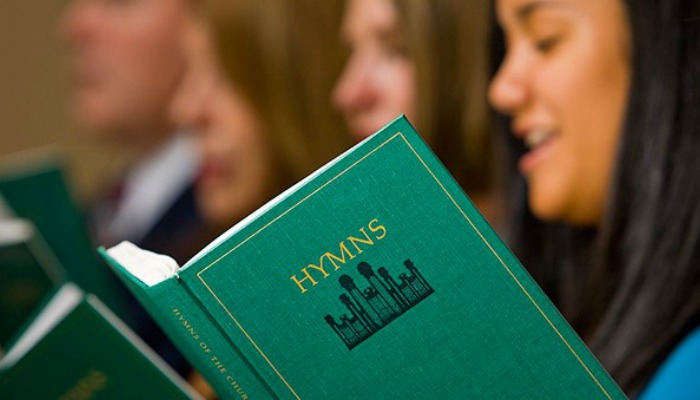
“Speaking to Yourselves in Hymns”: A Biblical Explanation
The phrase “speaking to yourselves in psalms and hymns and spiritual songs” comes from Paul’s instruction in Ephesians 5:19 (KJV). At first glance, the wording may sound unusual to modern readers. Why would Scripture encourage believers to speak to themselves, and what does this have to do with hymns? Is Paul referring to private worship, congregational singing, inner reflection, or something else entirely? Understanding this phrase requires careful attention to biblical language, context, and theology.
The Scriptural Foundation of the Phrase
Ephesians 5:18–19 reads, “And be not drunk with wine, wherein is excess; but be filled with the Spirit; speaking to yourselves in psalms and hymns and spiritual songs, singing and making melody in your heart to the Lord.” Paul contrasts being controlled by alcohol with being controlled by the Holy Spirit. One leads to disorder and excess. The other leads to worship, gratitude, and spiritual clarity.
The phrase “speaking to yourselves” does not promote self-centered thinking or psychological self-talk. Rather, it describes Spirit-directed communication that shapes the heart and mind through truth-filled song. Hymns and psalms become a means by which believers instruct, remind, and anchor themselves in God’s Word.
What “Speaking to Yourselves” Means Biblically
In biblical language, “yourselves” often refers to the believing community as well as the individual believer. Paul is addressing the church, not isolated individuals. The phrase implies mutual encouragement and internal reinforcement of truth. Believers speak truth-filled words that affect both their own hearts and the hearts of others.
This idea appears elsewhere in Scripture. Colossians 3:16 says, “Let the word of Christ dwell in you richly in all wisdom; teaching and admonishing one another in psalms and hymns and spiritual songs.” Here, the emphasis is clearly communal. Singing is not entertainment. It is instruction. It is a way believers speak God’s truth into life, memory, and conscience.
Speaking to the Soul Through Song
The Bible frequently portrays godly people speaking to their own souls. David repeatedly does this in the Psalms. In Psalm 42:5 he says, “Why art thou cast down, O my soul? and why art thou disquieted within me? hope thou in God.” David addresses his inner being, not to affirm his feelings, but to correct them with truth.
When believers sing hymns, they are often preaching to themselves. Hymns remind the soul of God’s faithfulness, Christ’s work, human frailty, and eternal hope. This is especially important in moments of fear, doubt, temptation, or sorrow. Music has a unique ability to reach places that spoken words alone may not.
Hymns as Stored Theology
Historically, hymns have served as portable theology. Many believers learned core doctrines not through formal education but through singing. Hymns embed Scripture, doctrine, and prayer into memory. When a believer sings or recalls a hymn verse, they are often speaking truth to themselves without consciously realizing it.
For example, hymns about the cross, grace, perseverance, or heaven shape how believers interpret suffering and joy. In moments of trial, a hymn verse may rise in the heart before a Bible verse does. This does not diminish Scripture. Instead, it demonstrates how Scripture, once internalized, continues to speak.
Internal Worship and the Heart
Paul also says believers are to make melody “in your heart to the Lord.” This shows that speaking to oneself in hymns is not limited to outward singing. It includes internal worship, where the heart is engaged with God even in silence. A believer may mentally rehearse a hymn verse during work, illness, or prayer.
This internal speaking is not self-exaltation. It is God-centered remembrance. The heart is directed toward truth rather than drifting toward anxiety or despair. In this way, hymns help guard the mind, similar to how Scripture meditation works in Psalm 1.
The Role of the Holy Spirit
Paul connects hymn-speaking directly to being filled with the Spirit. This means the practice is not mechanical or emotional manipulation. It is Spirit-enabled. The Holy Spirit brings Scripture to remembrance, shapes affections, and aligns the heart with God’s will.
When believers speak to themselves in hymn verses, they are cooperating with the Spirit’s work of sanctification. The Spirit uses truth-filled songs to correct wrong thinking, soften hardened emotions, and renew hope. True spiritual singing flows from submission to the Spirit, not emotional excitement alone.
Speaking to Yourself Versus Worldly Self-Talk
Modern culture often promotes positive self-talk rooted in self-esteem or self-empowerment. Biblical self-speaking is very different. Scripture never teaches believers to affirm their own greatness. Instead, it teaches them to declare God’s greatness to their own souls.
Hymns do not say, “I am enough.” They say, “Christ is enough.” They do not say, “Believe in yourself.” They say, “Trust in the Lord.” Speaking to yourself in hymns is not about boosting confidence but about anchoring the soul in divine truth.
Hymns in Times of Suffering
One of the most powerful contexts for speaking to oneself in hymn verses is suffering. Paul and Silas sang hymns in prison in Acts 16. Their singing was not denial of pain but defiance of despair. Hymns reminded them of God’s sovereignty even while chains remained.
Throughout church history, believers have sung hymns in persecution, illness, and death. These songs often became lifelines of faith, reminding the soul that present suffering is not the final word. Hymns speak hope when circumstances speak fear.
Personal Devotion and Daily Life
Speaking to yourself in hymn verses can be part of daily Christian living. A believer may recall a hymn while praying, walking, or facing temptation. This practice helps Scripture dwell richly in the heart. It also guards against spiritual forgetfulness.
Deuteronomy 6 emphasizes the importance of keeping God’s words present in daily life. Hymns serve this purpose well. They carry truth into ordinary moments, shaping thoughts and attitudes when formal study is not possible.
Guarding Against Empty Singing
While hymns are powerful, Scripture warns against empty worship. Singing without understanding or obedience becomes hollow. Isaiah 29:13 warns of honoring God with lips while hearts remain far away. Speaking to oneself in hymns must be sincere and connected to faith and obedience.
Hymns are not magical formulas. Their power lies in the truth they carry and the faith that receives that truth. The goal is heart transformation, not emotional comfort alone.
Teaching and Unity in the Church
In congregational worship, hymn singing unifies believers around shared truth. When the church sings together, individuals are reminded that they are not alone in faith. Speaking to yourselves becomes speaking to one another. This mutual reinforcement strengthens doctrine and fellowship.
This is why hymn content matters. Songs should reflect sound biblical teaching. When believers sing truth together, they are collectively shaping belief, memory, and identity.
Speaking to yourself in hymn verses is a deeply biblical practice rooted in Scripture, worship, and spiritual formation. It is not self-centered speech but God-centered remembrance. Through hymns, believers instruct their souls, resist despair, recall truth, and express trust in God.
The Bible presents hymns as more than music. They are vessels of truth, tools of encouragement, and instruments of the Holy Spirit. Whether sung aloud, whispered in prayer, or recalled silently, hymn verses allow believers to speak faith into their own hearts. Speaking to yourself in hymns is a way of ensuring that the loudest voice shaping the soul is the truth of God.



No comments yet. Be the first to share your thoughts!