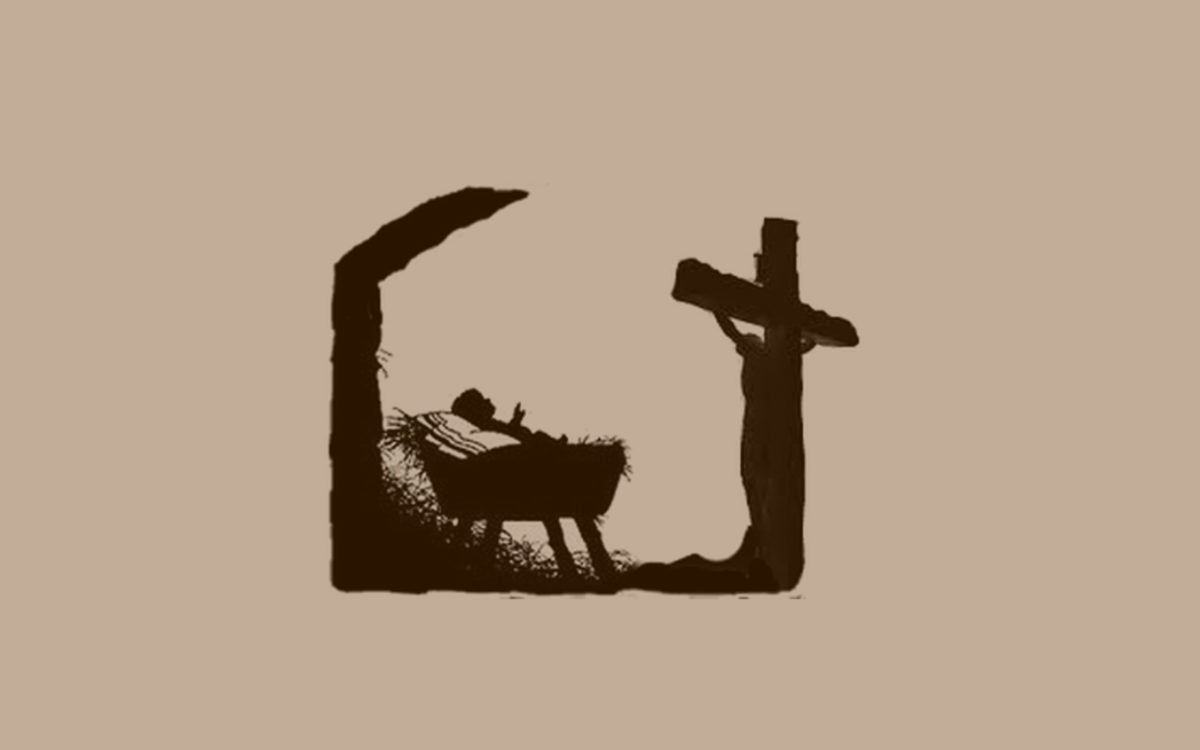
The Incarnation of Christ: How God Became Man
The incarnation of Jesus Christ stands at the very center of Christian theology. It is not a secondary doctrine, nor a poetic metaphor, but the foundation upon which the gospel itself rests. The eternal, infinite, uncreated God entered human history by becoming man, without ceasing to be God. This doctrine answers some of the deepest questions of human existence: Who is God? How can sinners be reconciled to Him? And how can the infinite truly touch the finite?
What the Incarnation Means
The word incarnation comes from the Latin incarnatio, meaning “to be made flesh.” Scripture states this plainly in John 1:14: “And the Word was made flesh, and dwelt among us” (KJV). The Word refers to the eternal Son of God, who existed before creation and through whom all things were made. The incarnation means that the Son of God assumed a real human nature, body and soul, while remaining fully divine.
This was not God pretending to be human, nor God temporarily visiting humanity. It was God truly becoming man. Jesus Christ possessed everything essential to humanity, including a human mind, will, emotions, and physical body, yet without sin. At the same time, He retained all the attributes of deity, such as holiness, omniscience, authority, and eternal existence.
Why God Became Man
The incarnation was necessary because salvation required both divine power and human obedience. Humanity’s problem was not merely ignorance or weakness but guilt before a holy God. Sin had broken fellowship with God and brought condemnation. Only God could save, but only man owed the obedience and penalty required by the law. In Christ, both needs were met.
As man, Jesus could obey the law perfectly on behalf of humanity. Romans 5 teaches that just as Adam’s disobedience brought condemnation, Christ’s obedience brings righteousness. As God, His obedience had infinite value. His suffering and death were sufficient to satisfy divine justice fully. No mere human could bear the weight of God’s wrath against sin, but the God Man could.
Fully God and Fully Man
Christian orthodoxy insists that Jesus is fully God and fully man, not half of each and not a mixture that produces something new. This union of two natures in one person is known as the hypostatic union. The Council of Chalcedon in AD 451 carefully articulated this truth, affirming that Christ is one person in two natures, without confusion, without change, without division, and without separation.
Scripture presents both realities clearly. Jesus grows tired, hungry, and sorrowful, showing true humanity. He also forgives sins, calms storms, raises the dead, and receives worship, showing true deity. These are not contradictions but complementary truths held together in one person.
The Humility of the Incarnation
Philippians 2 gives one of the most profound theological reflections on the incarnation. Christ, who existed in the form of God, did not cling to His divine privileges but humbled Himself by taking the form of a servant. This humility did not mean He stopped being God. Rather, He willingly veiled His glory and submitted Himself to human limitations.
This humility reveals the heart of God. The incarnation shows that God is not distant or indifferent but willing to enter human suffering. He did not save humanity from afar but came near. In Jesus, God experienced hunger, rejection, sorrow, and pain. This makes Christianity unique among world religions. God does not merely sympathize with human weakness; He has lived it.
The Incarnation and Revelation
Through the incarnation, God revealed Himself in a way never before possible. Hebrews 1 says that God, who previously spoke through prophets, has now spoken through His Son. Jesus does not merely speak God’s words; He is God’s self revelation. To see Jesus is to see the Father. His character, compassion, holiness, and truth reveal who God truly is.
This guards Christians from creating a god in their own image. The true God is revealed not through speculation or philosophy but through the person of Jesus Christ. Any view of God that contradicts the character of Christ is not biblical.
The Incarnation and Redemption
The incarnation was not an end in itself but the means by which redemption was accomplished. Jesus was born in order to die. His humanity made Him capable of suffering and death, while His deity gave eternal significance to His sacrifice. On the cross, God’s justice and mercy met perfectly. Sin was judged, and sinners were offered forgiveness.
Because Christ became man, believers now have a mediator who understands them fully. Hebrews teaches that Jesus is a merciful and faithful High Priest who sympathizes with human weakness. Prayer, therefore, is not directed toward a distant deity but toward a Savior who knows human pain firsthand.
The Incarnation and the Christian Life
The incarnation also shapes how Christians live. If God humbled Himself to serve, believers are called to humility. If God entered human suffering, believers are called to compassion. If Christ took on human flesh, then human life has profound dignity and worth.
Furthermore, the incarnation assures believers of their future hope. Just as Christ took on a real human body, believers will one day experience resurrection. Salvation is not an escape from creation but its restoration. God values the physical world enough to enter it and redeem it.
The incarnation of Christ is the greatest mystery and the greatest miracle of the Christian faith. It reveals the depth of God’s love, the seriousness of sin, and the beauty of redemption. In Jesus Christ, God did not merely speak salvation. He became salvation. To understand the incarnation is to stand in awe of a God who became man so that fallen humanity might be brought back to Him.
This doctrine calls not only for belief but for worship. The incarnation invites wonder, humility, and gratitude. The eternal Word became flesh, not to condemn the world, but that the world through Him might be saved.




No comments yet. Be the first to share your thoughts!