Understanding the Trinity Once and for All
Why Every Illustration Fails but the Doctrine Still Stands
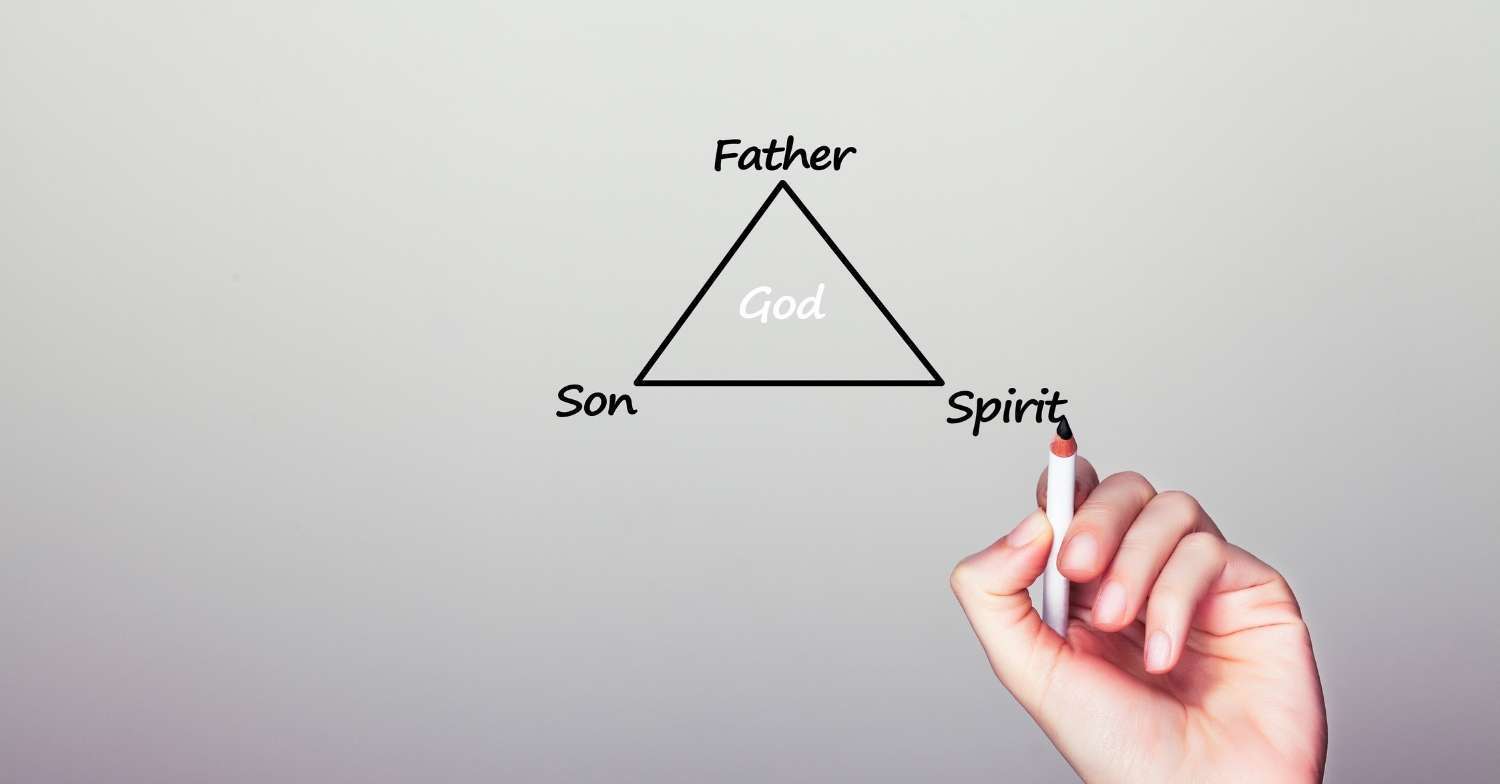
The doctrine of the Trinity is one of the most misunderstood teachings in Christianity. Many believers struggle not because Scripture is unclear, but because the Trinity does not fit neatly into human categories. The Bible reveals one God who eternally exists as three distinct Persons: Father, Son, and Holy Spirit (Matthew 28:19). Any attempt to simplify this truth beyond what Scripture allows leads to distortion.
The Trinity is not a philosophical invention. It arises from the Bible’s consistent teaching that there is one God (Deuteronomy 6:4), that the Father is God (John 6:27), the Son is God (John 1:1), and the Holy Spirit is God (Acts 5:3–4), while the Father, Son, and Spirit are not the same Person (John 14:16–17). Scripture forces these truths together even when human logic resists them.
Many illustrations are commonly used to explain the Trinity. Most of them help briefly, then fail decisively.
The water illustration describes God as H₂O existing as liquid, ice, and steam. This analogy teaches that one substance can appear in different forms. The problem is that this describes modalism, the idea that God is one Person who appears in different modes at different times. Scripture rejects this. The Father, Son, and Spirit exist simultaneously and interact with one another (Matthew 3:16–17).
The sun illustration presents the sun as the source, light as the rays, and heat as warmth. While it tries to show unity, it subtly teaches that the Son and Spirit are lesser or derived forms of God. This leads toward subordinationism, which Scripture denies. The Son is fully God, not a created extension (John 5:18).
The three-leaf clover illustration suggests three parts forming one whole. This implies that each Person is only one-third of God. Scripture never teaches that God is divided into parts. Each Person is fully God, not a fraction (Colossians 2:9).
The egg illustration (shell, white, yolk) fails for the same reason. It divides God into components, suggesting God is composed of parts. God is indivisible in His being (Isaiah 44:6).
The mind analogy (memory, intellect, will) comes closer by emphasizing unity, but it still collapses into a single person with faculties rather than three distinct Persons. The Father loves the Son, the Son prays to the Father, and the Spirit intercedes, which requires real personal distinction (John 17:1, Romans 8:26).
The failure of illustrations does not mean the Trinity is illogical. It means God is not like created things. Scripture never apologizes for this. God Himself declares that He is not comparable to anything in creation (Isaiah 40:18). The Trinity is not a contradiction. A contradiction would be saying God is one Person and three Persons in the same sense. Scripture says God is one in essence and three in Person, which are different categories (2 Corinthians 13:14).
The baptism of Jesus clearly displays the Trinity in action. The Son is baptized, the Spirit descends, and the Father speaks, all at the same moment (Matthew 3:16–17). No illustration can improve upon this biblical revelation. Scripture shows, rather than explains away, the mystery.
The Trinity matters because it shapes salvation. The Father plans redemption, the Son accomplishes it, and the Spirit applies it (Ephesians 1:3–14). Remove the Trinity, and the gospel collapses. A non-divine Christ cannot save. A non-personal Spirit cannot regenerate. A solitary God cannot be eternally loving (1 John 4:8).
Knowing God truly requires accepting what He has revealed, not forcing Him into human frameworks. The Trinity teaches humility. Some truths are not meant to be reduced, only confessed. The church did not invent the Trinity to confuse believers. It articulated the doctrine to protect the biblical witness against distortion (Jude 3).
The Trinity is not understood by mastering illustrations. It is understood by submitting to Scripture. God is one. God is three. God has revealed Himself this way, and He is worthy of worship, not revision (Romans 11:33).




No comments yet. Be the first to share your thoughts!