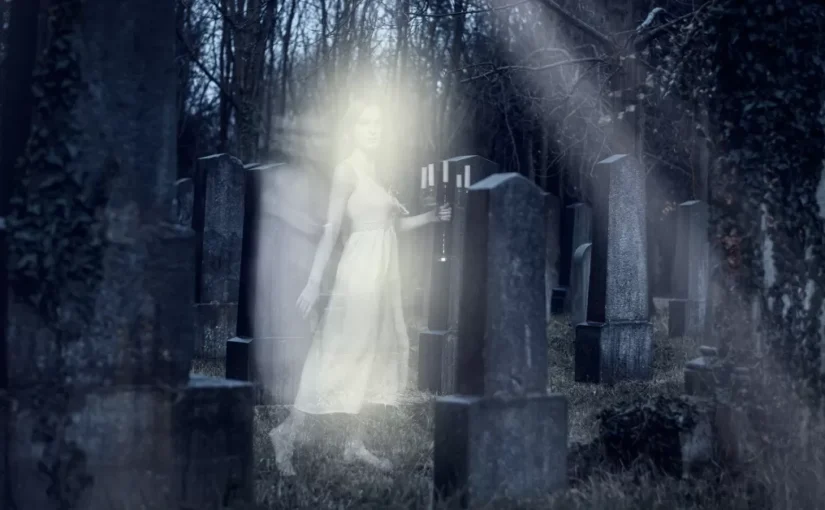
Why Did Early Christians Believe in Ghosts?
The Bible mentions spirits, angels, demons, and departed souls with no attempt to deny their existence. Many readers notice that when Jesus appeared to His disciples after the resurrection, He said very clearly, “A spirit hath not flesh and bones, as ye see me have” (Luke 24:39). This raises an important question. Why did the early Christians believe in ghosts, and what exactly did Jesus mean by this statement?
To understand the answer, we must look at Jewish beliefs, biblical teachings, and the purpose behind Jesus describing Himself in comparison to a spirit. The goal is not to promote superstition, but to understand the world as Scripture describes it.
1. The Bible Teaches That the Spiritual World Is Real
Scripture never presents the material world as the whole of reality. God is spirit (John 4:24), angels are spirits (Hebrews 1:14), and demons are also spirits (Matthew 8:16).
Because the Bible teaches that humans continue to exist after death, early Jews and early Christians understood that the soul survives the body.
“Then shall the dust return to the earth as it was, and the spirit shall return unto God who gave it.”
Ecclesiastes 12:7
This understanding naturally produced the belief that departed spirits are real. The Bible never mocks or denies this idea.
2. The Jews of Jesus’ Day Already Believed in Spirits
When Jesus walked on water, the disciples immediately thought He was a spirit.
“But when the disciples saw him walking on the sea, they were troubled, saying, It is a spirit.”
Matthew 14:26
This shows that belief in spirits was normal among Jews of the first century. This belief did not come from paganism but from their own Scriptures, which mention:
-
the witch of Endor calling up Samuel (1 Samuel 28)
-
angels appearing as men (Genesis 18)
-
demons appearing and speaking (Mark 5)
-
disembodied spirits mentioned directly (Luke 24:37 to 39)
They were not wrong to believe in a spiritual realm. The Bible confirms that such a realm exists.
3. The Bible Never Denies the Existence of Spirits of the Dead
Some Christians try to claim that ghosts cannot exist, but the Bible never says this. In fact, the episode with the witch of Endor is strong evidence that Samuel truly appeared.
“And Samuel said to Saul.”
1 Samuel 28:15
The passage plainly states that Samuel appeared and spoke. Scripture gives no hint that this was a demon pretending to be Samuel. The text simply says that Samuel came up and spoke to Saul.
This does not encourage reaching out to the dead, because God forbids that (Deuteronomy 18:10 to 12). The existence of something is not an endorsement of contacting it.
4. Why the Disciples Thought the Risen Christ Was a Spirit
When Jesus appeared in the upper room, the disciples were terrified. They supposed they were seeing a spirit.
“But they were terrified and affrighted, and supposed that they had seen a spirit.”
Luke 24:37
Why? Because they saw Him appear inside a locked room without using the door (John 20:19). Their immediate conclusion was based on their normal understanding of spirits. They believed Jesus had died, so they assumed His ghost had come to them.
The Bible never says this assumption was foolish. It simply shows Jesus correcting their misunderstanding.
5. Why Jesus Said, “I Am Not a Spirit”
Jesus did not deny the existence of spirits. Instead, He denied that He was one.
“A spirit hath not flesh and bones, as ye see me have.”
Luke 24:39
His point was very specific. He wanted the disciples to understand that He had risen bodily, not as a disembodied soul.
This teaches two essential truths.
A. The resurrection is physical
The Christian hope is not a ghostly existence but a future bodily resurrection.
“He shewed them his hands and his feet.”
Luke 24:40
B. Spirits exist, but the risen Christ is not one
If spirits did not exist, Jesus could have said so. Instead, He used their existence as a comparison to prove the reality of His physical resurrection.
6. Early Christians Believed in Spirits Because the Bible Teaches a Spiritual Realm
The earliest Christians did not invent ideas about ghosts. Their beliefs came from the Old Testament, which contains:
-
angels appearing in physical form
-
demons possessing people
-
the spirit of Samuel appearing
-
God Himself appearing in visible glory
The New Testament continues this theme:
-
demons speak through people (Luke 8:28 to 30)
-
spirits of the dead appear at the Transfiguration (Moses and Elijah, Matthew 17:3)
-
Jesus mentions unclean spirits as real beings (Matthew 12:43)
Belief in disembodied spirits was simply a recognition of what Scripture reveals.
7. Jesus Affirmed the Reality
When Jesus said, “a spirit hath not flesh and bones,” He did not attack the idea of spirits. He used the idea to show the difference between His resurrected body and a disembodied soul.
He affirmed:
-
the existence of spirits
-
the reality of the spiritual world
-
the truth of bodily resurrection
-
the difference between a spirit and a resurrected person
His words strengthened faith, not superstition.
Early Christians believed in spirits because the Bible teaches the existence of a real spiritual realm, not because of superstition. The Old Testament and New Testament both describe spirits, angels, and departed souls as part of God’s created order.
When Jesus told the disciples that He was not a spirit, He was not denying the reality of spirits. He was proving that His resurrection was physical. His body was not a vision or an apparition. It could be touched, handled, and seen. He had risen in the same body that had been crucified.
This truth is the foundation of Christian hope. Christ’s resurrection was bodily, and because of that, believers will one day rise bodily as well.

No comments yet. Be the first to share your thoughts!