About Thomas Ken
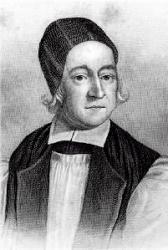
Thomas Ken (1637–1711) was an inspirational 17th-century Anglican prelate, nonjuror, and poet who stands as one of the most saintly figures in the history of the Church of England. Raised under the affectionate guardianship of his brother-in-law, the famous author Izaak Walton, Ken was educated at Winchester College and Oxford before ascending to become the Bishop of Bath and Wells.
Fiercely principled, completely independent, and utterly unswayed by the threat of royal displeasure, Ken famously locked horns with three successive British monarchs to protect his conscience. Yet, while his political and ecclesiastical battles shook the foundations of the English state, his permanent gift to the global church was a series of intensely personal bedroom devotions written for schoolboys—concluding with a single four-line stanza that has become the most frequently sung piece of music in the history of the Christian world.
                     ┌──────────────────────────────────────┐
                     │      THOMAS KEN'S ROYAL CONFLICTS    │
                     └──────────────────┬──────────────────┘
                                        │
         ┌──────────────────────────────┼──────────────────────────────┐
         ▼                              ▼                              ▼
 CHARLES II (1683)              JAMES II (1688)                WILLIAM III (1691)
Refused to let the King's       One of the "Seven Bishops"     A staunch Nonjuror; refused
mistress, Nell Gwynne, lodge    imprisoned in the Tower for    the new oath of allegiance and
inside his Winchester home.     opposing royal overreach.      gladly forfeited his bishopric.
Standing Against the Crown: Three Monarchs
Ken’s entire career was marked by a rare, unflinching moral courage that earned him the deep respect of the very kings he opposed. While serving as a prebendary and chaplain at Winchester, King Charles II arrived for a royal visit accompanied by his famous mistress, the actress Nell Gwynne. When court officials ordered Ken to provide Gwynne with lodgings in his official residence, Ken flatly refused, famously declaring his house was "under repair" and reportedly having a builder remove the roof to make the stay physically impossible. Rather than becoming enraged, the easygoing Charles was so charmed by Ken's absolute honesty that when the bishopric of Bath and Wells fell vacant shortly after, the King pithily demanded: "Who shall have Bath and Wells but the little man who would not give poor Nelly a lodging?" Ken was duly appointed, and later stood faithfully at Charles's deathbed, offering noble, uncompromising pastoral counsel.
His courage was tested again in 1688 under Charles's successor, the Catholic King James II. Ken was one of the historic "Seven Bishops" who refused to read the King’s Declaration of Indulgence from their pulpits, viewing it as an illegal exercise of absolute royal prerogative over the established church. For this act of defiance, James had Ken and his colleagues arrested and imprisoned in the Tower of London. They were subsequently tried in a spectacular public case that resulted in a triumphant acquittal, igniting mass celebrations across England.
The final test of Ken's conscience arrived during the Glorious Revolution of 1689, which overthrew James II and brought William III and Mary II to the throne. Having previously sworn a sacred oath of allegiance to James, Ken’s conscience would not allow him to break his vow to swear a new oath to the replacement Dutch prince. Consequently, in 1691, Ken joined the ranks of the Nonjurors—clergymen who chose to be systematically stripped of their titles, incomes, and palaces rather than violate their personal integrity. Reduced to possessing nothing but seven hundred pounds and his beloved library, Ken spent his remaining two decades living in peaceful retirement as a guest of Lord Weymouth at the estate of Longleat, stubbornly refusing all political offers to restore his wealthy bishopric.
The Winchester Manual and the Devotional Triad
Long before his episcopal promotions, Ken’s heart was bound to the spiritual formation of young people. In 1674, while serving as a fellow and chaplain at Winchester College, he compiled a pastoral guidebook entitled:
A Manual of Prayers for the Use of the Scholars of Winchester College
In the text, Ken strongly urged the young schoolboys to wake up early and go to sleep late with song, instructing them to "sing the Morning and Evening Hymn in your chamber devoutly." While the words were initially circulated privately on loose broadsheets, Ken formally appended three magnificent, expansive poems to the 1695 edition of the Manual: a Morning Hymn, an Evening Hymn, and a Midnight Hymn.
                     ┌──────────────────────────────────────┐
                     │     THE THREE WINCHESTER HYMNS       │
                     └──────────────────┬──────────────────┘
                                        │
         ┌──────────────────────────────┼──────────────────────────────┐
         ▼                              ▼                              ▼
 THE MORNING HYMN               THE EVENING HYMN               THE MIDNIGHT HYMN
*“Awake, my soul, and with     *“All praise to Thee, my God,   *“My God, now I from sleep
the sun...”* An energetic       this night...”* A tender,      awake...”* A mystical, dark-
call to daily stewardship.     peaceful plea for protection.  hour defense against fear.
Ken practiced exactly what he preached; he routinely woke up at dawn, took up his lute, spinet, or viol, and sang his own morning verses in his private chambers as an offering of early devotion. Written in clean, sturdy Long Meter (LM), these hymns were rigorously revised by Ken between 1705 and 1709 to perfect their phrasing and defend against publishers who were printing highly corrupted, unauthorized bootleg editions of his work.
The Universal Doxology
The single most stroke of genius in Ken's hymnology was his decision to append the exact same four-line closing stanza to the end of all three Winchester hymns. Designed to tie the themes of morning labor, evening rest, and midnight watchfulness back to the glory of the Triune Godhead, this stanza broke away from its parent hymns to become a standalone, universal phenomenon:
$$\text{Praise God, from Whom All Blessings Flow}$$
$$\text{Praise Him, All Creatures Here Below}$$
$$\text{Praise Him Above, Ye Heavenly Host}$$
$$\text{Praise Father, Son, and Holy Ghost.}$$
Known simply as "The Doxology," this brief, monumental stanza is sung weekly across virtually every Christian denomination—Protestant, Catholic, Evangelical, and Orthodox—spanning thousands of languages across the face of the earth. Set to the classic Genevan Psalter tune OLD 100TH, it has achieved an unmatched, transcendent liturgical status, acting as a global anthem of gratitude.
Liturgical Footprint and Posthumous Works
While the world focused heavily on the Winchester triad, Ken was a voluminous writer of verse throughout his life. Posthumously published in four volumes in 1721, his wider library includes his Hymns for all the Festivals of the Year (later repackaged by Pickering in 1868 as Bishop Ken's Christian Year), which directly inspired John Keble’s famous Oxford Movement poetry collection. It also contained his Anodynes—deeply moving, raw poems penned during his final years to combat acute, agonizing physical suffering—and his Preparatives for Death.
From these historical festival books, hymn compilers extracted several widely used liturgical sub-hymns:
| Cento / Extracted First Line | Original Festival Focus | Core Liturgical Theme |
| All praise to Thee Who safe hast kept | Morning Hymn | Gratitude for nocturnal preservation |
| Glory to Thee, my God, this night | Evening Hymn | Trusting God's shadow in the dark |
| O purify my soul from stain | 10th Sunday after Trinity | A passionate prayer for interior purity |
| O Lord, when near the appointed hour | Holy Communion | Eucharistic focus and seasonal devotion |
| Unction the Christian name implies | Confirmation | The sealing and strengthening of the Holy Spirit |
Bishop Thomas Ken passed away at Longleat on March 19, 1711, at seventy-three years of age, surviving every other nonjuring prelate of his generation. In accordance with his final wishes, he was buried at dawn beneath the eastward window of the Church of St. John in Frome, the exact hour his own Morning Hymn was meant to be sung. Summarizing his immaculate, historic life, the historian Lord Macaulay remarked that Ken’s character approached "as near as human infirmity permits to the ideal perfection of Christian virtue," leaving behind a name that remains synonymous with the absolute triumph of individual conscience.