About Thomas Olivers
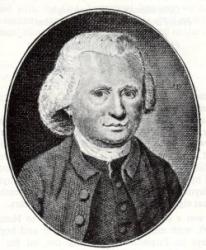
Thomas Olivers (1725–1799) was a Welsh-born Methodist itinerant preacher, editor, and hymn writer whose life stands as one of the most dramatic stories of personal redemption in the 18th-century Evangelical Revival. Orphaned in early childhood and raised in absolute neglect, Olivers spent his youth as a notoriously profligate, wandering shoemaker until a single sermon by George Whitefield completely transformed his character.
Recruited by John Wesley, he spent twenty-five years traversing Great Britain on horseback as a fiery evangelist. Though his lack of formal education occasionally hampered his later work as a magazine editor, his name was permanently etched into church history as the author of a monumental, sweeping hymn of praise that brought the majesty of ancient Hebrew liturgy directly into the heart of early Methodism.
From Profligate Shoemaker to Circuit Rider
Thomas Olivers was born in 1725 in Tregynon, near Newtown, Montgomeryshire, Wales. His childhood was marked by severe tragedy; his father died when he was only four years old, and his mother passed away shortly thereafter. Handed over to a succession of distant relatives who took little interest in his welfare, Olivers grew up with virtually no formal education and was eventually apprenticed to a shoemaker.
Free from parental restraint, his youth devolved into severe ungodliness and profligacy. By the age of eighteen, his reckless behavior and bad reputation forced him to flee his hometown. He drifted from town to town—including Shrewsbury and Wrexham—miserably poor, spiritually broken, and deeply wretched.
                  ┌──────────────────────────────────────┐
                  │      THE CRITICAL PIVOT OF 1753      │
                  └──────────────────┬──────────────────┘
                                     │
         ┌───────────────────────────┴───────────────────────────┐
         ▼                                                       ▼
 THE BRISTOL SERMON                                      THE METHODIST CALL
Heards Whitefield preach on "a                          Met John Wesley at Bradford-on-Avon;
brand plucked from the fire."                           Wesley recognized his zeal and made him
Radical conversion follows.                             an itinerant evangelist on Oct 1, 1753.
The massive turning point in his life occurred when his travels brought him to Bristol. There, he happened to hear the great open-air evangelist George Whitefield preach a sermon based on Zechariah 3:2: "Is not this a brand plucked out of the fire?" The message pierced Olivers to the heart, prompting a profound, radical conversion.
Though he initially sought to join Whitefield’s Calvinistic movement, a discouraging interaction with one of Whitefield's assistants led him instead to join the Methodist Society at Bradford-on-Avon. It was there that he met John Wesley. Recognizing a rare combination of raw intellectual ability, poetic instinct, and unquenchable evangelical zeal beneath the young man’s rough exterior, Wesley immediately enlisted him. On October 1, 1753, Olivers officially set out for Cornwall as one of Wesley's itinerant "helpers," beginning a grueling, twenty-five-year career riding circuits across the British Isles.
Editor of the Arminian Magazine
As Olivers aged, the physical toll of decades on horseback wore him down. Seeking to utilize his sharp mind in a more sedentary capacity, Wesley appointed him as the co-editor of the Arminian Magazine, the theological flagship journal of the Wesleyan movement.
Unfortunately, this appointment proved to be a mismatch. Because Olivers lacked a formal classical education and systematic training in grammar and printing mechanics, his editorial work was frequently marred by typographical errors and oversight. Wesley, who was notoriously meticulous about the literary quality of his movement, eventually had to relieve Olivers of his editorial duties. Despite this administrative setback, the Wesleyan Conference held Olivers in incredibly high esteem, granting him a comfortable retirement pension for his remaining years in recognition of his decades of sacrificial field evangelism.
The Masterpiece: "The God of Abraham Praise"
While Olivers wrote several notable works, including the stirring “Come Immortal King of glory,” “O Thou God of my salvation” (composed while residing at Chester), and a moving Elegy upon the death of John Wesley, his entire global legacy rests securely upon a single, majestic hymn:
"The God of Abraham praise, Who reigns enthroned above!"
The hymn was born out of a profound cross-cultural liturgical experience. While visiting London, Olivers attended a service at the Great Synagogue in Duke’s Place. There, he heard the celebrated cantor Meyer Lyon sing the Yigdal—an ancient Hebrew chant that systematically summarizes the thirteen articles of the Jewish faith compiled by Maimonides.
Deeply moved by the haunting beauty and grand scale of the music, Olivers went back to his lodgings and immediately wrote a Christianized, multi-stanza paraphrase of the text, matching its exact, sweeping meter. To ensure it could be sung by Methodist societies, he adapted the Hebrew melody directly from Meyer Lyon, naming the historic tune HELMSLEY (or alternatively, LEONI, in honor of the cantor).
Lyrical and Theological Architecture
The hymn stands out in Christian hymnody for its vast, epic scope. Rather than focusing purely on localized, personal emotion, Olivers’ text sweeps across cosmic history, connecting the ancient covenant of Abraham to the final, celestial victory of the church.
| Movement | Scriptural Theme | Poetic Focus |
| The Covenant | Genesis 15 & 17 | Anchoring faith in the eternal, unchangeable promise made to Abraham. |
| The Pilgrimage | Hebrews 11 | Framing the Christian life as a dangerous march through a wilderness toward a promised home. |
| The Celestial Throne | Revelation 4 & 7 | A sweeping vision of the Trinity surrounded by the angelic host and redeemed saints in white robes. |
Hymn Excerpt: The Cosmic Adoration
The God of Abraham praise,
At Whose supreme command
From earth I rise—and seek the joys
At His right hand;
I all on earth forsake,
Its wisdom, fame, and power;
And Him my only Portion make,
My Shield and Tower.
Death and Burial beside Wesley
Thomas Olivers died suddenly in London in March 1799 at seventy-four years of age. In an extraordinary final tribute to the deep bond shared between the two men, he was buried directly inside John Wesley’s personal tomb in the graveyard behind the City Road Chapel in London. Though his youth was spent in ruinous obscurity, his transformed life yielded timeless metric songs that bridged ancient Hebrew chant with early Methodist fervor, ensuring his voice would ring out in congregational worship for generations to come.