About Tim Hughes
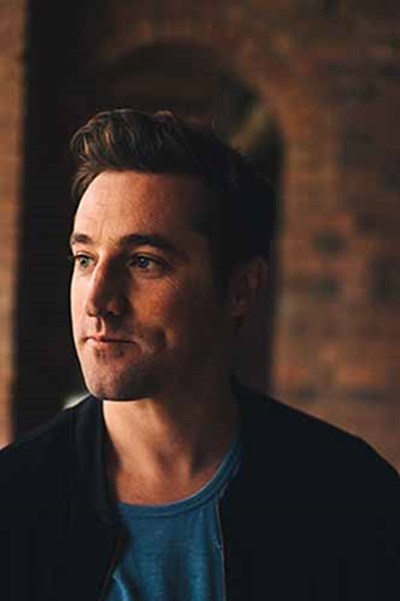
The Reverend Timothy David Llewelyn Hughes (born July 23, 1977) is an influential British contemporary Christian music singer, songwriter, and Anglican priest. Rising to prominence during the late-1990s youth revival movements in the United Kingdom, Hughes became a leading architect of modern congregational worship music.
Combining an early background in history with classical Anglican ordination, his lyrics intentionally bridge the gap between emotional modern pop-rock arrangements and deep, orthodox theological truths. His breakthrough stadium anthem stands as one of the most frequently sung pieces of contemporary worship music in global church history.
From Vicarage to Soul Survivor
Tim Hughes was born in High Wycombe, Buckinghamshire, England, the son of an Anglican vicar. Raised in a traditional, deeply committed rectory environment, his family relocated to Birmingham during his teenage years when his father was appointed vicar of St. John’s Church in Harborne. It was here that Hughes mastered the acoustic guitar and began leading worship for local church youth groups, drawing early musical inspiration from British pioneers like Graham Kendrick and Martin Smith of the band Delirious?.
While studying history at the University of Sheffield in the late 1990s, Hughes's raw musical and pastoral leadership caught the attention of Mike Pilavachi, the co-founder of Soul Survivor—a massive, era-defining Christian youth festival movement in the UK. In 1997, at just nineteen years of age, Hughes was invited to lead worship on the main stage at Soul Survivor. When the legendary songwriter Matt Redman stepped down as the worship pastor of Soul Survivor Watford Church, Hughes was chosen to succeed him, establishing his reputation as a premier voice for a new generation of British worshippers.
                    ┌──────────────────────────────────────┐
                    │      HUGHES'S MINISTERIAL TIMELINE   │
                    └──────────────────┬──────────────────┘
                                       │
         ┌─────────────────────────────┼─────────────────────────────┐
         ▼                             ▼                             ▼
  1997: SOUL SURVIVOR          2005: HOLY TRINITY BROMPTON    2015: GAS STREET CHURCH
Recruited by Mike Pilavachi;   Moved to London as Director    Relocated to Birmingham; planted
succeeded Matt Redman as       of Worship; ordained an        a vibrant parish inside a
Worship Pastor at Watford.     Anglican priest (2014).        derelict industrial gasworks.
Liturgical Hubs: HTB and Gas Street
In 2005, Hughes left Watford to relocate to central London, accepting the position of Director of Worship at Holy Trinity Brompton (HTB). HTB was the most influential evangelical parish in the Church of England, famous worldwide as the birthplace of the Alpha Course. While managing the extensive musical demands of HTB’s multiple sites, Hughes formally pursued theological studies for holy orders at St. Mellitus College. He was ordained as an Anglican deacon at St. Paul’s Cathedral in 2013 and advanced to the priesthood in 2014.
Seeking to plant a fresh, creative community in the industrial heart of the Midlands, Hughes and his family moved back to Birmingham in 2015. They launched Gas Street Church, transforming a massive, derelict historical gasworks warehouse into a thriving, multi-generational parish community with an explicit mission to be a vibrant "Light for the City."
Global Training: Worship Central
Recognizing that thousands of local church musicians lacked access to practical, high-quality theological and technical education, Hughes partnered with associate worship director Al Gordon in 2006 to co-found Worship Central.
Operating directly out of HTB and later Gas Street, Worship Central exploded into an international school, training hub, and resource organization. Offering free online courses, local training hubs, and massive live conferences across three continents, the collective has equipped tens of thousands of worship leaders worldwide and released several live albums that reached the top of international Christian charts.
The Masterpiece: "Here I Am to Worship"
Though Hughes has written dozens of highly successful modern standards, his absolute monument in global hymnology is a song penned during his student days at Sheffield University:
"Light of the world, You stepped down into darkness, opened my eyes, let me see."
(Commonly known as "Here I Am to Worship")
Lyrical and Theological Architecture
Written in 1999 when Hughes was twenty-two years of age, the lyric was structurally inspired by the grand Christological passage found in Philippians 2:5–11 (the Kenosis, detailing Christ’s self-emptying humility). The final thematic breakthrough for the bridge came to Hughes after he watched the film The Green Mile, which deeply stirred his reflections on the weight of substitutionary atonement.
-
The Verse (The Incarnation): Contemplates the vast cosmic distance Jesus traveled, moving from eternal majesty into the broken darkness of human history out of pure love.
-
The Chorus (The Response): Shifts the singer into an immediate, first-person presentation of self, using an intimate, rhythmic triplet rhythm to declare Christ as altogether lovely, worthy, and wonderful.
-
The Bridge (The Cross): Confronts human limitation, acknowledging that the human mind can never fully compute the immense cost and suffering required to pin our sins to the cross.
Hymn Excerpt: The Incarnational Verse
Light of the world, You stepped down into darkness,
Opened my eyes, let me see;
Beauty that made this heart adore You,
Hope of a life spent with You.
The song was an immediate, international phenomenon, winning the prestigious Dove Award for Song of the Year. According to statistics from Christian Copyright Licensing International (CCLI), the anthem sat at the absolute top of global church charts for years, with estimates suggesting it has been sung by over 45 million people in congregations spanning dozens of languages.
Wider Catalog and Structural Anthologies
Hughes’s wider library is characterized by an energetic, accessible pop-rock aesthetic that avoids overly sentimental prose in favor of direct, scripture-saturated declarations of justice, victory, and corporate renewal:
1. Happy Day (The greatest day in history)
Co-written with Ben Cantelon, this high-energy, celebratory anthem focuses purely on the historical resurrection of Jesus Christ and the total defeat of death, becoming a premier modern staple for Easter Sunday services worldwide.
2. Beautiful One (Wonderful, so wonderful is Your unfailing love)
Released on his 2004 album When Silence Falls, this driving song focuses on creation, salvation, and the internal compulsion of the human soul to respond to the beauty of the divine character.
Summary of Major Contemporary Hymns
| Song Title / First Line | Primary Co-Writers | Core Biblical / Liturgical Focus |
|
Here I Am to Worship (Light of the world...) |
Tim Hughes (Sole Writer) | The Incarnation; Philippians 2; Christ's humility and beauty. |
|
Happy Day (The greatest day in history...) |
Ben Cantelon | The Resurrection; victory over the grave; personal baptismal joy. |
|
Beautiful One (Wonderful, so wonderful...) |
Tim Hughes (Sole Writer) | Cosmic adoration; creation praise; the active worth of God. |
|
God of Justice (God of justice, Savior to all...) |
Tim Hughes (Sole Writer) | Social justice; care for the poor; the church as hands and feet. |
|
At Your Name (At Your name, mountains shake...) |
Phil Wickham | Divine sovereignty; creation trembling; the supremacy of Jesus. |
The Reverend Tim Hughes continues his active pastoral work at Gas Street Church in Birmingham alongside his wife, Rachel, balancing local parish leadership with global resource development. Living in an era marked by rapid musical experimentation, his career successfully demonstrated how the simple, unvarnished gospel, when married to tight, accessible melodic lines, can unite global, diverse congregations under a single singing banner.