How a Hymn Saved a Missionary’s Life
The Story of E. P. Scott and All Hail the Power of Jesus’ Name
The hymn All Hail the Power of Jesus’ Name is one of the most celebrated songs in Christian worship, often called the “national anthem of Christendom.” It was written by Edward Perronet in 1779 and has been sung in churches around the world ever since. But its story is not just one of lyrics; it became a living testimony of God’s power through the life of a missionary named Reverend E. P. Scott in India.
Reverend Scott was a missionary serving in India during the 1800s. He had a deep burden to share the gospel with tribes that had never heard the name of Jesus. One day he encountered an unusual tribesman who told him about a remote mountain people who had never seen a missionary or heard the gospel. Despite warnings from fellow missionaries that it was dangerous, Scott felt led by God to take the message of Christ to them.
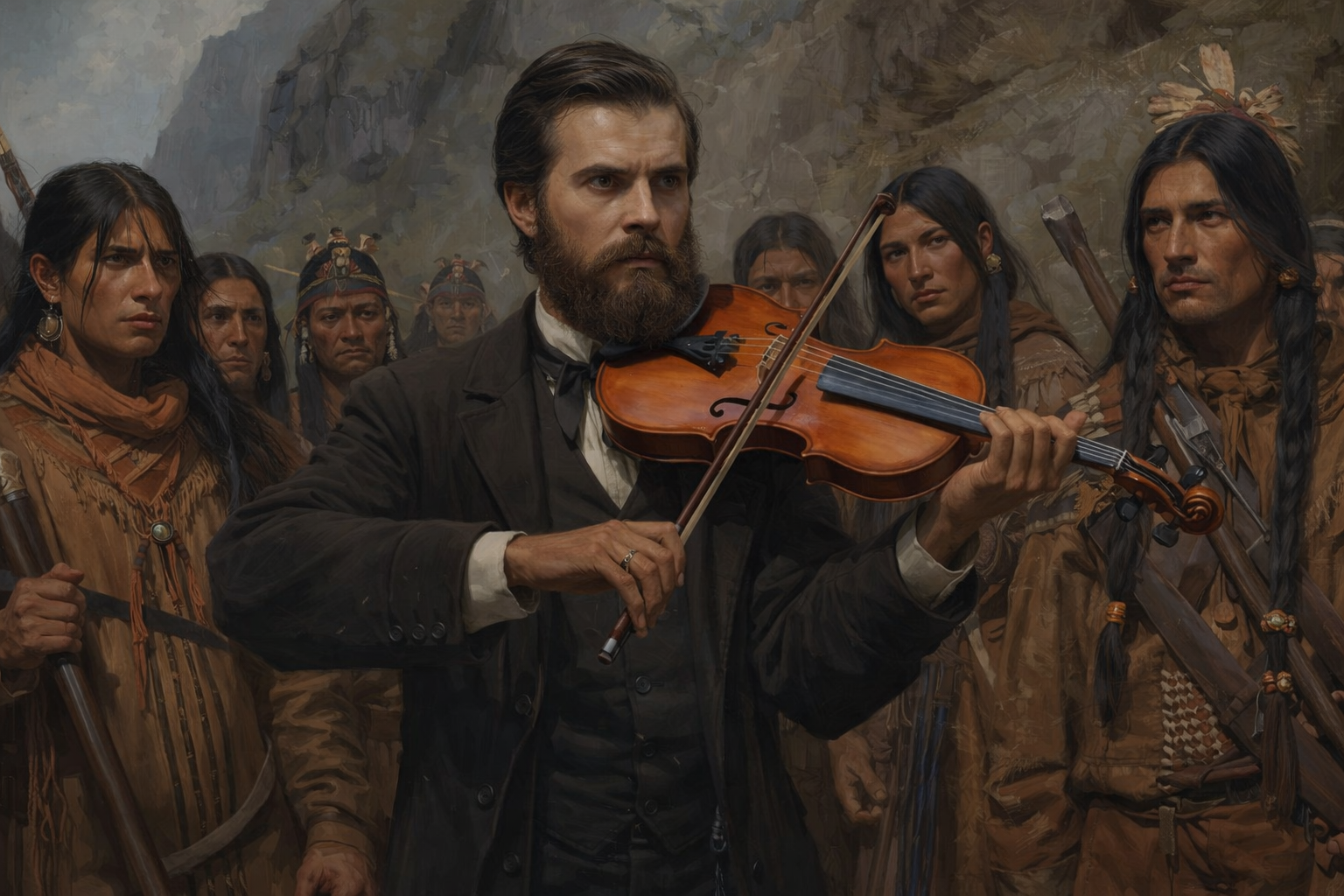
After traveling alone for two days through difficult terrain, Scott finally reached the territory of this tribe. Before he could even speak, he found himself surrounded by armed tribesmen, each holding spears and clearly prepared to kill him. Facing imminent death, Scott had no weapons, no defenses, and no human strength to rely on. Instead, he did what he knew best, he reached for his violin, which he always carried with him to accompany sacred songs. With his eyes closed, he began to play and sing All Hail the Power of Jesus’ Name, including the powerful stanza:
“Let every kindred, every tribe
On this terrestrial ball,
To Him all majesty ascribe,
And crown Him Lord of all.”
As he sang, expecting the worst, something extraordinary happened. When he opened his eyes after the third and fourth stanza, the spears were lowered, and the warriors’ faces were softened, some had tears in their eyes. The same men who had been ready to kill him were now listening with curiosity and awe. Rather than facing death, Scott found an open door to share the gospel.
The transformation was remarkable. The tribe, once hostile, invited him to live with them. He spent over two years among them, preaching Christ and seeing many come to faith. When his health later forced him to leave, they escorted him forty miles to make sure he reached safety. Some accounts even say he later returned to continue his ministry among them.
This dramatic encounter testifies to how God can use even a hymn, a simple song of praise, as a vessel of power, conviction, and salvation. All Hail the Power of Jesus’ Name declares the supremacy of Christ, and in Scott’s moment of greatest need, those words became a witness of Christ’s reign and grace to people who had never heard His name before.
This story challenges us today to recognize that songs in worship are not mere traditions. When they proclaim the majesty and lordship of Christ, they sound deep theological truths that strengthen faith, open hearts, and glorify God. All Hail the Power of Jesus’ Name does exactly that: declaring Jesus as sovereign over every tribe, every nation, and every soul.





No comments yet. Be the first to share your thoughts!