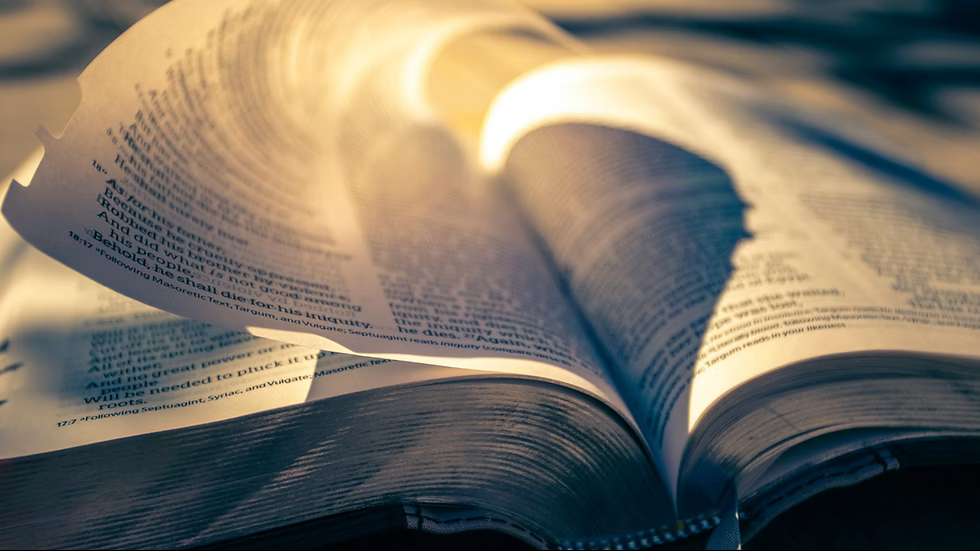
How Do We Know the Bible Is Truly the Word of God?
This question is not only ancient, but deeply personal for every Christian who builds faith, morality, hope, and eternal assurance on the Scriptures. If the Bible is merely a human book, then its authority collapses, its promises fade, and its commands lose all weight. But if it is truly the Word of God, then it stands as the highest truth, the sure foundation for life and salvation, and the eternal voice of the living God speaking into human history. The question, therefore, deserves careful reflection, thought, and consideration. The answer is not discovered through blind faith or sentimental tradition, but through evidence that is historical, theological, spiritual, and experiential in depth.
One of the clearest reasons we recognize the Bible as the Word of God is its remarkable unity across time. The Scriptures were written over a period of roughly fifteen hundred years, through more than forty different human authors, living in different cultures, speaking different languages, and coming from different walks of life. Some were kings, others were fishermen. Some were prophets in the wilderness, others were scholars in royal courts. Yet from Genesis to Revelation the message flows with one great narrative and one consistent theology. It tells one story about God’s creation of the world, humanity’s fall into sin, God’s unfolding plan of redemption, the promised Messiah, the cross, the resurrection, and the hope of a restored creation. No other ancient collection of writings shares such seamless agreement across centuries without contradiction in essential doctrine. This unity is not the product of literary coordination. It bears the mark of a single divine Author working through many human instruments.
Prophecy also gives strong evidence that the Bible is not merely human. The Scriptures contain hundreds of prophecies given long before the events took place, particularly concerning nations, kings, and most importantly the coming of Jesus Christ. The suffering servant passages in Isaiah, written centuries before the birth of Christ, describe with remarkable accuracy His rejection, His wounds, His sin bearing sacrifice, and His ultimate exaltation. The precise details concerning His birthplace in Bethlehem, His betrayal price of thirty pieces of silver, the casting of lots for His garments, and His resurrection hope cannot be explained by coincidence or manipulation. The prophets spoke words that no ordinary human foresight could produce. The fulfillment of these prophecies bears witness that the Bible speaks with divine insight and supernatural authority.
The preservation of the Bible across history provides another compelling reason to believe in its divine origin. Many ancient writings have been lost, altered, or corrupted over time, but the biblical manuscripts have been preserved with extraordinary accuracy. The discovery of the Dead Sea Scrolls confirmed that the Old Testament text we read today matches manuscripts that are more than two thousand years old. The New Testament has more surviving ancient manuscripts than any other historical document in world history by an incomparable margin. This level of preservation is not accidental. Empires attempted to burn it, critics attempted to destroy it, rulers attempted to silence it, and skeptics attempted to discredit it, yet the Scriptures have endured. A human book might fade, but the Word of God remains.
The Bible also proves itself through its power to transform lives. Across generations and cultures, the Scriptures have convicted hardened hearts, restored broken marriages, delivered men and women from destructive lifestyles, and inspired moral courage in times of oppression. Countless believers testify that when they read the Bible, it speaks with a voice that exposes sin, heals wounds, comforts despair, and awakens spiritual understanding. It shapes conscience, reforms character, and produces holiness in ways that no literature or philosophy can achieve. This transformative power does not arise from human wisdom alone. It reflects the active work of God through His Word upon the human soul.
Another strong indicator of divine origin is the Bible’s moral and spiritual authority. Unlike philosophical writings that speculate about ethics, the Scriptures speak with absolute certainty. They do not present suggestions but commands grounded in God’s character. The law confronts human sin honestly, revealing human hearts rather than flattering them. It exposes pride, selfishness, greed, and corrupt desire at the deepest level. At the same time, it proclaims grace, mercy, forgiveness, and redemption through Christ. It presents a vision of righteousness that is perfect, holy, and beyond human invention. No civilization creates a moral standard that humbles humanity so completely while also lifting them into hope through faith in God. The God of Scripture is not the projection of cultural preferences. He is revealed as holy, sovereign, eternal, and righteous, speaking with a voice above human invention.
The testimony of Jesus Christ Himself affirms the Bible as the Word of God. Jesus quoted the Scriptures as final authority and declared that not one word of God would fail. He treated Scripture not as religious literature, but as divine truth that must be believed and obeyed. The apostles followed this conviction, preaching the Scriptures as God breathed revelation. The early church did not invent biblical authority. They received it as truth already established by God and confirmed through Christ. To honor Christ is to honor the Scriptures He affirmed.
There is also a spiritual dimension to how we know the Bible is the Word of God. Scripture teaches that the Holy Spirit bears witness within the hearts of believers that the Word truly comes from God. This is not blind emotionalism, but a deep inner conviction produced by the Spirit working through the truth of Scripture as it is read, preached, and believed. When the Bible speaks, the conscience senses the voice of the Creator, not simply the voice of human authors. This inward witness does not replace evidence, but completes it. The evidence leads the mind toward belief, and the Spirit seals the heart in assurance.
At the same time, the Bible is honest about its critics. Throughout history many intelligent thinkers have opposed or rejected Scripture, yet its truth remains unmoved. The Bible does not collapse under examination. Instead, it withstands scrutiny and answers doubt with depth and coherence. It invites investigation rather than fearing it. Those who study it with humility and sincerity often discover that its truth proves stronger than their skepticism.
Knowing that the Bible is the Word of God is not the result of one single argument, but the convergence of many powerful evidences working together. Its unity across centuries, its fulfilled prophecies, its historical preservation, its moral authority, its power to transform lives, its confirmation by Christ, and the witness of the Holy Spirit all point in one clear direction. The Bible is not merely a religious book or a cultural artifact. It is the living Word of God, speaking truth that endures forever.
Therefore the right response is not only intellectual agreement, but humble submission and joyful trust. If God has spoken, then we are called to listen, to obey, and to anchor our lives in His truth. The Scriptures are not simply to be admired. They are to be read, believed, and lived. Through them God reveals Himself, guides His people, and leads us to salvation in Jesus Christ. The question, How do we know the Bible is the Word of God, ultimately leads to a greater one. Now that we know, will we receive it, trust it, and shape our lives according to its truth?





No comments yet. Be the first to share your thoughts!