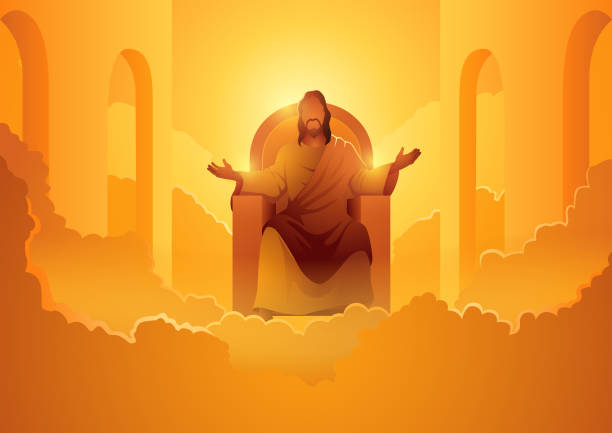
Why is Jesus fully God and fully Man?
This question goes to the very heart of the Christian faith because it touches the mystery of the incarnation, the person of Christ, and the work of salvation. The Bible teaches that Jesus is not partly God and partly man, nor does He switch between two modes of existence. Instead, He is one person with two complete natures, fully divine and fully human at the same time. Understanding why this is true is essential, because every major Christian doctrine about redemption, forgiveness, resurrection, and eternal life flows from this truth.
The first reason Jesus must be fully God is because only God has the power to save sinners. Throughout Scripture, salvation is repeatedly described as belonging to the Lord. No prophet, angel, or human being could bear the full weight of humanity’s sin or satisfy divine justice. If Jesus were merely a great teacher or an exalted creature, His death would have no eternal value. It would be the death of one creature for another. But because Jesus is truly God, His sacrifice carries infinite worth, fully sufficient to pay the penalty for sin and reconcile humanity to God. Only a divine Savior could accomplish redemption that reaches across all generations and all people who trust in Him.
Jesus must also be fully God in order to reveal the Father perfectly. Scripture teaches that the fullness of God dwells in Him, and that whoever has seen the Son has seen the Father. No human teacher, no matter how wise or holy, could reveal God with absolute perfection. Jesus speaks not about God from the outside, but as the eternal Son who shares the very nature of the Father. His words carry divine authority, His works display divine power, and His identity is rooted in eternal existence. To know Jesus is to know God, because the Son is truly and fully divine.
At the same time, Jesus must be fully man because salvation requires a true human representative. Humanity fell through a human being, and therefore humanity must be redeemed through a human being. Jesus becomes the second Adam, standing in the place of sinners and obeying God perfectly where Adam failed. In order to bear human sin, He must Himself be truly human, sharing in real human nature, human weakness, human suffering, and even human death. If Jesus were only God appearing in human form without a genuine human nature, then He could not truly represent us, could not stand in our place, and could not die a real human death on our behalf.
Because Jesus is fully man, He truly experiences the human condition. He knows hunger, fatigue, sorrow, grief, and temptation. Scripture emphasizes that He was tempted in every way like we are, yet without sin. This means He is not distant from human struggle. He is a sympathetic Savior who understands our weakness from within human experience. His humanity is not an illusion. It is a real participation in the life of the world, so that He might become a faithful high priest who intercedes for His people with compassion and understanding.
The union of these two natures in one person is not a contradiction. Rather, it is a divine mystery in which God brings together humanity and divinity without confusion or division. Jesus does not cease to be God when He becomes man, and His humanity is not swallowed up by His divinity. Both natures remain fully intact in perfect unity within one person. This union makes Him uniquely qualified to stand between God and humanity as the true Mediator. As God, He brings divine life to us. As man, He brings our humanity into fellowship with God.
If Jesus were not fully God, we would have no assurance that His sacrifice was sufficient, His words authoritative, or His promise of eternal life trustworthy. And if He were not fully man, He could not take our place, could not obey on our behalf, and could not die the death that redeems. The gospel depends entirely on who He is. Redemption is not just about what Jesus did, but about who Jesus is while He does it.
The mystery of the incarnation calls believers not merely to intellectual understanding, but to worship. The eternal Son enters time. The Creator takes on the nature of the created. God walks among humanity in real flesh and real history. This truth invites awe, humility, and deep reverence. The church confesses that Jesus Christ, fully God and fully man, is the only Savior, the only Redeemer, and the only Lord through whom we receive life.
To believe in Christ as both God and man is to trust that God Himself has drawn near, has taken our place, and has opened the way back to Himself. The incarnation is not an abstract doctrine. It is the heartbeat of the gospel. It assures us that salvation is real, complete, and grounded in the eternal purposes of God, accomplished through the person of Jesus Christ who is truly God and truly man forever.




No comments yet. Be the first to share your thoughts!