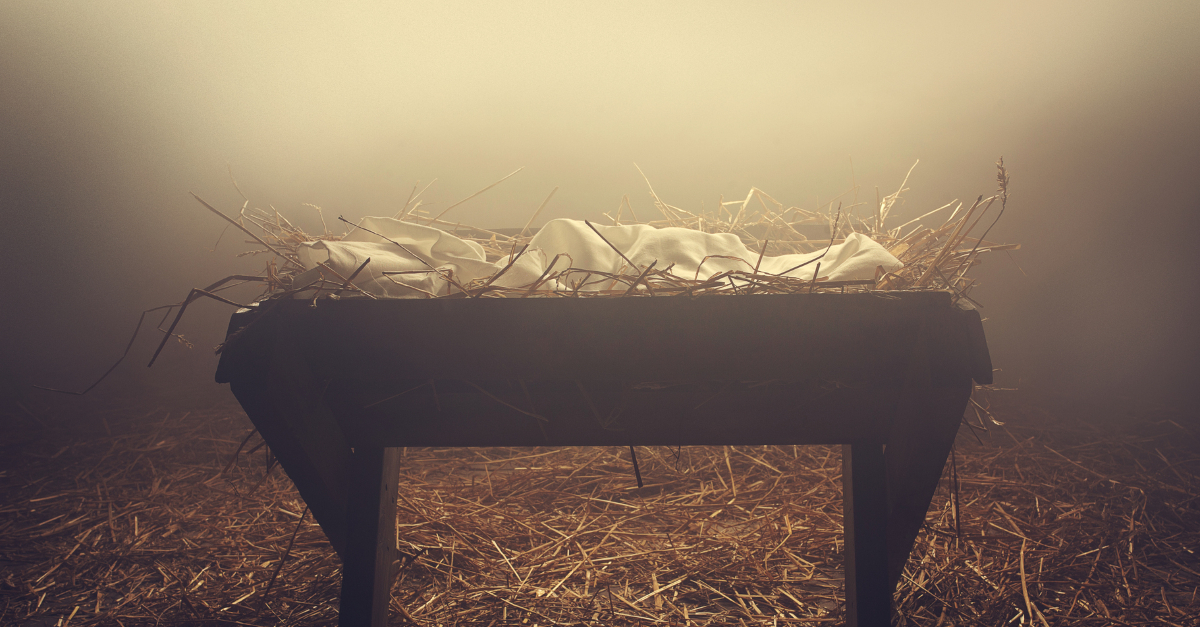
Why Was Jesus Born in a Manger
The Gospel of Luke gives a brief yet deeply meaningful account of the birth of Jesus. Luke 2:7 tells us that Mary “brought forth her firstborn son, and wrapped him in swaddling clothes, and laid him in a manger, because there was no room for them in the inn.” Every detail carries spiritual weight, and understanding the historical setting helps us see the significance of the humble place where the Savior entered the world.
The Historical Account
The word translated as “inn” in Luke 2:7 comes from the Greek word kataluma. This word most often refers to a guest room in a private home rather than a commercial establishment. In the homes of first century Judea and Galilee, people often kept animals at night in a lower area or side chamber. The family lived in the upper or main room, and visitors stayed in the attached guest room. When all guest areas were full, the only available space for travelers would be near the animals.
Because of the Roman census, Bethlehem was crowded. Families with relatives in town would stay together, and lodging was scarce. Mary and Joseph likely arrived later than others, and the guest room was already filled. The only sheltered space left was the lower room of a home where animals were kept at night. That explains why Mary placed the newborn Jesus in a manger, which was a feeding trough shaped to hold hay for livestock.
This was not a random detail. It was the exact place God chose for His Son to enter the world.
The Meaning Behind the Manger
The place where Jesus was born tells us more about the heart of God than the location itself. Several powerful truths rise from this humble setting.
The manger reveals the humility of Christ.
The Son of God did not come as a prince surrounded by earthly glory. He entered the world among the poor, the ordinary, and the overlooked. The manger shows that the Savior identifies with the weak, the weary, and the common people of the world.
The manger shows that the gospel is available to all.
Had Jesus been born in a palace, only the wealthy and influential would have approached Him. Instead, His birthplace was open to shepherds, travelers, and the simplest of people. This foreshadows His entire ministry. He came for all, regardless of class or status.
The manger fulfills prophecy and divine purpose.
The Messiah was foretold to come from Bethlehem, the city of David, yet His lowly birth demonstrated that God’s kingdom would not appear in the way human kingdoms rise. The manger stands as a symbol of God’s unexpected plan, one that confounds human pride and restores broken hearts.
The manger reflects Christ as the Bread of Life.
A manger was used to hold food for animals. In a symbolic sense, the One who would later call Himself the Bread of Life was placed in the very object used to give nourishment. He came to feed the world with truth, grace, and eternal life.
Lessons for Christians Today
The birth of Jesus in a manger remains one of the most familiar images in Christianity, but it is also one of the most challenging. It invites us to consider what God values. God chose humility over prestige. He chose the simple over the extravagant. He chose a feeding trough over royal bedding.
For believers today, the manger teaches several lessons:
-
God often works in quiet and ordinary places.
-
True greatness comes through humility.
-
The presence of Christ brings dignity and purpose even to the lowest places of life.
-
No one is too unimportant to be reached by the love of God.
The manger is more than a detail in a Christmas story. It is a declaration of who God is and how He works.
Related Hymns
Reflect on the meaning of the manger through these hymn links:
Away in a Manger
https://hymnallibrary.org/hymns/away-in-a-manger/
No Room in the Inn
https://hymnallibrary.org/hymns/no-room-in-the-inn/


No comments yet. Be the first to share your thoughts!