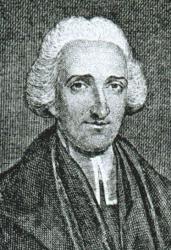
Augustus Toplady
Hymn writer & lyricist
About Augustus Toplady
Short Name: Augustus Toplady
Full Name: Toplady, Augustus, 1740–1778
Birth Year: 1740
Death Year: 1778
Biography:
Augustus Montague Toplady was born at Farnham, Surrey, on November 4, 1740. His father, Richard Toplady, was a Major in the British army and was killed at the siege of Carthagena in 1741. His mother was noted for her remarkable piety and placed him at Westminster School, London, for his early education. He later attended Trinity College, Dublin, where he graduated with an M.A.
Toplady experienced his spiritual awakening at age sixteen while visiting Ireland. During a service in a barn in Codymain, he was converted under the ministry of a layman named Morris, inspired by Ephesians 2:13. In 1762, he was ordained to the ministry in the Church of England and in 1768 became vicar of Broadhembury, Devonshire. Later, he ministered in London at the Chapel of the French Calvinists in Leicester Fields.
He became a staunch Calvinist, which led to controversy with John Wesley and the Methodists. Known for his fervent preaching and deep devotion, Toplady remained intensely pious throughout his life despite physical frailty. He died of consumption on August 11, 1778, leaving a legacy of hymns and devotional writings.
Publications and Hymns:
Toplady’s principal hymns were published in:
-
Poems on Sacred Subjects (Dublin, 1759)
-
Psalms and Hymns for Public and Private Worship (1776)
-
Contributions to The Gospel Magazine (1771–1776)
-
Hymns and Sacred Poems on a Variety of Divine Subjects (reprinted by D. Sedgwick, 1860)
-
Works, with a Memoir by W. Row, 6 vols., 1794
Among the 419 hymns in his Psalms and Hymns, notable works include:
-
Rock of Ages, Cleft for Me (1776)
-
If on a Quiet Sea (1776)
-
Object of My First Desire
-
Deathless Principle Arise
Notes:
-
Toplady’s hymns were widely used in both England and America, especially in Evangelical hymnals.
-
He was recognized for his moral and devotional strength rather than poetic imagination; his greatness lies in holiness, earnest preaching, and sincere faith rather than literary artistry.
-
His works influenced many hymnbooks and remain enduring examples of 18th-century English Calvinist hymnody.
Hymns by Augustus Toplady
| # | Title | Year | Views | |
|---|---|---|---|---|
| 1 | A Debtor to Mercy | 1771 | 328 | View |
| 2 | A Sovereign Protector I Have | 1768 | 237 | View |
| 3 | Hail, Thou Once Despised Jesus | 1776 | 249 | View |
| 4 | If on a Quiet Sea (Living by Faith) | 1772 | 510 | View |
| 5 | Rock of Ages, cleft for me | 1763 | 3148 | View |