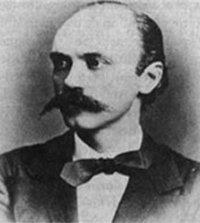
Calixa Lavallée
Hymn writer & lyricist
About Calixa Lavallée
Calixa Lavallée (1842–1891) was a Canadian-American composer, conductor, organist, pianist, and music educator best known for composing the music for “O Canada,” the national anthem of Canada. Born on December 28, 1842, in Verchères, Quebec, he grew up in a musically supportive environment shaped largely by his father, a craftsman who repaired musical instruments and later worked with the renowned organ builder Joseph Casavant in Saint-Hyacinthe. This early exposure to instruments and musical craftsmanship played a key role in shaping Lavallée’s musical talent. By the age of eleven, he was already playing the organ, and at thirteen he demonstrated remarkable skill by performing a piano recital at the Théâtre Royal in Montréal, an early indication of his prodigious musical ability.
Lavallée’s musical career soon expanded beyond Canada. As a young man, he moved to the United States, where he pursued opportunities as a performer and composer. In New Orleans, he won a notable musical competition, which helped establish his reputation as a gifted musician. He later worked as an accompanist for the Spanish violinist Olivera, with whom he toured extensively in Brazil and the West Indies. These international travels exposed him to diverse musical traditions and broadened his artistic outlook, contributing to the versatility that would characterize his later compositions.
During the American Civil War, Lavallée enlisted and served on the Union side, ultimately rising to the rank of lieutenant. This period of military service marked a significant interruption in his musical career but also demonstrated his adaptability and engagement with the broader historical events of his time. After the war, he returned to Montréal, where he resumed his musical activities, including teaching, performing, and composing. He became a respected figure in Canadian musical life and maintained strong connections with both Canadian and American musical institutions.
One of Lavallée’s most enduring contributions came in 1880 when he was commissioned by the Congrès National des Canadiens-Français to compose a patriotic piece for the Saint-Jean-Baptiste Day celebrations. The result was the music for “O Canada,” with lyrics originally written by Adolphe-Basile Routhier in French. Though initially intended as a regional patriotic anthem, the composition gradually grew in popularity and was later adopted as Canada’s national anthem. Today, “O Canada” remains his most famous and widely recognized work, securing his legacy in Canadian cultural history.
Beyond “O Canada,” Lavallée composed a wide range of musical works, including operettas, symphonic pieces, piano works, and songs. In 1887, he was elected president of the Music Teachers’ National Association in the United States, reflecting his standing in the broader North American musical community. His career demonstrates a blend of performance excellence, compositional skill, and leadership in music education.
Lavallée died on January 21, 1891, in Boston, Massachusetts. He was initially buried there but was later reinterred in 1933 in the Notre-Dame-des-Neiges Cemetery in Montréal, a symbolic return to his Canadian homeland. His legacy endures primarily through “O Canada,” but his broader contributions to nineteenth-century North American music reflect a life dedicated to musical artistry, cultural exchange, and national identity.