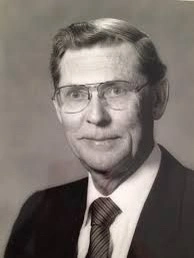
Carl A. Blackmore
Hymn writer & lyricist
About Carl A. Blackmore
Carl A. Blackmore (1904–1965) was an American gospel hymn writer and composer associated with early twentieth-century evangelical and revivalist Christian music. Although relatively little formal biographical documentation survives about his life, his extensive body of hymn texts preserved in hymnological databases reveals that he was a prolific contributor to gospel song literature, particularly in the tradition of evangelical revival meetings, radio evangelism, and mid-century church music publishing.
Born in 1904, Blackmore lived during a period when American gospel music was undergoing significant expansion, moving from regional revival traditions into widely distributed printed hymnals, radio broadcasts, and touring evangelistic campaigns. This environment provided fertile ground for hymn writers who specialized in simple, memorable, and emotionally expressive gospel songs. Blackmore’s work fits clearly within this tradition, emphasizing themes such as personal salvation, assurance of faith, daily Christian living, and the hope of heaven.
While specific details about his personal life, education, or denominational affiliation are limited, his hymns suggest a strong evangelical Christian background shaped by revivalist theology. Many of his texts focus on individual conversion experiences, the personal relationship between the believer and Jesus Christ, and the comfort of divine presence in everyday life. Titles such as “Just Let Jesus Into Your Heart,” “I Found a Hiding Place in Jesus,” and “Jesus, My Jesus, Means Everything to Me” reflect a devotional emphasis typical of mid-century American gospel music, where the language of personal testimony and intimate faith was central.
Blackmore’s output appears to have been substantial, with more than forty hymn texts attributed to his name. These include widely circulated gospel songs such as “Some Glorious Morning Sorrow Will Cease,” which reflects eschatological hope and the anticipation of Christ’s return, and “Living for Jesus as On We Go,” which emphasizes daily discipleship and Christian conduct. Many of his hymns were translated into other languages, including Spanish, Arabic, and Chinese, indicating that his work circulated beyond English-speaking congregations and was adopted into international evangelical hymnody.
The stylistic characteristics of Blackmore’s hymns are consistent across his body of work. His texts are typically straightforward in structure, often featuring repeated refrains, simple rhyming patterns, and clear doctrinal statements rather than complex theological argumentation. This simplicity made his hymns particularly suitable for congregational singing, Sunday school use, and evangelistic services where accessibility and memorability were essential. His writing often balances themes of conviction and comfort, moving between calls to repentance and assurances of God’s love and care.
Blackmore’s hymns also reflect the broader cultural context of American Christianity in the first half of the twentieth century, a period marked by revivalism, the rise of Pentecostal and Holiness movements, and the expansion of mass media evangelism. His songs align with the musical aesthetics of gospel publishers who sought to create spiritually engaging yet easily performable music for churches of varying sizes and musical abilities.
Despite the widespread use of his hymns, Carl A. Blackmore himself remains a somewhat obscure figure in historical records, with few surviving details about his personal biography beyond his name, lifespan, and musical output. This is not uncommon among gospel songwriters of his era, many of whom contributed extensively to hymnals and song collections without achieving public fame comparable to classical composers or denominational leaders.
Carl A. Blackmore stands as a representative figure of mid-twentieth-century American gospel hymnody. His work reflects the devotional, evangelistic, and accessible style of Christian music that shaped church life during his period. Through his numerous hymn texts, he contributed meaningfully to the worship practices of evangelical congregations, leaving behind a legacy of songs centered on faith in Christ, personal transformation, and the hope of eternal life.
Hymns by Carl A. Blackmore
| # | Title | Year | Views | |
|---|---|---|---|---|
| 1 | Some Golden Daybreak Jesus Will Come | 1934 | 2468 | View |