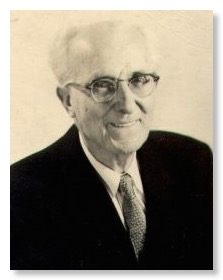
Charles F. Weigle
Hymn writer & lyricist
About Charles F. Weigle
Charles Frederick Weigle was a prolific American gospel hymn writer, evangelist, and composer whose long ministry spanned the late nineteenth and much of the twentieth century. Born on September 20, 1871, in Midland, Michigan, Weigle became one of the notable figures in early evangelical gospel music, writing hymns that emphasized personal salvation, devotion to Christ, and the joy of Christian living. His life and work reflect the broader revivalist movement that shaped American Protestant worship during his era.
Weigle originally pursued a career in evangelism and church ministry rather than music alone. He studied at the Moody Bible Institute in Chicago, a major center for evangelical training founded by Dwight L. Moody, which strongly influenced his theological outlook and musical style. Like many gospel writers of his time, Weigle combined preaching with hymn writing, using music as a tool for evangelism and spiritual encouragement. His hymns were often simple in structure, emotionally direct, and designed for congregational singing in revival meetings, churches, and evangelistic campaigns.
Throughout his career, Weigle traveled extensively as an evangelist, holding meetings across the United States and abroad. His experiences in revival settings shaped the tone of his hymns, many of which focus on themes such as personal testimony, redemption, assurance of salvation, and daily walking with Christ. One of his most famous hymns, “I Would Love to Tell You What I Think of Jesus,” reflects this testimonial style, inviting believers to share their faith openly and joyfully. This hymn became widely used in evangelical churches and remains one of his most enduring contributions to gospel music.
Another significant hymn associated with him is “Living for Jesus,” which expresses total commitment to Christ and continues to be included in many modern hymnals. This hymn, like much of his work, emphasizes surrender, discipleship, and daily Christian service. Its straightforward language and memorable melody made it particularly effective in revival contexts, where congregational participation and emotional engagement were central.
Weigle’s life also included personal hardship that deeply influenced his theology and music. One of the most frequently noted events in his biography is a period of discouragement and personal crisis later in life when he temporarily left ministry. According to accounts often repeated in hymn histories, he returned to Christian service after experiencing a renewed sense of calling, which further reinforced the themes of grace, restoration, and perseverance found in his hymns. This personal journey added emotional depth to his writings, making them resonate with believers facing doubt or struggle.
In addition to his English-language hymns, Weigle’s work was translated into multiple languages, including Spanish, Chinese, and Arabic, reflecting the global spread of evangelical Christianity in the twentieth century. His hymns were widely used in missionary contexts, particularly in Asia and Latin America, where simple gospel songs played a key role in worship and evangelism. This international reach contributed to his lasting influence beyond American church music.
Weigle lived a remarkably long life, passing away on July 3, 1966, at the age of 94. By the time of his death, he had composed dozens of hymns and gospel songs that continued to be sung in churches worldwide. His legacy is closely tied to the tradition of revivalist gospel music, which prioritizes heartfelt testimony, accessible language, and congregational participation over complex poetic structure.
Today, Charles F. Weigle is remembered as a representative figure of early American gospel hymnody. His songs continue to appear in hymnals and remain in use in evangelical and revivalist traditions, valued for their clarity, warmth, and emphasis on a personal relationship with Jesus Christ.
Hymns by Charles F. Weigle
| # | Title | Year | Views | |
|---|---|---|---|---|
| 1 | I Love to Walk With Jesus | 1904 | 1943 | View |
| 2 | No One Ever Cared for Me Like Jesus | 1932 | 3420 | View |