About Charles W. Fry
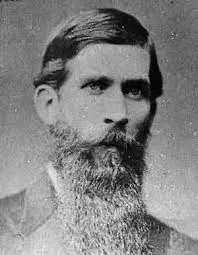
Charles William Fry was an English musician, builder, and hymn writer whose influence on Christian music is most clearly seen in his pioneering role in the development of Salvation Army brass bands. He was born in 1837 in Alderbury, Wiltshire, England, and worked professionally as a bricklayer before becoming a successful building contractor. Alongside his trade, he inherited a strong musical ability from his father and became skilled in several instruments, including the violin, cello, piano, cornet, and harmonium.
Fry was deeply involved in Methodist worship and led both an orchestra and a band at the Wesleyan chapel in Alderbury. His musical leadership in the church prepared him for a much wider influence that would come later through his connection with the early Salvation Army movement.
In 1878, when the newly formed Salvation Army began its work in Salisbury, its members often faced hostility and even physical attacks while preaching in the open air. Moved by their situation, Fry offered to protect them. The following day, he and his three sons arrived, not with weapons of violence, but with musical instruments, cornets, a trombone, and a small tuba. While they were prepared to defend the workers if necessary, it was their music that proved most powerful. As they played, crowds gathered, creating opportunities for the preaching of the gospel.
This moment marked the beginning of what is recognized as the first Salvation Army brass band. The success of Fry’s musical support drew the attention of William Booth, who quickly saw the value of brass music in evangelism. Booth encouraged the formation of similar bands, and this became a defining feature of Salvation Army ministry worldwide.
Fry and his family band continued to assist in evangelistic campaigns, helping to attract listeners and support the proclamation of the gospel through music. His contribution was not merely musical but also strategic, helping to shape a method of outreach that combined sound, visibility, and message in a powerful way.
Charles W. Fry died in Glasgow, Scotland, in 1882, just one year after writing his hymn. Though his life was relatively short, his legacy endures in the global tradition of Salvation Army bands, which continue to use music as a means of drawing people to hear the message of Christ.