About Christopher Smart
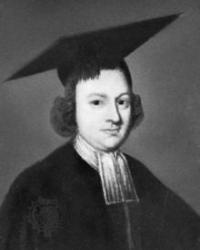
Christopher Smart was born in 1722 at Shipbourne, Kent, England. He was educated at Pembroke Hall, Cambridge, where he distinguished himself academically and poetically. During his time there, he won the prestigious Seatonian Prize for English religious poetry five times, four of them in consecutive years. He graduated with a Bachelor of Arts degree in 1747.
In 1753, Smart moved to London and devoted himself to literary pursuits. Although he showed remarkable poetic talent, his life was marked by instability. He neglected both his financial affairs and his health, which eventually led to poverty and mental illness. His struggles became severe, and he spent time in confinement due to his condition.
Despite these hardships, Smart continued to write, producing works that reflected deep religious devotion and poetic insight. His writings often reveal a profound awareness of God’s presence and a desire for spiritual guidance. He died in 1771 while confined in the King’s Bench Prison.
His Poems were published in two volumes in 1771, preserving much of his literary legacy. Among his hymn contributions are “Father of light, conduct my feet” (Divine Guidance) and “I sing of God, the mighty Source” (God the Author of All). These hymns demonstrate his strong theological focus, emphasizing God as the source of light, wisdom, and creation.
Christopher Smart’s life stands as a testimony to both human frailty and enduring faith. Even amid suffering and mental distress, his works continue to point readers and worshipers toward the glory and guidance of God.