About Clara H. Scott
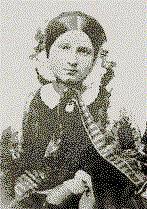
Clara Harriett Fiske Jones Scott (1841–1897) was a pioneering American composer, hymnwriter, and music publisher, recognized for her contributions to sacred music in the 19th century. Born in Elk Grove, Illinois, she was the daughter of a farmer, and in 1856 her family relocated to Chicago, where she began formal musical training at the newly established Chicago Musical Institute, founded by Chauncy M. Cady and William Bradbury in 1858. Her early education there provided her with a foundation in both musical theory and performance, equipping her for a lifelong career in music ministry and composition.
After completing her studies, Clara took a position at Lyons Girl’s Seminary in Lyons, Iowa, also founded in 1858. While teaching there, she met Henry Clay Scott, an employee of Scott & Ovington Brothers, a wholesale crockery firm, and they married in 1861 in McGregor, Iowa. The couple had two daughters, Medora and Mary, and in the 1870s the family moved to Austin, Illinois, near Chicago. During this period, Clara developed her career as a composer and hymnwriter, producing works that would become widely sung in American churches.
Clara Scott was the first woman in the United States to publish a volume of anthems, with her landmark The Royal Anthem Book in 1882. Encouraged by her friend Horatio Palmer, she published three major collections of songs and hymns that combined accessible melodies with devotional depth, often intended for congregational and choral use. Her music emphasized clarity, spiritual sincerity, and emotional expression, reflecting both her rigorous training and personal faith.
In 1895, she and her husband, who had become an invalid, returned to Chicago. Tragically, in 1897, Clara died in a buggy accident near Dubuque, Iowa, when her horse collided with a coping stone, causing the vehicle to overturn. She and her friend Martha Hay were thrown from the buggy and died instantly. Her funeral was attended by musicians, teachers, publishers, and friends, and her influence was commemorated by performances of her own compositions. Clara Scott’s work continues to be remembered for its pioneering role in American sacred music and for her lasting contribution as a female composer in a largely male-dominated field.