About Cyrus S. Nusbaum
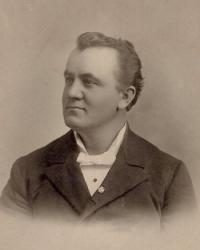
Cyrus S. Nusbaum (1861–1937)
Cyrus Sylvester Nusbaum was an American Methodist minister, evangelist, and hymn writer whose life reflected deep commitment to pastoral service and spiritual encouragement. Born in 1861 in Middlebury, Indiana, Nusbaum pursued his early education locally and later taught in Marion County, Kansas. In 1886, he married Harriett Eleanor Erwin, and they had two children, Hazel and Mark. That same year, he was ordained as a Methodist minister, beginning a ministry that spanned numerous congregations in Kansas, including Douglass, Goddard, Wichita, and Kingman.
Nusbaum served in several leadership roles within the Methodist Church. He was educational secretary at Southwestern College in Winfield, Kansas from 1895 to 1897, pastor at Ottawa, Kansas from 1897 to 1903, and presiding elder of the Independent District from 1903 to 1907. He returned to pastoral work in Parsons, Kansas from 1908 to 1914, before being appointed as an evangelist for the Methodist Conference. During World War I, he served as a U.S. Army Captain, working as an American Red Cross inspector in France. Following the war, Nusbaum frequently spoke on the Redpath Lyceum circuit and conducted evangelistic meetings in Kansas, Nebraska, Oklahoma, and Texas. In recognition of his contributions, Southwestern College awarded him a Doctor of Divinity degree. In later years, he continued ministry in smaller Kansas congregations and served as a “supply preacher” at Lost Springs and Antelope. He died in Wichita in 1937 and was buried in Kingman, Kansas.
Nusbaum’s hymn writing was closely tied to his personal spiritual experiences. One of his best-known hymns, "Would You Live for Jesus, and Be Always Pure and Good?", was composed after a particularly challenging year in ministry. After attempting to pastor seven different locations simultaneously on a very low salary, he felt discouraged and rebellious when reassigned to the same circuit at the annual conference. Late at night, in prayer, he surrendered his will to God, and this act of consecration inspired him to write both the lyrics and music for the hymn. His works reflect a theme of reliance on God’s power and encouragement for faithful Christian living, resonating with congregations across generations.