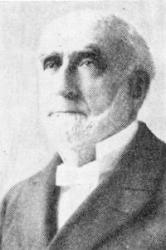
About DeWitt Clinton Huntington
DeWitt Clinton Huntington (1830–1912) was an American Methodist Episcopal minister, educator, and author whose life reflected dedication to pastoral service, Christian education, and community leadership. Born in Townsend, Vermont, he was one of nine children and pursued higher education at Syracuse University in New York. He was ordained in 1853, the same year he married Frances Harriett Davis, with whom he had three children: Charles, Thomas, and Horace. Following her death in 1866, he married Mary Elizabeth Moore in 1868, and they had a daughter, Mary Frances.
Huntington served in numerous pastorates across New York, Pennsylvania, and Nebraska, including Rochester, Syracuse, Olean, Bradford, and Lincoln. He demonstrated remarkable personal initiative, designing and overseeing the construction of a brick sanctuary that could seat over 1,100 worshipers and later planning an addition that was completed two decades after its conception. His pastoral work was marked by commitment and sacrifice, exemplified during the 1893 economic depression when he forewent his salary to continue ministering to his congregation.
In addition to pastoral duties, Huntington contributed to higher education as Chancellor of Nebraska Wesleyan University from 1898 to 1908, initially without pay. Upon retirement as Chancellor emeritus, he continued teaching as a professor of English Bible and Ethics. He authored several books, including Is the Lord among us?, Half century messages to pastors and people, and A documentary history of religion in America since 1877, addressing both spiritual and historical themes. Huntington was also actively involved in civic affairs, serving on the boards of the local telephone company and Windom Bank.
Known for his principled convictions, Huntington opposed football at Nebraska Wesleyan, believing it had no place in a Christian institution, though the sport was reinstated after his death. He passed away in Lincoln, Nebraska, from pleura-pneumonia. His legacy is commemorated in the city through a street and an elementary school bearing his name, reflecting a life of enduring influence in ministry, education, and the broader community.