About Francis of Assisi
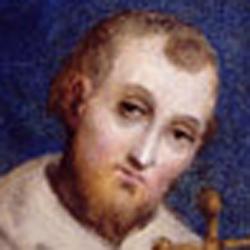
Saint Francis of Assisi (1182–1226), born Giovanni di Pietro di Bernardone in Assisi, Italy, was one of the most influential figures in Christian history, renowned for his deep devotion to poverty, simplicity, and the care of all living creatures. His father, Pietro, a prosperous silk merchant, nicknamed him Francesco, meaning “the Frenchman,” in recognition of his fondness for French culture and the family’s commercial connections. Francis spent his youth enjoying the privileges of wealth and the life of a soldier, but a series of spiritual experiences, including a vision on a pilgrimage to Rome and a mystical encounter with Christ in the chapel of San Damiano, turned him toward a life wholly devoted to God. He renounced his inheritance and familial comforts, choosing instead to embrace poverty and service to the poor.
In 1209, Francis founded the Order of Friars Minor, commonly known as the Franciscan Order, after gaining approval from Pope Innocent III. The friars, also called "lesser brothers," lived in simplicity and itinerant preaching, sharing the Gospel directly with ordinary people. Francis’ influence extended to the founding of the Order of Poor Clares for women, led by St. Clare of Assisi, and the Third Order of Penitents, which allowed laypeople to live according to Franciscan principles without withdrawing from secular life. He traveled extensively, including a journey to Egypt during the Crusades where he met the Sultan al-Kamil in an effort to promote peace and witness to the Gospel. He also brought the Gospel to Italy and encouraged the restoration of neglected chapels in the Assisi region, including the Porziuncola, which became the center of his religious activity.
Francis’ legacy includes his love for all creatures, his creation of the first recorded Nativity scene in Greccio, and his mystical reception of the stigmata in 1224, marking him as the first recorded individual to bear Christ’s wounds. He withdrew gradually from public affairs to focus on prayer and the spiritual guidance of his followers, completing his life in 1226 while reciting Psalm 142. Canonized in 1228 by Pope Gregory IX, Francis is the patron saint of animals, the environment, and one of the two patron saints of Italy. His life continues to inspire devotion, humanitarian work, and ecological care, reflecting a profound commitment to living the teachings of Christ with humility, joy, and compassion.