About Frank C. Huston
Frank Claude Huston (1871–1959) was an American hymn writer, composer, evangelist, and minister whose life was deeply shaped by music and Christian service. He was born on September 12, 1871, in Orange, Indiana, into a musically inclined family. From an early age, he demonstrated remarkable musical ability, playing the cornet in a local band by the age of twelve, singing in vocal groups by seventeen, and conducting church music by eighteen. He further developed his skills through study at the Moody Bible Institute and under notable teachers such as Daniel B. Towner and Charles H. Gabriel. These influences helped shape his future as a gospel songwriter and leader in church music.
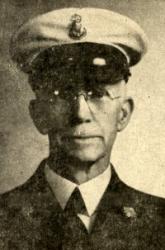
Huston’s career combined ministry, music, and evangelism. After a short period as a public school teacher, he became a singing evangelist and traveled with the Charles Reign Scoville evangelistic team. He was ordained in 1915 in the Christian Church (Disciples of Christ), and throughout his life he remained active in ministry. He also served in various patriotic roles, gaining the nickname “the Singing Chaplain” due to his musical ministry and involvement during World War I. Though appointed as a chaplain for the 150th Field Artillery, a clerical error prevented him from joining the regiment before the war ended. Nevertheless, he continued to serve in patriotic and military-related roles, including volunteering with the Coast Guard Auxiliary during World War II, where he served as a recruiter even into his seventies.
As a hymn writer, Huston was highly productive, composing over 400 songs, many of which combined strong doctrinal messages with accessible melodies. His best-known hymns include It Pays to Serve Jesus (1909) and The Christ of the Cross (1924), both of which he wrote in both text and tune. Other notable works include Keep on Believing, The Word of God Shall Stand, and Lead On, O Christ, Thou Holy One. He also operated his own publishing company in Indiana and was a member of the American Society of Composers, Authors, and Publishers. In his later years, he lived at the Florida Christian Home in Jacksonville, where he remained active in music and correspondence until his death on October 14, 1959. His legacy endures through his extensive contributions to gospel music and his lifelong dedication to Christian ministry.