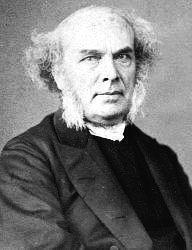
Horatius Bonar
Hymn writer & lyricist
About Horatius Bonar
Birth/Death: 19 December 1808 – 31 July 1889
Place of Birth: Edinburgh, Scotland
Horatius Bonar was born into a devout and intellectually gifted family. His father, James Bonar, served as the second Solicitor of Excise in Edinburgh and was noted for his learning and piety. Bonar was educated at the High School and the University of Edinburgh. After completing his studies, he was licensed to preach and initially served as assistant to Rev. John Lewis at St. James’s, Leith. In November 1837, he was ordained as minister of the North Parish in Kelso, and in 1843 he joined the Free Church of Scotland during the Disruption, continuing his pastoral ministry there. Later, in 1866, he was called to Chalmers Memorial Church in Edinburgh, and in 1883 he served as Moderator of the General Assembly of the Free Church of Scotland.
Bonar was a prolific hymn-writer and poet, whose work has deeply influenced congregational worship in Scotland, Britain, and America. His hymns often combined devotional reflection with theological richness, focusing on Christ as the substitute, the universal offer of grace, the privilege of assurance, communion with God, and the hope of the Second Advent. His best-known hymns include I Heard the Voice of Jesus Say, Here, O My Lord, I See Thee Face to Face, A Few More Years Shall Roll, and Come, Lord, and Tarry Not. Nearly 100 of his hymns were widely included in British and American hymnals.
Bonar wrote both prose and poetry, publishing works such as Songs for the Wilderness (1843–44), The Bible Hymn Book (1845), Hymns of Faith and Hope (three series, 1857–1866), The Song of the New Creation (1872), Hymns of the Nativity (1879), and Communion Hymns (1881). Even in his lifetime, his hymns were celebrated for their pensive reflection, tender sympathy, and theological depth.
Dr. Bonar’s life reflected a balance of intellectual rigor and devotional warmth. His work remains a lasting contribution to Reformed hymnody, inspiring believers to meditate on Christ, God’s grace, and the eternal hope of heaven. He passed away in Edinburgh on 31 July 1889, leaving a legacy of spiritual songs that continue to bless the Church.
Hymns by Horatius Bonar
| # | Title | Year | Views | |
|---|---|---|---|---|
| 1 | All Praise to Him | 1861 | 215 | View |
| 2 | Come, Lord Jesus (The Church Has Waited Long) | 1845 | 247 | View |
| 3 | Come, Lord, and Tarry Not | 1846 | 619 | View |
| 4 | Father, We Thank Thee | 1885 | 467 | View |
| 5 | Fill Thou My Life | 1866 | 249 | View |
| 6 | Glory Be to God the Father | 1866 | 230 | View |
| 7 | Go, Labor On: Spend and Be Spent | 1843 | 454 | View |
| 8 | Hallelujah for the Cross! | 1882 | 1192 | View |
| 9 | Here, O my Lord | 1855 | 1017 | View |
| 10 | Here, O Our Lord, We See You Face to Face | 1855 | 176 | View |
| 11 | I Hear the Words of Love | 1861 | 881 | View |
| 12 | I Heard the Voice of Jesus Say | 1846 | 2080 | View |
| 13 | I Lay My Sins on Jesus | 1843 | 1097 | View |
| 14 | I Was A Wandering Sheep | 1843 | 439 | View |
| 15 | No Blood, No Altar Now | 1857 | 915 | View |