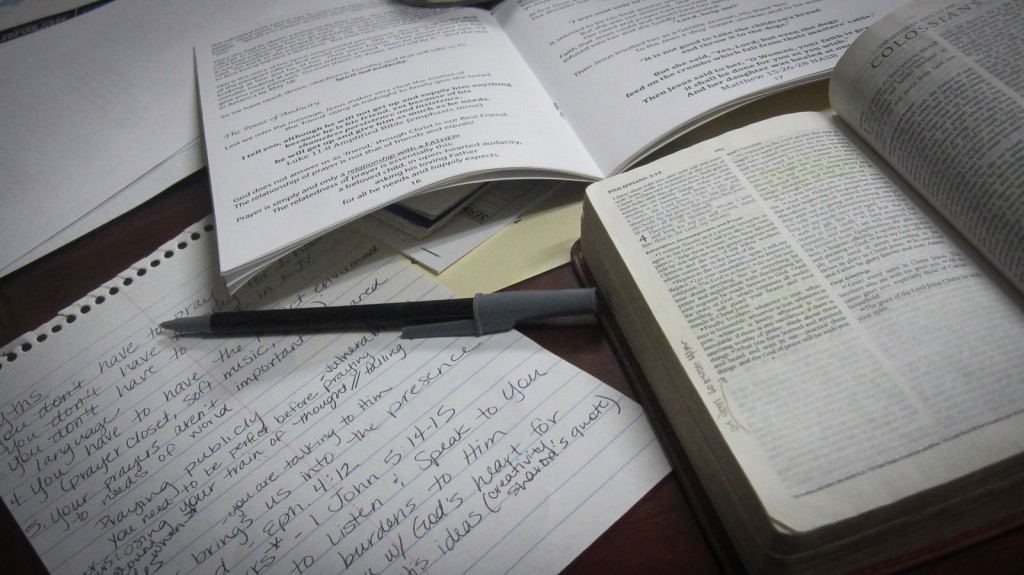
How to Write a Bible Lesson
Writing a Bible lesson is more than organizing information. It is the careful work of handling God’s Word faithfully, clearly, and helpfully so that others can understand, believe, and obey what Scripture teaches. Whether you are teaching children, youth, new believers, or adults, a well-prepared Bible lesson honors God and serves His people.
“All scripture is given by inspiration of God, and is profitable for doctrine, for reproof, for correction, for instruction in righteousness.”
2 Timothy 3:16, KJV
Below are practical, step by step tips to help you write a solid Bible lesson.
1. Begin With Prayer and Dependence on God
Before opening commentaries or writing outlines, begin with prayer. Teaching Scripture is a spiritual task that requires spiritual help.
“Open thou mine eyes, that I may behold wondrous things out of thy law.”
Psalm 119:18, KJV
Ask God for understanding, clarity, humility, and love for those you will teach. A lesson prepared without prayer may be informative, but it will lack spiritual power.
2. Choose a Clear Bible Passage or Topic
A good Bible lesson starts with focus. Choose either:
-
A specific passage of Scripture, or
-
A clear biblical topic supported by multiple passages
Avoid trying to cover too much at once. Depth is usually more helpful than breadth.
“For God is not the author of confusion, but of peace.”
1 Corinthians 14:33, KJV
Write down the main passage at the top of your lesson and read it several times in its context.
3. Study the Text Carefully Before Writing
Never start writing before you understand the passage. Observe what the text actually says.
Ask basic questions:
-
Who is speaking?
-
Who is the audience?
-
What is happening?
-
Why is this being said?
-
How does this fit the surrounding verses?
“Study to shew thyself approved unto God, a workman that needeth not to be ashamed, rightly dividing the word of truth.”
2 Timothy 2:15, KJV
Use cross references and basic word study when helpful, but let Scripture interpret Scripture.
4. Identify the Main Teaching Point
Every Bible lesson should have one central truth. This is sometimes called the big idea.
Ask yourself:
-
What does God want the listener to know?
-
What does God want the listener to believe?
-
What does God want the listener to do?
Write this main idea in one clear sentence. This will guide everything else in the lesson.
5. Create a Simple Lesson Structure
A clear structure helps people follow and remember the lesson. A simple and effective structure includes:
Introduction
Explain the context and why the lesson matters. Use a question, situation, or short illustration that connects with real life.
Explanation
Walk through the passage verse by verse or idea by idea. Explain what the text means, not just what it says.
Application
Show how the truth applies to daily life. Biblical teaching always leads to obedience.
“But be ye doers of the word, and not hearers only.”
James 1:22, KJV
6. Use Scripture Generously and Accurately
A Bible lesson should sound like the Bible. Let Scripture do the heavy lifting.
Avoid building lessons on opinions, stories, or traditions. Support every major point with clear verses.
“For the word of God is quick, and powerful.”
Hebrews 4:12, KJV
Always read verses in context and avoid twisting Scripture to fit a message.
7. Explain, Do Not Assume
Never assume your audience already understands biblical terms or background.
Explain words like:
-
Grace
-
Faith
-
Repentance
-
Justification
-
Sanctification
Jesus often explained simple truths patiently and clearly.
“And he opened his mouth, and taught them.”
Matthew 5:2, KJV
Clarity is an act of love.
8. Make Application Practical and Specific
Good Bible lessons answer the question, “So what?”
Instead of vague application, give clear examples:
-
How should this change our thinking?
-
How should this affect our behavior this week?
-
How should this shape our prayers or relationships?
“Teaching us that, denying ungodliness and worldly lusts, we should live soberly, righteously, and godly.”
Titus 2:12, KJV
9. Keep Christ at the Center
Every Bible lesson should ultimately point to Christ. Even Old Testament lessons find their fulfillment in Him.
“And beginning at Moses and all the prophets, he expounded unto them in all the scriptures the things concerning himself.”
Luke 24:27, KJV
Ask how the passage reveals God’s character, humanity’s need, and God’s redemptive plan.
10. End With Review and Encouragement
Conclude your lesson by briefly reviewing the main points. Reinforce the central truth and encourage response.
You may end with:
-
A summary statement
-
A reflective question
-
A short prayer
“Now unto him that is able to do exceeding abundantly above all that we ask or think.”
Ephesians 3:20, KJV
Writing a Bible lesson is a sacred responsibility. It requires prayer, study, clarity, and love for God’s people. When Scripture is handled faithfully and applied wisely, God uses it to teach, correct, and transform lives.




No comments yet. Be the first to share your thoughts!