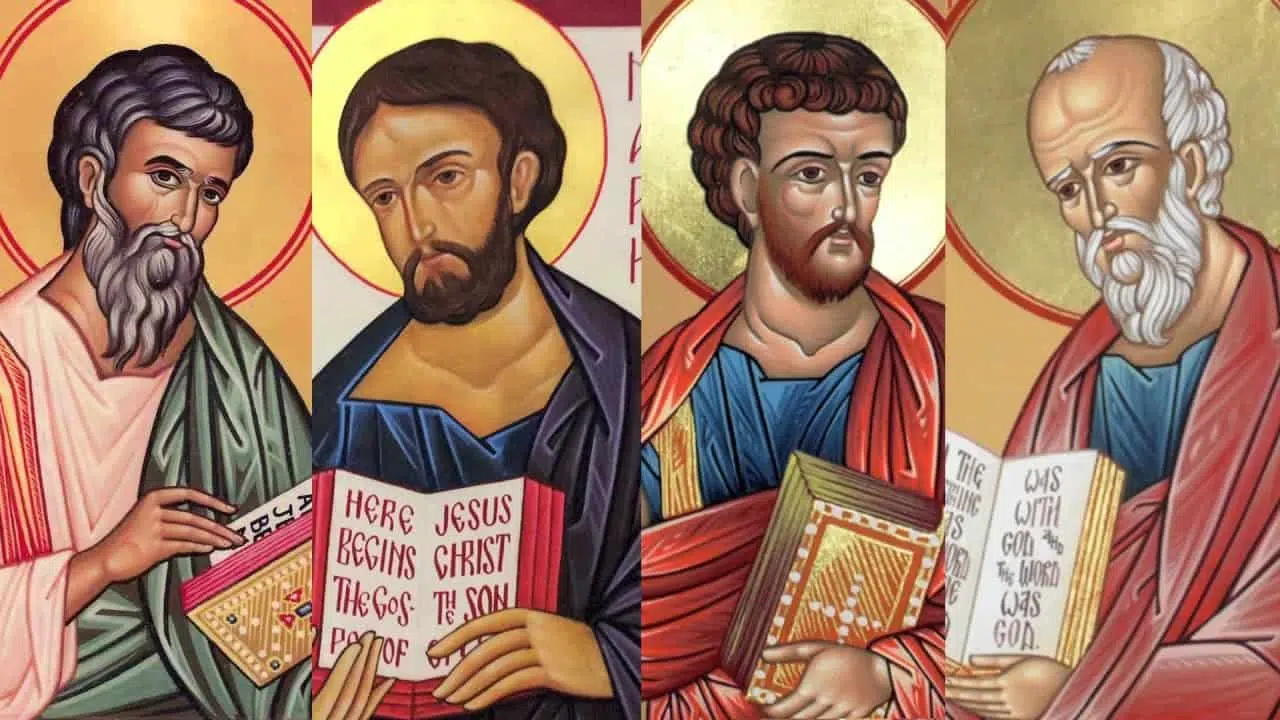
The Story of Jesus Christ According to the Four Gospels, in Chronological Order
The four Gospels do not give four different stories of Jesus. They give four perspectives on one life, written to different audiences, emphasizing different themes, yet united around the same historical person. When read together, Matthew, Mark, Luke, and John form a single, coherent narrative that moves from eternity past to resurrection glory (John 1:1; Luke 1:3).
Jesus’ story does not begin in Bethlehem, but in eternity. John opens by declaring that the Word existed with God and was God, sharing in creation itself (John 1:1–3). Before angels, before Abraham, before time, Christ already was (John 8:58). The incarnation marks the moment when the eternal Son entered history, taking on human nature without ceasing to be divine (John 1:14).
The announcement of His earthly coming begins with angelic visitations. Gabriel appears to Zechariah, foretelling the birth of John the Baptist, who would prepare the way of the Lord (Luke 1:13–17). Soon after, Gabriel appears to Mary, declaring that she would conceive by the Holy Spirit and bear the Son of God (Luke 1:35). Matthew emphasizes that this fulfilled prophecy, showing Jesus as the promised Messiah born of a virgin (Isaiah 7:14; Matthew 1:22–23).
Jesus is born in Bethlehem during the reign of Caesar Augustus. Luke records the humility of His birth, laid in a manger, announced first to shepherds rather than kings (Luke 2:7–11). Matthew records the visit of the Magi, Gentile worshipers guided by Scripture and a star, signaling that Jesus came not only for Israel but for the nations (Matthew 2:1–2). Herod’s violent response leads to the family’s flight into Egypt, fulfilling prophecy and paralleling Israel’s story (Matthew 2:15).
After Herod’s death, Jesus grows up in Nazareth. The Gospels pass quickly over His childhood, emphasizing His true humanity and obedience (Luke 2:40). One brief glimpse shows Him at twelve years old, conscious of His unique relationship with the Father, yet submissive to His earthly parents (Luke 2:49–51). Silence marks most of these years, reminding readers that God’s greatest work often unfolds quietly.
The public ministry begins with John the Baptist preaching repentance and announcing the nearness of God’s kingdom (Mark 1:4). Jesus comes to be baptized, not for repentance, but to identify with sinners and inaugurate His mission (Matthew 3:15). At His baptism, the Trinity is revealed openly. The Father speaks, the Spirit descends, and the Son stands in obedience (Matthew 3:16–17).
Immediately after, Jesus is led into the wilderness to be tempted by Satan. Where Adam failed, Jesus obeys. Where Israel grumbled, Jesus trusted. Each temptation is answered with Scripture, demonstrating submission to God’s Word over fleshly desire (Matthew 4:4). His victory sets the pattern for His entire ministry.
Jesus begins preaching the kingdom of God, calling people to repent and believe (Mark 1:15). He calls disciples, not from religious elites, but from fishermen and ordinary men, showing that His kingdom advances by grace, not status (Matthew 4:18–22). John highlights early signs, including turning water into wine, revealing His glory quietly before crowds recognized Him openly (John 2:11).
His ministry expands rapidly. He heals the sick, casts out demons, forgives sins, and teaches with authority unlike the scribes (Matthew 7:28–29). The Sermon on the Mount reveals the heart of the kingdom, exposing outward religion and calling for inward righteousness (Matthew 5:20). Jesus does not abolish the law but fulfills it, revealing its true intent (Matthew 5:17).
Conflict with religious leaders grows steadily. Jesus claims authority over the Sabbath, forgives sins, and calls God His Father in a unique sense, escalating hostility (Mark 2:7; John 5:18). Parables become a primary teaching method, revealing truth to the humble while concealing it from the hardened (Matthew 13:11).
John’s Gospel highlights extended discourses, where Jesus identifies Himself as the bread of life, the light of the world, the good shepherd, and the resurrection and the life (John 6:35; John 8:12; John 10:11; John 11:25). These are not metaphors alone. They are claims of divine identity, which provoke belief in some and rage in others (John 10:33).
As opposition intensifies, Jesus begins preparing His disciples for His death. He speaks plainly of suffering, rejection, crucifixion, and resurrection, though they struggle to understand (Mark 8:31). The transfiguration briefly unveils His glory, confirming Him as the Son whom the Father commands them to hear (Matthew 17:5).
The final week begins with the triumphal entry into Jerusalem. Crowds hail Him as king, unknowingly fulfilling prophecy (Zechariah 9:9; Matthew 21:9). Yet the same city soon rejects Him. Jesus cleanses the temple, exposing corrupted worship and intensifying opposition (Mark 11:15–17).
During the last supper, Jesus institutes the new covenant, interpreting His impending death as sacrificial and redemptive (Luke 22:20). John records intimate teaching, promising the Holy Spirit and explaining love, obedience, and union with Christ (John 14:16–17).
Jesus is betrayed, arrested, falsely tried, and condemned. Though innocent, He remains silent before His accusers, fulfilling prophecy (Isaiah 53:7; Matthew 26:63). He is crucified under Pontius Pilate, publicly executed, mocked, and buried in a known tomb (Mark 15:24–39).
On the third day, Jesus rises bodily from the dead. The tomb is empty, witnesses multiply, and fear turns into faith (Luke 24:6). He appears to individuals and groups over forty days, proving the reality of the resurrection (Acts 1:3). Thomas’ confession captures the Gospel’s conclusion. My Lord and my God (John 20:28).
Jesus ascends into heaven, commissioning His disciples to proclaim repentance and forgiveness to all nations (Matthew 28:19–20). The story does not end with His departure. It continues through the church, empowered by the Spirit, awaiting His return (Acts 1:11).
The four Gospels together present one Jesus, fully God and fully man, promised, revealed, rejected, crucified, risen, and reigning. Their unified testimony invites not mere admiration, but faith (John 20:31).




No comments yet. Be the first to share your thoughts!