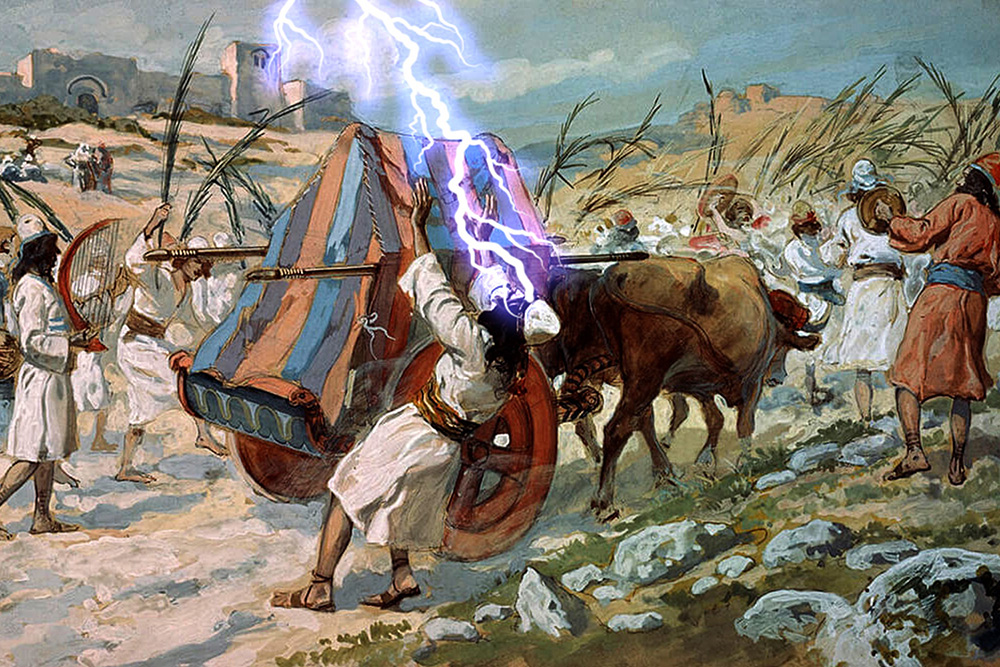
Why Did Uzzah Die for Touching the Ark of the Covenant?
Uzzah reached out to steady the ark of the covenant when the oxen stumbled, and God struck him dead instantly. “And the anger of the LORD was kindled against Uzzah; and God smote him there for his error” (2 Samuel 6:7, KJV).
To understand why Uzzah died, we must examine what the ark represented, what God had clearly commanded, and what this incident reveals about God’s holiness and human responsibility.
The Ark of the Covenant Represented the Holy Presence of God
The ark of the covenant was not a religious symbol or ceremonial object. It represented the very presence and throne of God among Israel. God said, “There I will meet with thee, and I will commune with thee from above the mercy seat” (Exodus 25:22). The ark was placed in the Most Holy Place and was associated with God’s glory, holiness, and covenant.
Because of this, the ark was to be treated with extreme reverence and strict obedience. God is not merely powerful. He is holy, meaning completely set apart from sin and human familiarity (Isaiah 6:3).
God Had Given Clear Instructions on How the Ark Was to Be Moved
God did not leave Israel without instruction. He specifically commanded that the ark was to be carried only by Levites from the family of Kohath, using poles, and never touched directly. “They shall not touch any holy thing, lest they die” (Numbers 4:15). The poles were designed so the ark could be transported without human contact (Exodus 25:13–15).
However, David and the people ignored these commands. Instead of carrying the ark, they placed it on a new cart, copying Philistine practice rather than God’s law (2 Samuel 6:3; 1 Chronicles 13:7). This act revealed carelessness toward God’s Word, even though the intentions may have seemed good.
Uzzah Touched the Ark in Direct Disobedience
When the oxen stumbled, Uzzah reached out and touched the ark. Though his action appeared helpful, it violated a direct command of God. Scripture states plainly that Uzzah died “for his error” (2 Samuel 6:7). His action demonstrated a dangerous assumption that human hands were cleaner or safer than God’s holy command.
The issue was not that the ark might fall. The issue was that God’s holiness cannot be handled casually. “Who shall ascend into the hill of the LORD? or who shall stand in his holy place? He that hath clean hands, and a pure heart” (Psalm 24:3–4).
The Sin Was Irreverence, Not Ignorance
Uzzah was not ignorant of the ark. He had lived near it for years in his father’s house (1 Samuel 7:1). He should have known God’s law. His action reflected familiarity without reverence, which Scripture consistently warns against. “God is greatly to be feared in the assembly of the saints, and to be had in reverence of all them that are about him” (Psalm 89:7).
Familiarity with holy things can dull the fear of the Lord. Uzzah treated the ark as an object to be managed rather than a manifestation of God’s holy presence.
God’s Judgment Taught Israel the Fear of the Lord
Uzzah’s death was not merely punishment. It was instruction. Scripture says that David became afraid of the Lord that day (2 Samuel 6:9). Later, David corrected his error by moving the ark according to God’s commands. “None ought to carry the ark of God but the Levites” (1 Chronicles 15:2).
When the ark was transported correctly, God blessed the journey, not cursed it (1 Chronicles 15:26). This shows that obedience brings blessing, while disobedience, even well-intentioned, brings consequences.
This Event Reveals God’s Unchanging Holiness
The God who struck Uzzah is the same God who warns believers today. “For our God is a consuming fire” (Hebrews 12:29). While believers are under grace, grace does not cancel God’s holiness. The New Testament also records severe judgment when God’s holiness was treated lightly, such as with Ananias and Sapphira (Acts 5:1–11).
God desires obedient worship, not pragmatic worship. “To obey is better than sacrifice” (1 Samuel 15:22).
The Gospel Perspective
The ark points forward to Christ, who bore the holiness and judgment of God on our behalf. In Christ, believers can draw near to God with confidence, but never with irreverence. “Let us have grace, whereby we may serve God acceptably with reverence and godly fear” (Hebrews 12:28).
Uzzah died because he violated God’s clear command and treated God’s holiness casually. The incident teaches that good intentions do not replace obedience, and God’s holiness must never be assumed or managed.
The story of Uzzah calls every believer to examine how they approach God. Worship is not about convenience or emotion. It is about reverence, obedience, and submission to God’s revealed will.



No comments yet. Be the first to share your thoughts!