About Francis H. Rowley
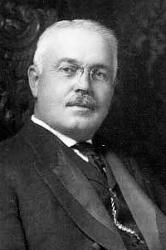
Francis Harold Rowley (1854–1952) was an American Baptist minister, hymn writer, and prominent advocate for animal welfare. Born in Hilton, New Hampshire, he was the son of a physician and pursued higher education at Rochester University, graduating in 1875, followed by Rochester Theological Seminary in 1878. That same year he married Ida Amelia Babcock, and together they had four children. Rowley’s ministerial career spanned over three decades, including pastorates in Titusville, Pennsylvania; North Adams, Massachusetts; Oak Park, Illinois; Fall River, Massachusetts; and Boston, Massachusetts, where he served at the First Baptist Church. He also preached at Appleton Chapel, Harvard University, and served as a trustee of the University of Chicago Divinity School from 1894 to 1896.
Rowley gained wide recognition as a hymn writer, most famously for I Will Sing the Wondrous Story, which he composed in a single night at the request of musician Peter Bilhorn. The hymn achieved international popularity and was adapted in numerous languages, including Spanish, Portuguese, German, Hawaiian, and Tagalog. Its widespread use demonstrates Rowley’s enduring impact on Christian worship. He was also connected to the evangelical music movement of his time, collaborating with notable musicians like Ira Sankey. Anecdotes of Salvation Army bands performing his hymns in London without knowing he was nearby highlight the reach of his work and the spontaneous influence his compositions had on congregations around the world.
Beyond his hymnody, Rowley was a tireless humanitarian and pioneer in animal welfare reform. Motivated by the mistreatment of animals in slaughterhouses, he lobbied for humane methods of slaughter and served as Secretary of the American Humane Association from 1892 to 1900. He held leadership roles with the Massachusetts Society for the Prevention of Cruelty to Animals, the American Humane Education Society, and the Angell Memorial Animal Hospital, and contributed to hospital work in Boston. His legacy in education and animal welfare includes the establishment of the Rowley School of Human Understanding in 1947 and the Rowley Memorial Hospital in Springfield, Massachusetts, named in his honor. Rowley’s life exemplified a combination of spiritual devotion, musical creativity, and compassionate activism, leaving a lasting impact on both church and society.