



The Christian Was Never Meant to Walk Alone
4 days, 22 hours ago
I Will Sing the Wondrous Story
Lyrics
1. I will sing the wondrous story
Of the Christ who died for me.
How He left His home in glory
For the cross of Calvary.
I was lost, but Jesus found me,
Found the sheep that went astray,
Threw His loving arms around me,
Drew me back into His way.
Of the Christ who died for me.
How He left His home in glory
For the cross of Calvary.
I was lost, but Jesus found me,
Found the sheep that went astray,
Threw His loving arms around me,
Drew me back into His way.
2. I was bruised, but Jesus healed me;
Faint was I from many a fall;
Sight was gone, and fears possessed me,
But He freed me from them all.
Days of darkness still come o'er me,
Sorrow's paths I often tread,
But the Savior still is with me;
By His hand I'm safely led.
Faint was I from many a fall;
Sight was gone, and fears possessed me,
But He freed me from them all.
Days of darkness still come o'er me,
Sorrow's paths I often tread,
But the Savior still is with me;
By His hand I'm safely led.
3. He will keep me till the river
Rolls its waters at my feet;
Then He'll bear me safely over,
Where the loved ones I shall meet.
Yes, I'll sing the wondrous story
Of the Christ who died for me,
Sing it with the saints in glory,
Gathered by the crystal sea.
Rolls its waters at my feet;
Then He'll bear me safely over,
Where the loved ones I shall meet.
Yes, I'll sing the wondrous story
Of the Christ who died for me,
Sing it with the saints in glory,
Gathered by the crystal sea.
Bible Reference
Psalm 89:1
About This Hymn
“I Will Sing the Wondrous Story” is one of the most beloved gospel hymns of the late 19th century, combining the heartfelt lyrics of Francis H. Rowley (1854–1952) with the stirring melody composed by Peter P. Bilhorn (1865–1936). Set in the 8.7.8.7 meter with chorus, the hymn reflects the spirit of Psalm 89:1 (KJV): “I will sing of the mercies of the Lord forever: with my mouth will I make known thy faithfulness to all generations.” The hymn’s joyful declaration of Christ’s redemptive love and the believer’s personal testimony has made it a favorite in churches and evangelistic meetings for generations.
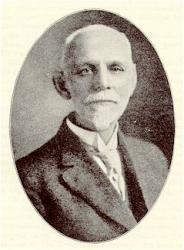
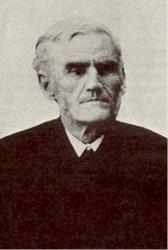
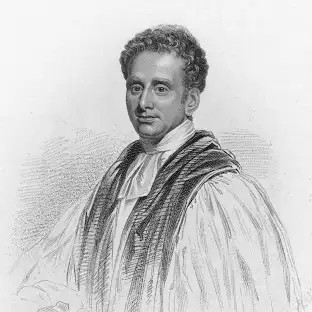
Francis H. Rowley was born on July 25, 1854, in Hilton, New York, and later became a Baptist minister, serving congregations in Massachusetts, Pennsylvania, and Illinois. The story behind the writing of this hymn begins in 1886, when Rowley was pastoring the First Baptist Church of North Adams, Massachusetts. During that time, the church and surrounding community were experiencing an extraordinary spiritual awakening. Assisting Rowley in these efforts was a gifted young Swiss-American musician, Peter P. Bilhorn. After one evening service, Bilhorn suggested to Rowley, “Why don’t you write a hymn for me to set to music?” That night, inspired by the revival atmosphere and his own joy in the gospel, Rowley composed the verses that would become this treasured hymn. The original line was “Can’t You Sing the Wondrous Story?” but when it was published the following year by Ira D. Sankey, the title and refrain were changed to the more declarative and celebratory “I Will Sing the Wondrous Story.”
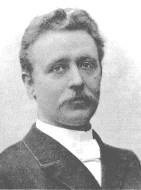
Peter P. Bilhorn, the composer, had a remarkable life story of his own. Born in Mendota, Illinois, in 1865, he experienced hardship early on. After the death of his father, young Peter had to leave school at the age of eight to help support his family. By fifteen, he had moved to Chicago, where his impressive singing voice gained attention in secular circles. However, at the age of twenty, Bilhorn experienced a dramatic spiritual transformation after attending a revival meeting led by Dr. George F. Pentecost with music by George Stebbins. This conversion changed the direction of his life entirely, launching him into full-time Christian service as an evangelist and gospel musician.
One of Bilhorn’s most innovative contributions was the invention of a small, portable folding organ, designed for use in street meetings and missionary settings. Weighing just sixteen pounds, the organ proved incredibly useful and became widely distributed, bearing his name. In 1887—the same year the hymn was published—Bilhorn began manufacturing these organs, further expanding the reach of his ministry. Over the course of his life, Bilhorn composed or arranged approximately 2,000 gospel songs. Among these, “I Will Sing the Wondrous Story” remains one of his finest and most enduring compositions. He also wrote “Sweet Peace, the Gift of God’s Love,” another hymn that remains cherished in Christian hymnody.
Peter Bilhorn was more than a musician—he was a fervent soul-winner. His passion for evangelism was evident in both word and deed. One notable story from his ministry took place in Reedsburg, Wisconsin, where he was leading revival services. Late one bitterly cold night, he felt an unusual prompting to leave his room with his folding organ. Wandering down the street, he noticed a light in a basement and knocked. Inside, he found a group of men gambling. Seizing the opportunity, he began playing and singing “Where is My Wandering Boy Tonight?” The message of the song touched their hearts, and six of the men gave their lives to Christ that very night. Stories like this reveal Bilhorn’s deep commitment not just to singing about the wondrous story of Jesus, but also to proclaiming it boldly wherever God led him.
The hymn “I Will Sing the Wondrous Story” was eventually presented by Rowley and Bilhorn as a gift to Ira D. Sankey, the famous gospel singer and music publisher associated with Dwight L. Moody’s evangelistic campaigns. Sankey was immediately struck by the beauty and spiritual power of the hymn, and he included it in the 1887 edition of Gospel Hymns and Sacred Songs and Solos. The song quickly became one of the most popular and widely sung selections in the entire collection, and its influence spread across denominational and national boundaries. It has remained a staple in hymnals ever since, known for its memorable refrain:
“Yes, I’ll sing the wondrous story
Of the Christ who died for me,
Sing it with the saints in glory,
Gathered by the crystal sea.”
The story of this hymn is a vivid reminder of the role that music can play in personal testimony and corporate worship. It grew out of revival, was shaped by personal transformation, and was spread through gospel passion. As Longfellow once wrote, “God sent His singers upon the earth with songs of sadness and of mirth, that they might touch the hearts of men, and bring them back to heaven again.” Likewise, minister Maltbie D. Babcock wisely observed, “The Christian life that is joyless is a discredit to God and a disgrace to itself.” “I Will Sing the Wondrous Story” continues to affirm the joy of salvation and the believer’s calling to share it with boldness and gladness.
From the Dictionary of Hymnology
Related terms and concepts automatically matched to this hymn.
John Quincy, Adam History
Biographical entry for John Quincy Adams (1767–1848), sixth President of the United States, diplomat, Unitarian, and writer of hymns and psalm versions.
Read moreI give immortal praise Hymnology
A publication, structural, and textual history of Isaac Watts's famous trinitarian doxology, charting its shift from first-person to corporate praise across historical hymnals.
Read moreAdams, Sarah History
Biographical entry for Sarah Adams (1805–1848), nee Flower, English Unitarian hymn writer best known as the author of "Nearer, my God, to Thee."
Read more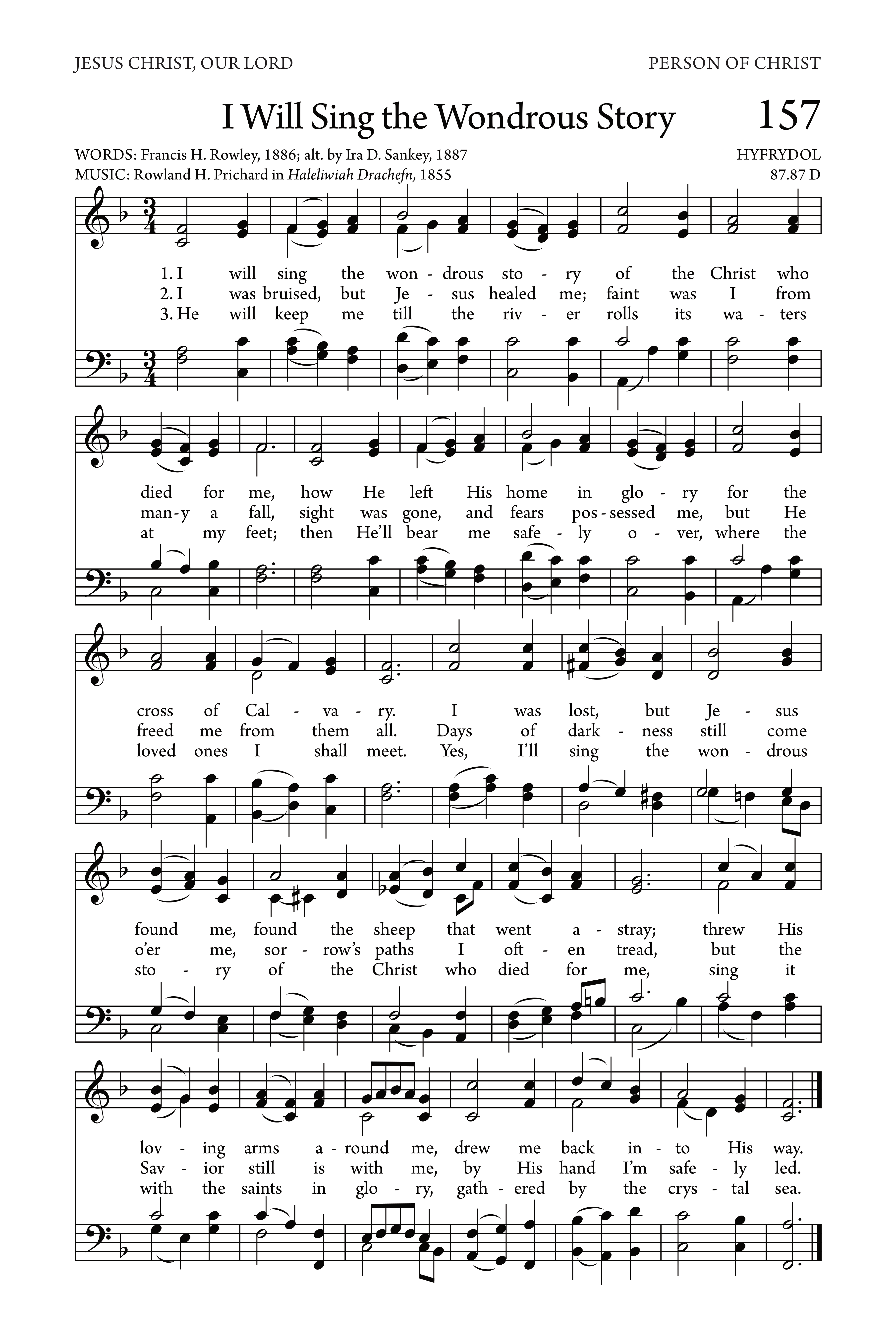

📬 Subscribe to Our Devotional Updates
Receive weekly hymns, devotionals, and website features directly in your inbox.
✅ Thank you! You'll start receiving our updates soon.
⭐ Recommend This Hymn
Share this beautiful hymn with others
This hymn is found in these hymnals
Open the hymnal that contains this hymn:
Hymns with the same subject
More hymns about Cross, Jesus Christ
- Because He Lives — Bill & Gloria Gaither
- How Deep the Father's Love for Us — Stuart Townend
- Heaven Came Down and Glory Filled my Soul — John W. Peterson
- The Old Rugged Cross — George Bennard
- Look and Live — William A. Ogden
- In Christ alone (my hope is found) — Stuart Townend
- Victory in Jesus - (I Heard an Old, Old Story) — E. M. Bartlett
- Jesus, Keep Me Near the Cross — Fanny Crosby
More hymn subjects
Explore other themes across the library.
Hymns about Consecration
Hymns about Courage
Hymns about Judgment
Hymns about Lord's Day
Hymns about Endtime
Hymns about Christian Love
Hymns about Healing
Hymns about Guidance
Browse all subjects →
Latest Updated Hymnals
-
Open
 The People's HymnalUpdated 4 days, 3 hours ago · 1961
 -
Open
 Book of Common Praise (BoCP1915)Updated 2 weeks, 4 days ago · 1915
 -
Open
 Our Great Redeemer's PraiseUpdated 2 months, 2 weeks ago · 2022
 -
Open
 The Parish Hymnal (1873)Updated 2 months, 2 weeks ago · 1873
 -
Open
 Book of Common Praise (BCP1998)Updated 3 months ago · 1998
Hymn Information
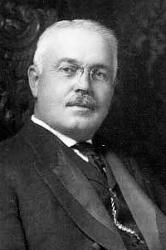
To view the author's biography, click their name above.
MIDI File
Ready to load
Download MIDI
Popular Hymns
Recent Blog Posts




Popular Blog Posts
-
 Easter vs Passover: How a Biblical Feast Bec…3 months, 4 weeks ago
 -
 Lessons from the Book of Haggai: Putting God…2 months ago
 -
 The Full Story of the Birth of Jesus Christ:…7 months, 3 weeks ago
 -
 The 30 Most Famous Christmas Hymns and Carols11 months ago
 -
 50 Most Sung Hymns Today: the Most Beloved S…8 months, 1 week ago
Visit Us on Social Media
Latest from X (Twitter)
Tweets by HymnalLibraryLatest from Facebook
Latest on YouTube
Loading latest video...
Daily Bible Verse
Disclaimer
The hymns, sheet music, MIDI files, and related content on this website are provided for educational and research purposes only.
- Public Domain: Many of the hymns featured here are in the public domain and may be freely used.
- Copyrighted Works: Some hymns may still be under copyright protection. Where applicable, permission has either been requested from the copyright owner, or the content is shared under the principles of fair use for educational purposes.
⚠️ Important Notice: If you wish to reproduce, distribute, or use any copyrighted hymn beyond personal study or educational use, you must obtain permission directly from the copyright holder. This website does not grant any rights for commercial use yet.
If there is any other question please address it to us in our Contact Page, for further assistance. Thank you for using the site. May God Bless You.
Recently Added · Dictionary of Hymnology
Browse dictionary →- All hail, dear Conqueror, all hail 4 days, 23 hours ago · History 46
- All glory to our gracious Lord 5 days, 2 hours ago · History 43
- All glory to God in the sky 5 days, 2 hours ago · History 47
- All glory and praise to Jesus our Lord 5 days, 2 hours ago · History 55
- All glorious God, what hymns of praise 5 days, 2 hours ago · History 44