About Friedrich von Canitz
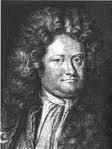
Friedrich Rudolf Ludwig, Freiherr von Canitz (1654–1699), was a distinguished German diplomat and poet whose life was a rare blend of worldly prestige and profound Christian devotion. Born in Berlin on November 27, 1654, just months after his father’s death, Canitz was raised in an environment of high legal and political status. He pursued an elite education at the Universities of Leyden and Leipzig, followed by an extensive grand tour of Italy, France, England, and Holland between 1675 and 1677. This international exposure prepared him for a remarkable career in the service of the Great Elector, Frederick William of Brandenburg, whom he accompanied during military campaigns in Pomerania.
A Career of Imperial Service
Canitz’s diplomatic trajectory was swift and successful. By 1680, he was appointed chief magistrate of Zossen and Trebbin, and he quickly rose through the ranks to become a counselor of the Court and Legation. Known for his skill in statecraft, he executed numerous sensitive missions under Frederick William and his successor, Frederick III. His contributions to the empire were so highly regarded that, in 1698, he was elevated to the dignity of a Baron by Emperor Leopold I. Despite the pressures of political life and his role as a privy counselor, Canitz maintained a disciplined internal spiritual life that would eventually define his literary legacy.
Literary Legacy and "Spiritual Poems"
Although Canitz was a poet throughout his life, his work was not published until after his death in Berlin on August 11, 1699. His secular poems were often described as stilted and heavily modeled after Greek and Latin classics, yet they provided a necessary "healthy influence" that counteracted the coarseness prevalent in 17th-century German literature. However, his 24 spiritual poems—published anonymously in 1700 by Joachim Lange under the title Nebenstunden unterschiedener Gedichte (Leisure Hours of Various Poems)—are considered his finest achievements. These works reflected his personal piety and offered a counterbalance to the rigid formality of his diplomatic persona.
The Morning Hymn and Cultural Impact
Of his religious works, the morning hymn "Seele du musst munter werden" (Come, my soul, thou must be waking) remains his most celebrated contribution to the church. The hymn is often cited as a mirror of his own life, particularly a poignant story from his final hours: as the dawn broke into his sickroom, he asked to be moved to the window to look at the rising sun one last time. He famously remarked:
"Oh! if the appearance of this earthly and created thing is so beautiful and quickening, how much more shall I be enraptured at the sight of the unspeakable glory of the Creator Himself."
Translated into English by figures such as H.J. Buckoll and Catherine Winkworth, his hymns have since been incorporated into major collections, including the American Episcopal Hymnal and Church Hymns, securing his place in the history of international hymnody.