About George Ratcliffe Woodward
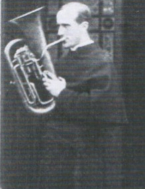
George Ratcliffe Woodward (1848–1934) remains one of the most distinctive and scholarly figures in the history of English hymnody and carol restoration. Born in Birkenhead, Cheshire, Woodward’s intellectual journey led him to Caius College, Cambridge, where he distinguished himself academically, earning his B.A. with honors in 1872 and his M.A. in 1875. This rigorous academic foundation laid the groundwork for his eventual ordination into the Church of England in 1874, marking the beginning of a long and dedicated clerical career that saw him serving in six different parishes across London, Norfolk, and Suffolk. While his pastoral duties were significant—including his notable tenure as the Curate of St. Mark’s, Marylebone Road—it was his work as a linguist, translator, and musical researcher that secured his place in liturgical history.
Woodward was a man of immense linguistic talent, possessing a deep command of Greek, Latin, and German. This expertise allowed him to act as a bridge between the ancient and continental hymn traditions and the English-speaking world. However, Woodward was not a conventional translator. He was a staunch advocate for a rigid theory of translation that prioritizes structural integrity over contemporary accessibility. He firmly believed that a translation should not merely convey the content of the original text but should also strictly reproduce its specific meter and rhyme scheme.
This uncompromising approach to translation created a unique literary paradox. On one hand, his work preserved the technical "soul" of the original hymns with a fidelity few others could match. On the other hand, this rigidity often resulted in phrasing that felt archaic or awkward to the average worshiper. Consequently, while his works were masterpieces of scholarly precision, they did not always succeed as "singable" hymns for the masses. Today, hymnologists and historians view Woodward’s translations less as common congregational songs and more as invaluable resources and primary source material for understanding the structure of ancient liturgical music.
Woodward’s impact was amplified through his prolific collaborative efforts, most notably with the composer Charles Wood. Together, they embarked on a mission to revive the "carol" as a sophisticated and historical musical form. Their partnership yielded several seminal collections that transformed the English carol repertoire:
-
The Cowley Carol Book (Three series: 1901, 1902, 1919): This series remains a cornerstone of carol scholarship, reintroducing many medieval and traditional melodies to the public.
-
Songs of Syon (1904, 1910): A vast collection of hymns that drew heavily on Woodward's translations from German and Latin sources.
-
An Italian Carol Book (1920) and the Cambridge Carol Book (1924): These later works continued his theme of sourcing traditional European melodies and providing them with scholarly English contexts.
Beyond his own publications, Woodward was a silent architect of one of the most influential hymnals in history: The English Hymnal (1906). Much of the "unfamiliar" music and the authentic medieval melodies introduced in that volume were the direct result of Woodward’s exhaustive research. His work helped shift the focus of English church music away from Victorian sentimentality toward a more robust, historically grounded aesthetic.
Woodward’s commitment to historical accuracy is perhaps best exemplified by his work with the Piae Cantiones of 1582. In 1910, he produced a definitive edition of this Finnish collection of late medieval Latin songs, ensuring that these ancient tunes were preserved for modern academic study. His passion for the Eastern tradition was equally evident in his 1922 publication, Hymns of the Greek Church, which provided English readers with a rare glimpse into the liturgical poetry of the Byzantine world.
Even during his later years in Highgate, London, where he passed away in 1934, Woodward remained a figure of immense respect. Though he might be remembered by some as a "difficult" poet due to his strict adherence to meter, his legacy is one of uncompromising quality and preservation. He was a guardian of liturgical heritage, ensuring that the complex beauty of the past was not lost to the convenience of the present. For the modern student of musicology, George Ratcliffe Woodward stands as a towering figure who prioritized the truth of the original text above all else.