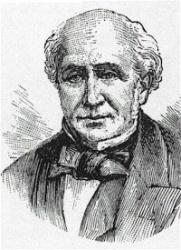
About George Rawson
George Rawson (1807–1889) stands as a prominent figure in nineteenth-century English hymnody, particularly within the Congregational and Baptist traditions. Born on June 5, 1807, in Leeds, England, Rawson spent much of his professional life practicing as a solicitor. Despite his demanding legal career, he harbored a deep passion for spiritual literature and sacred music, eventually earning a reputation as a meticulous and refined hymn writer. His modest nature was reflected in his choice of pseudonym, "A Leeds Layman," which he used to contribute to the religious discourse of his time without seeking personal fame.
Rawson’s entry into the world of hymnological compilation began in earnest in 1853. He was invited to assist Congregational ministers in Leeds to create a comprehensive worship volume titled Psalms, Hymns, and Passages of Scripture for Christian Worship. This book, which became widely known as the Leeds Hymn-book, served as the debut platform for many of Rawson's original compositions. His work was not limited by denominational boundaries; in 1858, he collaborated with Rev. Dr. Green and other Baptist leaders to prepare Psalms and Hymns for the use of the Baptist Denomination. This spirit of ecumenical cooperation was a hallmark of his career, as he sought to provide the broader Christian church with language that was both scripturally sound and aesthetically pleasing.
The hymns of George Rawson are frequently praised for their refinement of thought and delicacy of language. While critics of the era, such as those featured in John Julian’s Dictionary of Hymnology, noted that his work might not always reach the "first rank" of global fame, they consistently highlighted his "great excellence" and propriety. Rawson was known for his "recasts"—the practice of taking existing hymns by other authors and refining them to improve their flow or theological clarity.
In the latter half of his life, Rawson began consolidating his lifetime of work. In 1876, he published Hymns, Verses and Chants, a collection containing eighty original pieces and numerous liturgical chants. Nearly a decade later, in 1885, he released Songs of Spiritual Thought through the Religious Tract Society (R.T.S.), which included revised versions of his previous work along with new additions. Interestingly, some contemporary scholars observed that Rawson’s tendency to revise his own work sometimes "weakened" the raw power of the original texts, yet his commitment to perfection remained steadfast until his death on March 25, 1889.
Several of Rawson’s hymns became staples of nineteenth-century worship and continue to be recognized by hymnologists today. Among his most widely known pieces are:
-
"By Christ redeemed, in Christ restored" – A poignant reflection on the Holy Communion.
-
"Come to our poor nature's night" – A prayerful invocation of the Holy Spirit.
-
"Father in high heaven dwelling" – A classic evening hymn.
-
"Reaper, behold the fields are white" – A stirring call to missions and evangelism.
Rawson’s versatility allowed him to write for various liturgical needs, ranging from burial services, with hymns like "Captain and Saviour of the host", to Sunday school songs such as "Jesus, the Lord, our Righteousness." His ability to capture the solemnity of Saturday evening ("Soul, thy week of toil is ended") as well as the hope of the Ascension ("Christ to heaven is gone before") demonstrated a broad emotional and spiritual range.
Today, George Rawson is remembered as a vital contributor to the "Golden Age" of English hymnody. With approximately fifty of his hymns appearing in various collections well into the 20th century, his legacy is one of a "Leeds Layman" whose solicitor's precision and poet's heart helped shape the devotional life of thousands. He is buried in Arno’s Vale Cemetery in Bristol, leaving behind a body of work that continues to offer "gentle voices" of patience and hope to the faithful.