About George W. Crofts
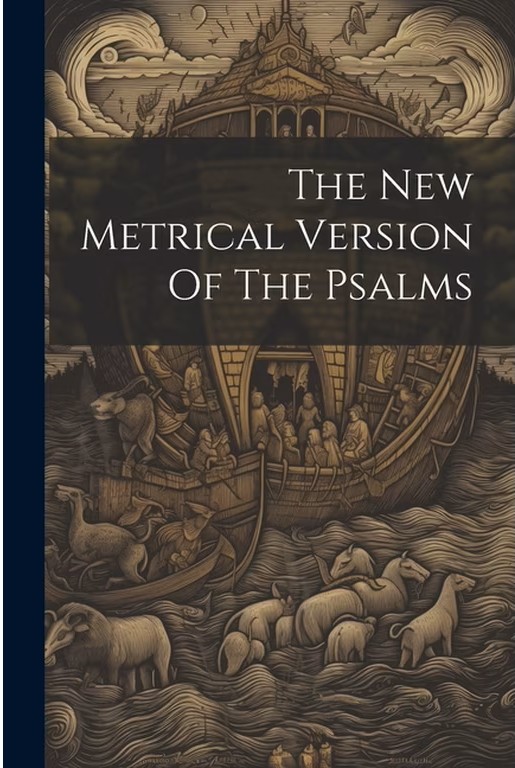
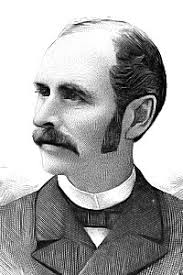
George W. Crofts (1842–1909) belongs to a group of nineteenth-century hymn writers whose personal biographies remain largely shadowed by time, yet whose creative output was significant and widely distributed during their era. While historical records offer "little data" on his personal life beyond his role as an ordained minister (often referred to in texts as Rev. G. W. Crofts), the legacy of his ministry is vividly preserved through a prolific collection of sacred texts and hymns.
Crofts was active during the late Victorian and early Edwardian periods, a time when the "Gospel Song" movement was at its zenith. His work reflects the evangelical fervor of the age, characterized by themes of spiritual warfare, the urgency of salvation, and the comfort of Christ’s presence. The sheer volume of his work—at least 43 recognized hymn texts—suggests a man deeply committed to the musical liturgy of the church.
One of the most striking characteristics of Crofts’ writing is his focus on the active Christian life. He frequently employed military and labor metaphors to inspire congregants to service. This "muscular Christianity" is evident in several of his most popular pieces:
-
"Move forward, valiant men and strong": This hymn appeared in at least 37 different instances across various hymnals, marking it as one of his most successful compositions. It served as a rallying cry for the faithful to advance their spiritual mission.
-
"Go, work today, the Lord commands": A direct appeal to the Christian work ethic and the necessity of immediate service.
-
"O army of the living God, why stand ye idle here?": A challenging text aimed at mobilizing the church body.
His work was not limited to English-speaking congregations. The presence of German translations such as "Auf, auf zum Werk! Auf, säume nicht" (Arise, arise to work! Arise, delay not) and "Voran, ihr Christen, stark und kühn" indicates that his message of spiritual mobilization resonated within immigrant communities and international missions.
Contrasting his more militant calls to action, Crofts also possessed a talent for writing deeply personal and reflective devotional verse. He had a gift for capturing the quiet reliance of the believer on the Savior.
One of his most enduring devotional thoughts is found in "How blest the thought that Jesus knows," which appeared in ten different hymnal instances. This text offers a sense of divine empathy, reassuring the singer that their inner struggles and circumstances are understood by Christ. Similarly, his hymn "Holy Spirit while we bend" showcases his ability to write liturgical prayers for the "bending" or humble heart, seeking the descent of grace.
Other notable titles that highlight this gentler, more contemplative side include:
-
"Don't keep Jesus waiting, waiting evermore": A tender, persuasive gospel invitation that saw significant use in 19 different publications.
-
"O to be something, dear Savior, I pray": A classic expression of spiritual surrender and the desire for divine purpose.
-
"I shall be satisfied at last": A hymn of hope focusing on the eventual peace of the afterlife.
Crofts’ hymns covered nearly every aspect of the Christian experience, from Sunday School songs like "How Jesus loved the little ones" to patriotic spirituals such as "America, Immanuel's land." He even contributed to the era's fascination with the "Crimson Cross" and the blood of the atonement in his text, "What is the cross, the crimson cross?"
The fact that his name appears as an author, adapter, and arranger across dozens of hymnals throughout the late 1800s and early 1900s speaks to his versatility. While we may not know the details of the parishes he served or the cities where he lived, the "Rev. G. W. Crofts" seen in the margins of old hymnbooks represents a voice that helped shape the emotional and spiritual vocabulary of thousands of worshippers. His life ended in 1909, just as the era of the classic gospel hymn was beginning to transition, but his "valiant" and "longing" verses remain a testament to a life dedicated to the ministry of song.