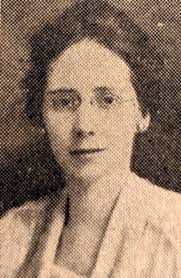
About Grace Reese Adkins
While her biographical details remain elusive in many standard hymnological records, the legacy of Grace Reese Adkins is clearly defined by her focus on childhood faith and evangelism. Her work is characterized by a "primary-level" simplicity, making profound theological truths accessible to the youngest members of the church through song and rhythm.
Adkins' compositions primarily appear in collections designed for Sunday schools and juvenile worship. Her lyrics often utilize nature and daily activities as metaphors for God’s care, a technique that was popular in mid-20th-century Christian education.
A survey of her 10 recognized texts reveals three major categories of focus:
1. Nature and the Creator
Adkins frequently used the physical world to explain the presence and power of God to children. These songs often function as both lessons in observation and acts of worship.
-
"All the flowers have bowed their heads": A personification of nature in reverence to God.
-
"This is the way the wind doth blow": A tactile, rhythmic song often used in early childhood ministry to teach about the unseen power of the Holy Spirit or God’s providence.
-
"My Heavenly Father is so strong": A foundational text emphasizing the protection and omnipotence of God in a way that feels secure to a child.
2. The Life and Sacrifice of Christ
Even when writing for children, Adkins did not shy away from the core tenets of the gospel, though she handled them with great lyrical care.
-
"They led Him away to Calvary": A simplified narrative of the Passion.
-
"Have you heard of the Savior dear": An invitational hymn designed to introduce children to the person of Jesus.
-
"By and by, when I look on His face": Her most widely circulated hymn (appearing in at least seven different hymnal instances). It focuses on the "Blessed Hope" and the joy of meeting Christ in eternity.
3. Daily Christian Living
Many of her songs were "action songs" or "play songs" that integrated faith into a child's standard routine.
-
"All through the day, While I'm at play": A prayer for constant companionship with God.
-
"Children served the blessed Savior": An encouraging look at biblical examples of children serving God, aimed at fostering a sense of ministry in young congregants.
Literary Style
The works of Grace Reese Adkins (often signed simply as G. R. A.) are notable for their:
-
Anapestic and Dactylic Rhythms: These meters create a "galloping" or "lilting" feel that is naturally engaging for children.
-
Internal Questioning: In songs like "How do I know about God and His love?", she uses a rhetorical style to help children articulate their own faith.
-
Visual Imagery: Her use of "dear little flowers" and "strong" fathers helps bridge the gap between the abstract and the concrete.
Though her life story may not be as well-documented as the great prelates of the 19th century, the seven instances of "By and by, when I look on His face" suggest that Grace Reese Adkins provided a vital musical vocabulary for generations of young believers. Her work remains a testament to the belief that the "blessed Savior" is best introduced through the simplicity of a song.