About Graf von Zinzendorf
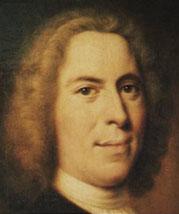
Nicolaus Ludwig, Count von Zinzendorf, was a pivotal figure in 18th-century Christianity, serving as the "Second Founder" and bishop of the Moravian Brethren (Unitas Fratrum). Born into Austrian nobility in Dresden on May 26, 1700, he bypassed a traditional life of worldly wealth to become one of the most fervent missionary organizers and hymn writers in church history.
Zinzendorf is best known for establishing the community of Herrnhut ("The Lord’s Watch") on his estate in Saxony, which became the launchpad for the first Protestant world missionary movement. His influence extended to John Wesley, who adopted Moravian concepts regarding class organization, church government, and congregational singing.
Hymnody and Literary Style
Zinzendorf was a staggeringly prolific writer, credited with over 2,000 hymns. His work is defined by "Heart Religion"—a deep, emotional, and personal devotion to the crucified Christ.
Characteristics of His Work:
-
The "Blood and Wounds" Theology: Especially between 1743 and 1750, Zinzendorf’s hymns focused intensely on the physical sufferings of Jesus. While some critics found this imagery "objectionable" or "perverted" in its familiarity, it provided a profound sense of comfort and intimacy for the Moravian community.
-
Noble Simplicity: His best works are characterized by lyric grace, unshaken faith in reconciling grace, and a spirit of total self-consecration.
-
Lack of Self-Restraint: Because he wrote so much and revised so little, many of his hymns are considered diffuse or exaggerated. Later editors, like Albert Knapp in 1845, often heavily rewrote his texts to modernize them.
Major Contributions to English Hymnody
Though he wrote in German, Zinzendorf’s hymns entered the English-speaking world primarily through the translations of John Wesley and later through the Moravian Hymn Books.
1. "Jesu, geh' voran" (Jesus, Still Lead On)
Perhaps his most famous hymn, it remains a staple in modern worship. It serves as a prayer for guidance through the "rougher ways" of life toward the "heavenly shore." (A stanza of this was drawn from his morning hymn Glanz der Ewigkeit).
2. "Christi Blut und Gerechtigkeit" (Jesus, Thy Blood and Righteousness)
Translated by John Wesley in 1739, this hymn is a cornerstone of Methodist and Moravian theology, emphasizing that the believer's only standing before God is the righteousness of Christ.
3. "Ich bin ein kleines Kindelein" (I Am a Little Child, You See)
A simple, beautiful catechetical hymn for children, showcasing Zinzendorf’s ability to translate complex theology into the language of a child’s faith.
4. "Herz und Herz vereint zusammen" (Heart and Heart Together Bound)
A hymn of Christian unity and brotherly love, reflecting the foundational principles of the Herrnhut community.
Key Historical Milestones
| Year | Event |
| 1700 | Born in Dresden, Germany. |
| 1722 | Established Herrnhut for Moravian refugees. |
| 1731 | Resigned public duties to focus entirely on missionary work. |
| 1734 | Received license to preach from the University of Tübingen. |
| 1737 | Consecrated as a Bishop of the Moravian Brethren. |
| 1741-43 | Traveled to America (specifically Pennsylvania) to organize Moravian societies. |
| 1760 | Died at Herrnhut on May 9. |
Legacy
Zinzendorf’s legacy is preserved not just in the Moravian Church, but in the global missionary spirit of Protestantism. He believed that the "apostle of the United Brethren" should be willing to "spend and be spent" for the Gospel. While his poetic style was often uneven, his "gospel sweetness and holy fervor" continue to influence Christian worship through the enduring power of his most reverent hymns.