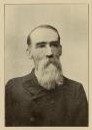
About James A. Crutchfield
James Allen Crutchfield was an American poet and songwriter active at the turn of the 20th century. While his personal biography remains largely in the shadows of history, his literary legacy is anchored by his 1906 collection, "Miscellaneous Poems," published in Chicago. His work is representative of the late Victorian and early Edwardian transition in American religious poetry, where formal verse was increasingly adapted for use in popular gospel hymnody and Sunday School songbooks.
Crutchfield’s most enduring contribution to the church is the hymn "There waits for me a glad tomorrow." First appearing in the early 1900s, the text focuses on the Christian hope of a future life free from earthly toil and sorrow. Its optimistic, forward-looking imagery resonated with the evangelical sentiment of the era, leading to its inclusion in over 20 different hymnal collections. The "glad tomorrow" theme was a staple of the "Better Land" genre of hymns that sought to provide comfort to a generation navigating the rapid industrialization and social changes of the early 20th century.
His writing often drew directly from biblical narratives and apocalyptic imagery. In the hymn "Two women shall be grinding at the mill," Crutchfield utilized the dramatic warnings found in the Gospel of Matthew regarding the Second Coming of Christ. This particular work demonstrates his ability to translate stark scriptural warnings into rhythmic, memorizable verse. Additionally, his hymn "There is a land all bright" continued the tradition of describing heaven as a place of perpetual light and beauty, a common motif in the "White City" era of American urban and religious thought.
Crutchfield is categorized among the "quiet" contributors to American hymnody—writers who self-published their poetry and saw it travel through the grassroots network of church songbooks and denominational publishers. By publishing his work in Chicago, a major hub for religious printing at the time, he ensured his verses reached a national audience. He is remembered as a poet who possessed a keen sense of meter and a deep commitment to the traditional themes of salvation and eternal rest.