About James Chadwick
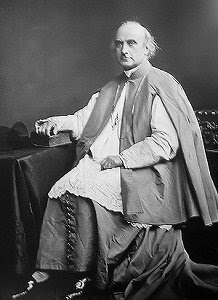
James Chadwick (1813–1882) was a distinguished Irish-born Roman Catholic prelate and educator who left an indelible mark on both the administrative and liturgical life of the Church in Northern England. Born in Drogheda, Ireland, he was educated at Ushaw College in Durham—a premier seminary for the formation of Catholic priests. His life was deeply intertwined with Ushaw, where he served as a professor before being appointed its President. In 1866, he was consecrated as the Bishop of Hexham and Newcastle, a position he held until his death.
While Chadwick was a significant ecclesiastical figure, he is known to millions today for a single, monumental contribution to Christmas music. Around 1862, he penned the most famous English translation of the traditional French carol "Les Anges dans nos campagnes", known globally as "Angels We Have Heard on High." Chadwick adapted the text for use in the Holy Family Hymns, and his version successfully captured the jubilant "Gloria in excelsis Deo" refrain that characterizes the carol. His translation is credited with popularizing the hymn across the English-speaking world, appearing in over 30 major hymnal collections and being translated further into languages like Spanish, Tamil, and Malayalam.
Beyond his Christmas legacy, Chadwick was a key figure in the "Mission" movement within the 19th-century Catholic Church. He contributed hymns specifically designed for parish missions—intensive periods of revival and repentance. His work "Hail, holy mission, hail" and the penitential "Jesus, my Lord, behold at length the time" were staples of Roman Catholic hymnals for decades. These texts reflected the mid-Victorian emphasis on personal conversion and the strengthening of the "faith of our fathers" during a period of Catholic expansion in England.
Chadwick’s dual role as a high-ranking Bishop and a humble hymn translator highlights the unique era of the Catholic "Second Spring" in England. He balanced the rigorous duties of overseeing a diocese with a poet's ear for congregational song, ensuring that the faith was not only taught in the seminary but sung in the pews. He passed away in 1882, leaving a legacy that rings out every December in cathedrals and small chapels alike through the triumphant voices of "angels from the realms of glory."