About John Bunyan
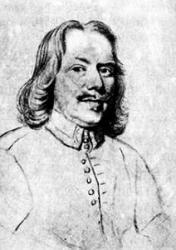
John Bunyan is universally recognized as one of the greatest allegorists in the English language, best known for his masterpiece, The Pilgrim’s Progress. Born in 1628 in Elstow, the son of a brazier or "mechanic," Bunyan’s early life was marked by a lack of formal education and a period of military service during the English Civil War. Following a profound and often agonizing spiritual conversion, he became a prominent Baptist preacher in Bedford. His refusal to stop preaching outside the established Church of England led to a combined twelve years of imprisonment, during which he produced much of the literary work that would secure his legacy as a titan of Puritan literature.
While Bunyan is not traditionally classified as a hymn writer in the prolific sense of his contemporaries, his influence on the hymnal comes directly from the verses embedded within his allegorical narratives. These "shrine songs" were intended to be sung by his characters as they navigated the perils and triumphs of the spiritual journey. One of the most famous examples is the Shepherd Boy’s Song from the second part of The Pilgrim’s Progress (1684), beginning with the line, "He that is down needs fear no fall." This simple, profound meditation on humility and contentment suggests that the lowliest state is often the safest for the soul, a theme central to Bunyan’s theology of grace.
The most enduring contribution from Bunyan to the modern hymnal is "Valiant's Song," originally beginning with the words "Who would true valour see." In its original context, the poem is a spirited declaration of the pilgrim's resolve to face "lions" and "giants" without turning back. In 1906, the editors of The English Hymnal modified the text to "He who would valiant be," softening some of the more rugged seventeenth-century phrasing while preserving the core message of steadfastness. This version has become an anthem of spiritual courage across various denominations, often associated with the imagery of a knight-errant on a holy quest.
Bunyan's writing is characterized by a "homely" yet vivid style that resonates with the common experience of faith. His poetry, often found in works like Divine Emblems; or, Temporal Things Spiritualized, uses everyday objects—such as a bird, a bush, or a candle—to illustrate eternal truths. Although he died in London in 1688, his voice continues to speak through these verses, encouraging believers to view their lives as a constant pilgrimage toward the "Celestial City." His inclusion in hymnody is a testament to the fact that his allegories were not merely stories to be read, but lived experiences meant to be sung.