About John Keble
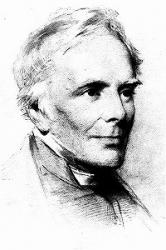
John Keble (1792–1866) was a central figure of the 19th-century Church of England, a poet-priest whose quiet life in the village of Hursley belied his role as a primary catalyst for the Oxford Movement. A child prodigy, Keble was educated entirely by his father before entering Oxford at age fourteen, where he achieved a "Double First"—a feat then virtually unheard of. Despite his academic brilliance as a Fellow of Oriel College and Professor of Poetry, Keble’s heart remained in the pastoral care of small country parishes. His 1833 "Assize Sermon" on National Apostasy is credited by John Henry Newman as the formal start of the High Church revival known as Tractarianism, yet Keble himself largely avoided the limelight, preferring the "soothing" influence of liturgical tradition and the beauty of the natural world.
Keble’s most enduring legacy is "The Christian Year" (1827), a collection of poems designed to track the Sundays and holy days of the Book of Common Prayer. While he did not set out to write congregational hymns, his verses were so rich in imagery and spiritual intimacy that editors frequently extracted sections (known as centos) for use in public worship. His most famous hymn, "Sun of My Soul, Thou Saviour Dear," is actually a fragment of a much longer evening poem. Critics often note that while his work was deeply refined and cultured—reflecting his scholarly background—it possessed a "sacred accuracy" when describing both Scripture and nature. This accuracy was so profound that even without visiting Palestine, his descriptions of its landscape were hailed by travelers for their vividness.
Later in life, Keble’s focus shifted toward more complex and matured theological themes, as seen in "Lyra Innocentium" (1846). Though often mistaken for a children's book, it was actually a collection of "thoughts in verse" on the religious privileges of childhood, written during the period when he was most distressed by Newman’s secession to Rome. Despite the controversies of his era, Keble’s poetry remained a stabilizing force for the Church of England. His ability to find "a spell unheard before" in familiar liturgy ensured that his work would live on. Today, nearly 100 hymns and centos attributed to him remain in common use, cementing his place alongside the "immortals" of English hymnology.
Notable Hymns and Sources
| Source | Notable Hymns / Centos | Theme |
| The Christian Year | "Sun of My Soul, Thou Saviour Dear" | Evening Prayer |
| "New Every Morning is the Love" | Morning Prayer | |
| "There is a Book, Who Runs May Read" | Nature & Scripture | |
| The Psalter (1839) | "Praise the Lord, For He is Love" | Psalm 136 |
| "My Shepherd is the Living God" | Psalm 23 | |
| Lyra Innocentium | "Once in His Name Who Made Thee" | Holy Baptism |
| Miscellaneous | "Lord, Lift My Heart to Thee at Morn" | Emigrant’s Hymn |