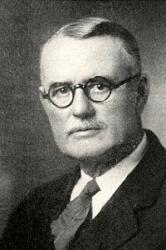
About John R. Clements
John Ralston Clements (1868–1946)
John R. Clements was a prominent figure in the American gospel song movement, exemplifying the "businessman-hymnwriter" tradition of the early 20th century. Born in County Armagh, Ireland, he emigrated to the United States with his family as a toddler. His life was a testament to the "American Dream" of the era; starting as a retail grocery clerk at the age of thirteen, he eventually built a highly successful wholesale grocery business. Despite his commercial success, Clements’ true passion lay in poetry and sacred song, a craft he began honing in his youth and continued throughout his professional life.
Clements is best remembered for his prolific output of gospel texts, many of which were set to music by the leading composers of the day, including H.P. Main and Robert Lowry. His writing was characterized by a direct, conversational style and a focus on the personal and practical aspects of the Christian life. His most famous contribution to the hymnal is the comforting text "No Night There," inspired by the imagery of Revelation 21. The hymn, with its refrain "God shall wipe away all tears," became a staple of funeral services and evening worship, offering a serene vision of the eternal home.
Beyond his individual compositions, Clements was deeply involved in the machinery of the gospel music industry. He served as the president of the Moody Bible Institute’s Alumni Association and was a frequent contributor to the publications of the Rodeheaver Company. His work was often featured in the "Gospel Hymns" series, where his ability to capture simple theological truths in memorable verse made him a favorite among revivalists and choir directors.
Clements’ legacy is one of bridging the gap between the marketplace and the sanctuary. He remained an active layman throughout his life, using his business acumen to support various religious causes while providing the church with songs that spoke to the "everyday" believer. When he passed away in 1946, he left behind a catalog of hundreds of hymns that emphasized the hope of heaven and the constant presence of Christ in the midst of earthly labor.