About John Ryland
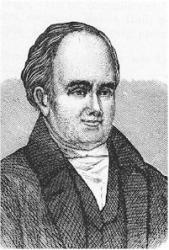
John Ryland (1753–1825)
John Ryland was a central figure in the English Baptist tradition, serving as a prominent pastor, educator, and a key architect of the modern missionary movement. Born in Warwick, he was the son of the noted Baptist minister John Collett Ryland. A precocious scholar, Ryland was ordained in 1781 as co-pastor with his father at College Street Baptist Church in Northampton. His leadership qualities and intellectual depth eventually led him to Bristol in 1794, where he assumed the dual role of President of the Baptist College and pastor of the Broadmead Church. Under his guidance, the college became a premier training ground for Baptist ministers, and he was honored with a Doctor of Divinity degree from Brown University for his contributions to theology and literature.
Ryland is perhaps most historically significant as one of the founders of the Baptist Missionary Society (BMS) in 1792. Alongside William Carey and Andrew Fuller, he helped ignite the "Great Century" of Protestant missions. After the death of Fuller in 1815, Ryland served as the society's secretary, managing its affairs during a period of critical growth and transition. His prose works, including memoirs of his colleagues and numerous theological charges, reflect a mind deeply concerned with both the "candid statement" of Baptist principles and the global expansion of the Christian faith.
As a hymn-writer, Ryland began composing verses in his teens and continued until his death. His work was characterized by a "plain and simple" style that prioritized theological clarity over poetic flourish. Many of his hymns were written for specific pastoral occasions, such as "Lord, Teach a Little Child to Pray," composed at the request of Andrew Fuller’s wife for their young daughter. While the hymnologist John Julian noted that Ryland’s work sometimes lacked "poetry and passion," his hymns resonated with the evangelical fervor of the time. His most enduring text, "O Lord, I Would Delight in Thee," was born out of a period of deep personal reflection and remains a classic expression of spiritual contentment in Christ.
Another of his notable works, "Sovereign Ruler of the Skies," emphasizes the doctrine of divine providence—a theme central to Ryland’s theology and his support for the fledgling mission movement. Many of his hymns were published posthumously in the two-volume Pastoral Memorial (1825), while 99 of his sacred verses were eventually collected and reprinted in 1862. Though he may not be ranked among the highest tier of English poets, Ryland’s hymns provided the soundtrack for the early missionary era, bridging the gap between the local parish and the "Zion" for whose sake he would not restrain his efforts.
The Missionary Circle
Ryland was the last surviving member of the "Kettering Circle," the group of ministers who met in a back parlor to launch the first modern missionary society. His hymns often reflected the specific anxieties and hopes of that pioneer era:
-
Global Vision: His hymns like "For Zion's Sake I'll Not Restrain" were call-to-action anthems for the church to awaken to its global responsibility.
-
Pastoral Care: Despite his international influence, he remained a devoted local pastor, writing simple hymns for the children of his congregation and his colleagues.