About John S. B. Monsell
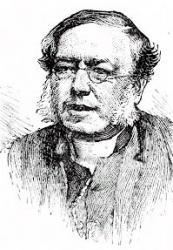
John Samuel Bewley Monsell (1811–1875)
John S. B. Monsell was a prolific Anglo-Irish clergyman and poet whose hymns are defined by their warmth, musicality, and "bright, joyous" spirit. Born in Londonderry, Ireland, he was the son of Archdeacon Thomas Bewley Monsell. After graduating from Trinity College, Dublin, he was ordained in 1834 and served various Irish parishes—even acting as chaplain to the influential Bishop Mant—before transferring to England in 1853. His career in the Church of England culminated in his service as the Rector of St. Nicholas Church in Guildford. Tragically, his life was cut short by a construction accident; he died in 1875 following a fall from the roof of his church while it was being rebuilt.
Monsell was an extraordinarily productive writer, publishing eleven volumes of poetry and nearly 300 hymns. His work was notable for its focus on the "Church's Year," providing verses specifically tailored for every Sunday and holy day. While hymnologists like John Julian noted that his work sometimes lacked "massiveness" or "concentration of thought," they simultaneously praised his ability to create verses that were inherently singable and deeply comforting. His hymns often emphasized the personal relationship between the believer and Christ, using intimate language that resonated with Victorian sensibilities.
His most enduring contribution to the church is the robust anthem "Fight the Good Fight with All Thy Might." Characterized by its vigorous rhythm and empowering metaphors of the Christian race and battle, it remains a standard across nearly all Christian denominations. Other popular works include "Sing to the Lord a Joyful Song" and the tender "Rest of the Weary, Joy of the Sad." Monsell’s legacy is that of a "pastoral poet" who sought to make the liturgical seasons of the church accessible and emotionally resonant through simple, musical verse.
Notable Hymns and Classifications
Monsell’s hymns are often categorized by the specific collection in which they first appeared, reflecting his lifelong habit of revising and reissuing his work.
| Hymn Title | Primary Theme | Significance |
| "Fight the Good Fight with All Thy Might" | Christian Perseverance | His most famous hymn; a staple for Confirmation and general worship. |
| "Sing to the Lord a Joyful Song" | Praise | A classic hymn of thanksgiving and celebration. |
| "Rest of the Weary, Joy of the Sad" | Christ the Comforter | Demonstrates his focus on the "sympathy" of Jesus. |
| "O Love Divine and Golden" | Holy Matrimony | A popular choice for wedding services in the 19th century. |
| "Birds Have Their Quiet Nests" | Humility of Christ | A poignant meditation on the poverty and humanity of Jesus. |
| "I Hunger and I Thirst" | Holy Communion | A simple, direct prayer for spiritual nourishment. |
Key Poetical Works
-
Hymns and Miscellaneous Poems (1837): His debut collection, containing early versions of several popular hymns.
-
Spiritual Songs for the Sundays and Holy Days throughout the Year (1857): A comprehensive guide to the liturgical year in verse.
-
Hymns of Love and Praise (1863): Widely considered to contain his most mature and enduring work.
-
The Parish Hymnal (1873): One of his final efforts to organize his compositions for congregational use.
Hymnologists have historically found Monsell "perplexing" because he frequently repurposed his own material. He would often publish a poem in one book, then shorten it into a hymn for another, or change the title and first line entirely. Despite this bibliographical complexity, his core message remained consistent: a cheerful, musical, and steadfast devotion to the liturgical life of the church.