About Kate Hankey
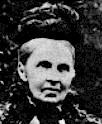
Arabella Katherine Hankey, known to her contemporaries and in hymnals as Kate Hankey, was a prominent English hymn writer and lay evangelist whose life was defined by the intersection of Victorian wealth and radical Christian service. Born in 1834 into a family of wealthy bankers, she was deeply influenced by the Clapham Sect, a circle of influential evangelical Anglicans that included William Wilberforce. This heritage instilled in her a lifelong commitment to social reform and global missions, leading her to spend her early years teaching Bible classes for London’s shop girls and visiting patients in local hospitals. She was a true "missionary at home," eventually dedicating the proceeds from her extensive writings to support international mission causes.
Hankey’s most enduring legacy in hymnody is a single, massive poem written in 1866 titled "The Old, Old Story." Written during a period of prolonged illness when she was bedridden, the poem consisted of fifty-five stanzas and was divided into two distinct parts: "The Story Wanted" and "The Story Told." From this epic work, two of the most famous hymns of the 19th-century Gospel movement were extracted. The first, "Tell Me the Old, Old Story," captures the earnest desire of a child-like heart to hear the Gospel, while the second, "I Love to Tell the Story," focuses on the believer's joy in sharing that message.
The international success of these hymns was largely due to the "Gospel Song" movement in America. "Tell Me the Old, Old Story" was set to an evocative melody by W. H. Doane, while "I Love to Tell the Story" gained its iconic tune from William G. Fischer. Both became cornerstones of Ira D. Sankey’s revival meetings and were included in the widely influential Sacred Songs and Solos. Hankey’s verses were celebrated for their simplicity, rhythmic flow, and ability to present profound theological truths in language that was accessible to children and adults alike.
In addition to her most famous poem, Hankey published several collections, including Heart to Heart (1870) and The Old, Old Story and Other Verses (1879). She was also a musician, often composing her own tunes for her Sunday School verses, such as the seasonal hymn "Advent Tells Us, Christ Is Near." Despite her social standing, she maintained a focus on the "beauty and simplicity" of the Christian faith until her death in Westminster in 1911. Today, she is remembered as a writer who provided the global church with its most poignant vocabulary for expressing a love for the "old, old story of Jesus and His love."