About Lydia Baxter
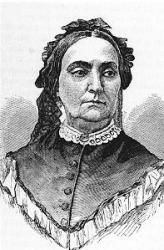
Lydia Baxter was a prolific American poet and hymn writer whose work became synonymous with the 19th-century Sunday School and evangelistic movements. Born in Petersburg, New York, in 1809, she underwent a religious conversion alongside her sister under the preaching of a Baptist missionary. Following her marriage and subsequent move to New York City, she became a central figure in the city’s religious circles, turning her home into a gathering place for clergy, musicians, and writers despite her own chronic physical frailty.
She is most widely recognized for the enduring hymn "Take the Name of Jesus with You." Written around 1870 for the composer William H. Doane, the hymn was inspired by Baxter's own reliance on the name of Jesus as a "precious comfort" during her frequent bouts of illness and pain. The song’s focus on the name of Jesus as a "shield from every snare" resonated deeply with the era's emphasis on personal, devotional piety and became a staple of the Ira D. Sankey and Dwight L. Moody revivals.
Another of her significant contributions is the invitational hymn "There Is a Gate That Stands Ajar." Written for S. J. Vail and later popularized by Philip Bliss, the hymn uses the imagery of a partially open gate to emphasize the accessibility of divine mercy. It became one of the most popular hymns in Great Britain and America during the 1870s, particularly after it was used extensively in Sankey’s Sacred Songs and Solos. Baxter’s writing often centered on themes of patience, reunion, and the transition from life to death, as seen in works like "One by One We Cross the River" and "In the Fadeless Springtime."
In 1855, Baxter published a collection of her poetry titled Gems by the Wayside, though her greatest impact remained in the ephemeral world of Sunday School songbooks and "gospel song" pamphlets. Her ability to craft simple, rhythmic, and emotionally resonant verses made her a favorite collaborator for the leading composers of her day, including H. P. Main and W. H. Doane.
Lydia Baxter died in New York City in 1874. Even as she faced her own "weary day's work" being done, she left behind a legacy of song that prioritized the "joy and peace" found in faith. Her hymns continue to be sung as a testament to her belief that the name of Jesus is the "hope of earth and joy of heaven."