About Mary D. James
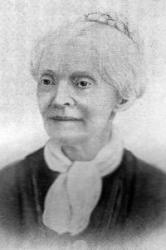
Mary Dagworthy James was a prominent American hymn writer and a leading voice in the Wesleyan Holiness movement of the 19th century. Born in Trenton, New Jersey, in 1810, her commitment to the church began remarkably early; she was teaching Sunday school by the age of 13. Her life was characterized by a rigorous pursuit of "Christian perfection" or "entire sanctification," a theological focus that defined the Holiness revival of her era. She was a close associate and frequent assistant to Phoebe Palmer, the movement's most influential figure, and James often led large-scale camp meetings at famous sites like Ocean Grove, New Jersey.
Her literary output was extensive and served as a primary vehicle for teaching Holiness theology. She was a prolific contributor to several religious periodicals, including the Guide to Holiness and The New York Christian Advocate. Shortly before her death, she published a biography of Edmund J. Yard titled The Soul Winner (1883), which reflected her own lifelong mission of evangelism. Her writing style was noted for its directness and its emphasis on the practical possibility of living a life "consecrated" or entirely set apart for God.
James is best remembered in hymnody for her 1858 masterpiece, "All for Jesus," which is considered the definitive musical expression of the "altar theology" central to the Holiness movement. The hymn’s opening lines—"All for Jesus! all for Jesus! / All my being’s ransomed powers"—capture the essence of total surrender. Other significant hymns by James include:
-
"Companionship with Jesus": A hymn celebrating the daily, intimate presence of Christ.
-
"Consecration": A text further exploring the themes of sacrifice and dedication.
-
"O Blessed Fellowship Divine": A song focusing on the unity of the "sanctified" community.
Mary D. James passed away in New York City in 1883. She remains a significant figure in American religious history, representing the "active" side of Victorian piety. Her hymns did more than provide music for worship; they functioned as lyrical manuals for a generation seeking a deeper, more disciplined spiritual life. Today, "All for Jesus" remains a standard in many hymnals, serving as a testament to her vision of a life lived in total harmony with the divine will.