About Matthew Arnold
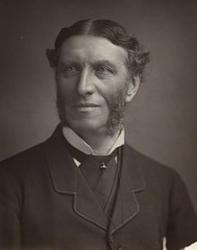
Matthew Arnold was a towering figure of the Victorian era, primarily known as a preeminent poet, cultural critic, and dedicated educational reformer. Born in 1822 in Laleham, England, he was the eldest son of Thomas Arnold, the celebrated headmaster of Rugby School. Educated at Winchester and Balliol College, Oxford, Arnold eventually became a Fellow of Oriel College. For over three decades, he served as an Inspector of Schools, a grueling position that gave him a unique perspective on the social and intellectual needs of the British middle class. His academic prestige culminated in his tenure as the Professor of Poetry at Oxford from 1857 to 1887, where he advocated for the importance of "high culture" as a remedy for the social fragmentation of the industrial age.
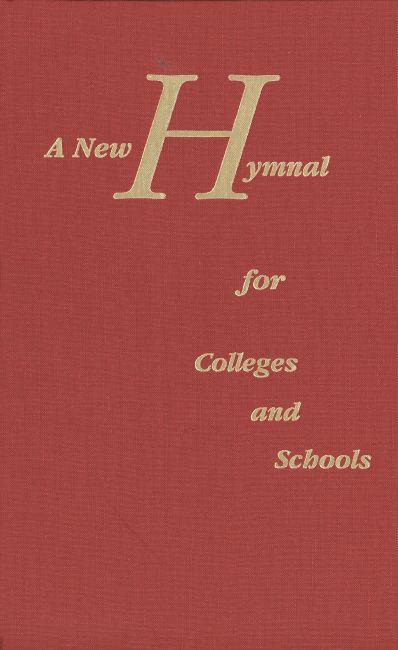
While Arnold is a giant of English literature, immortalized by works such as "Dover Beach" and Culture and Anarchy, his direct contribution to hymnology is notably minimal. He lived during a period of intense religious skepticism, which he famously characterized as the "melancholy, long, withdrawing roar" of the Sea of Faith. Consequently, he did not write hymns for liturgical use in the traditional sense. His appearance in hymnals is almost exclusively a result of editors extracting meditative stanzas from his secular poetry and repurposing them for congregational song.
The most prominent example of Arnold’s "accidental" hymnody is the text "Calm Soul of All Things! Make It Mine." These verses were originally titled "Lines Written in Kensington Gardens" and appeared in his Poetical Works. The poem reflects Arnold’s yearning for an "inner calm" and spiritual composure amidst the "huge world, which roars hard by." When set to music, the lines function as a prayer for peace and psychological steadiness, themes that resonate with his broader philosophical quest for "sweetness and light" in an increasingly chaotic world.
Despite the brevity of his hymnological record, Arnold’s influence on the religious thought of his time was profound. He sought to preserve the ethical and poetic power of Christianity while acknowledging the scientific challenges of the 19th century. By treating the Bible as literature and faith as "morality touched by emotion," he helped bridge the gap between traditional orthodoxy and modern secularism. He passed away in Liverpool in 1888, leaving behind a legacy as one of the most eloquent voices to ever plead for the preservation of the human spirit in a materialistic age.