About Maxwell N. Cornelius
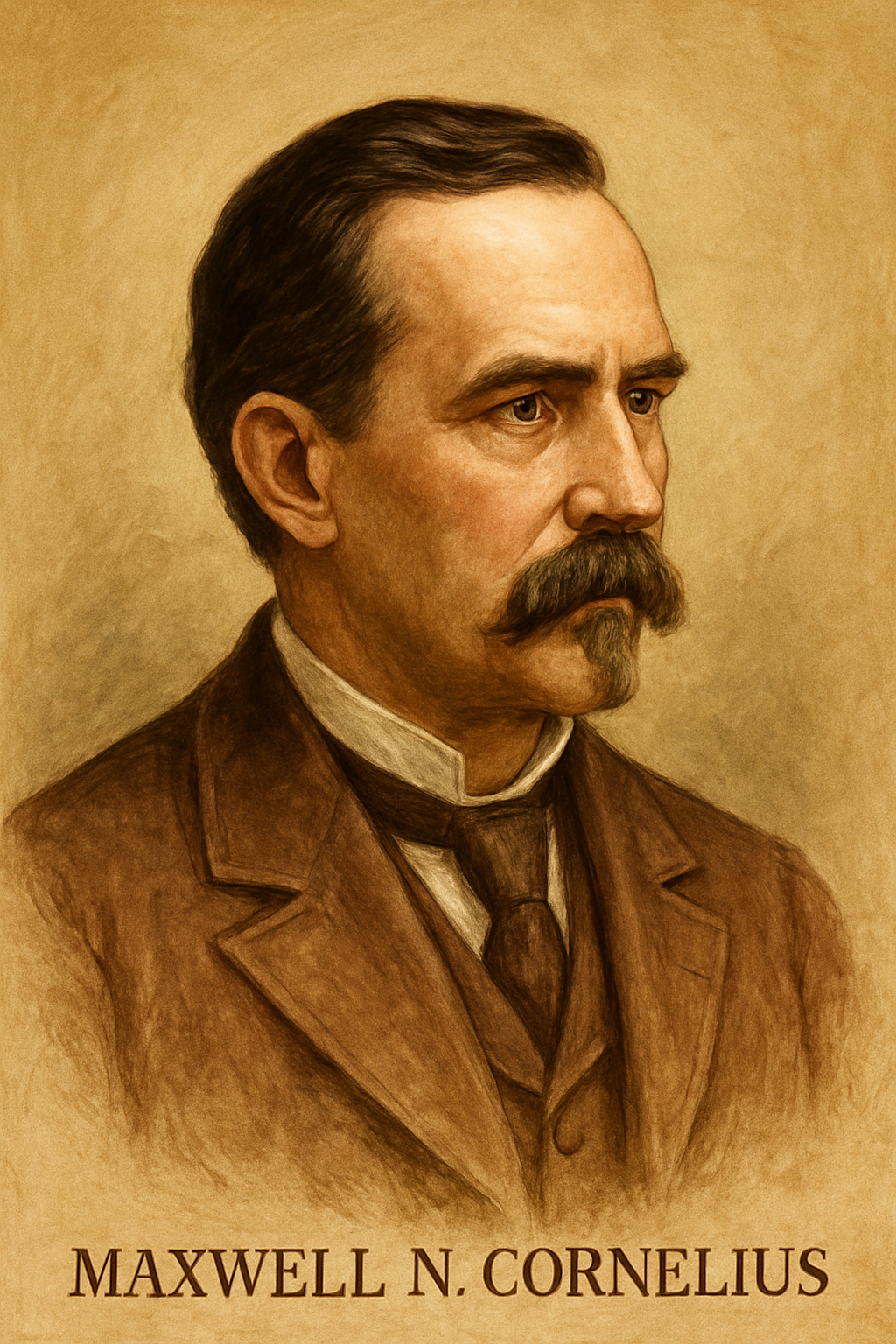
Maxwell Newton Cornelius was a Presbyterian clergyman whose transition from manual labor to the pulpit was forged through personal physical and emotional hardship. Born in 1842 to a farming family, he initially followed a practical career path as a carpenter and building contractor. However, a severe accident necessitated the amputation of one of his legs, a life-altering event that prompted him to pivot toward theological study. He was educated at the Vermillion Institute in Ohio and ordained in the Pittsburgh Presbytery in 1871. His ministry took him across the United States, with significant pastorates in Pennsylvania, California, and finally at the Eastern Presbyterian Church in Washington, D.C.
The defining moment of Cornelius’s contribution to hymnody came from a place of profound grief. In 1892, his wife, Mary, passed away. At her funeral, Cornelius preached a sermon based on the theme of God's sovereignty and the mystery of suffering, concluding with a poem he had written titled "Sometime We'll Understand." The text was an immediate source of comfort to his congregation and was soon set to music by the celebrated gospel composer James McGranahan. Cornelius himself passed away from pneumonia just one year later, in 1893, and was buried alongside his wife and their infant daughter in Poland, Ohio.
"Sometime We'll Understand"
This single hymn remains one of the most resilient "hymns of consolation" in the English language. It addresses the "why" of human suffering not with a definitive answer, but with a patient, eschatological hope. The hymn is noted for its refrain:
Not now, but in the coming years,
It may be in the better land,
We’ll read the meaning of our tears,
And there, sometime, we’ll understand.
Legacy and Style
Cornelius’s writing is characterized by the "Sovereignty of God" theology prevalent in 19th-century Presbyterianism, yet it is tempered by a deep, personal acquaintance with sorrow. His work became a staple of the Moody-Sankey revival era and remains frequently used in funeral and memorial services today. While he was a respected Doctor of Divinity and a successful builder of churches (quite literally, given his background in construction), he is remembered by the global church for his ability to articulate the quiet trust required when "the way is dark and cold."
Biographical Summary
| Detail | Information |
| Birth/Death | 1842 – 1893 |
| Denomination | Presbyterian (PCUSA) |
| Major Pastorates | Altoona, PA; Pasadena, CA; Washington, D.C. |
| Primary Hymn | "Sometime We'll Understand" (1891) |
| Key Themes | Divine Providence, Comfort in Grief, Future Hope |