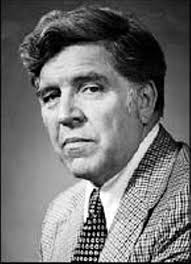
About Noël Regney
Noël Regney (1922–2002) was a French-born composer, lyricist, and World War II veteran whose dramatic life journey directly shaped one of the most powerful and enduring peace anthems of the 20th century. Born Léon Schlienger into a Catholic family in Strasbourg, Alsace, France, he later adopted his professional moniker by reversing the spelling of his first name. A classically trained musician, Regney studied at the Strasbourg Conservatory and the Conservatoire National de Paris under legendary figures like Olivier Messiaen. His aspirations for a classical career, however, were violently interrupted by the onset of the Second World War.
Regney's wartime experience was marked by survival and intense moral conflict. As an Alsatian fluent in both French and German, he was forcibly drafted into the Nazi army as a Malgré-nous (against our will). Horrified by the German war machine, he quickly established contact with the French underground, effectively operating as a double agent while wearing a German uniform. He successfully warned resistance fighters of impending attacks, but one harrowing assignment required him to lead a group of German soldiers into a fatal ambush. Regney was shot in the arm during the crossfire and deserted shortly thereafter, living in hiding with the French Resistance until liberation. The trauma of those years left deep, permanent emotional scars.
Following the war, Regney served as the musical director for Radio France’s Indochinese Service and later at the famous Lido nightclub in Paris. In 1951, he immigrated to the United States while touring as a musical director for singer Lucienne Boyer. Settling in Manhattan, he shifted his focus to commercial jingles and early television arrangements. His life took a major creative turn when he met pianist and composer Gloria Shayne at a hotel dining room; the two were married within a month and formed a highly successful songwriting partnership. While they usually worked with Shayne writing the words and Regney writing the music, producing hits like Bobby Vinton's "Rain, Rain, Go Away", their creative process flipped completely for their greatest masterpiece.
In October 1962, at the absolute height of the Cold War and the terrifying nuclear brinkmanship of the Cuban Missile Crisis, Regney walked through the streets of Manhattan feeling an intense, heavy despair for the future of humanity. His mood shifted when he passed two mothers walking their babies in strollers; seeing the infants smile at one another sparked a sudden sense of hope. He immediately conceived the lyrics to "Do You Hear What I Hear?" as a poignant, desperate prayer for peace. Returning home, he jotted down the verses and asked his wife to set them to music. The resulting carol, progressing from a night wind to a little lamb, a shepherd boy, a mighty king, and finally a call to the "people everywhere", was recorded by the Harry Simeone Chorale that December and became an instant global phenomenon.
In his later years, Regney wrote English lyrics for international hits, including the English version of "Dominique" for the Singing Nun (Sœur Sourire), and composed a five-part cantata titled I Believe in Life (1974). He eventually aligned with the Unitarian Universalist tradition and spent his final years in Connecticut and New York before passing away from complications of Pick’s disease in 2002. Regney remains a deeply unique figure in modern hymnology: a scarred soldier who took the terrifying imagery of a mid-century nuclear threat and transformed it into a timeless, multi-layered Christmas prayer that continues to voice the global congregation's collective plea for "goodness and light."