About Omer Westendorf
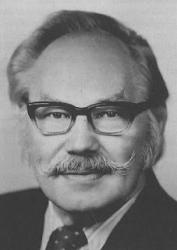
Omer Westendorf (1916–1997) was a pioneering force in American Catholic church music, widely regarded as one of the earliest and most influential lyricists and publishers of English-vernacular liturgical music following the Second Vatican Council. Born in Cincinnati, Ohio, Westendorf's path into sacred music publishing began organically in the aftermath of World War II. While serving in Europe, he discovered a wealth of vibrant, contemporary choral Mass settings in Holland and brought them back for his home parish choir. Recognizing a profound American interest in this European repertoire, Westendorf founded the World Library of Sacred Music out of a suburban garage, an enterprise that initially imported European scores before expanding into World Library Publications (WLP), which commissioned original English-language works from prominent European composers like Jan Vermulst.
Westendorf’s visionary leadership predicted and shaped the mid-century liturgical renewal of the Catholic Church. In 1955, WLP published the first edition of The Peoples Hymnal, which was radically revised in 1964 as the People's Mass Book, becoming the very first vernacular hymnal designed to meet the participatory mandates of Vatican II. Westendorf was also instrumental in introducing the cross-cultural biblical music of French composer Lucien Deiss to American pews. For his foundational contributions to the development of a homegrown, participatory musical tradition in American Catholicism, the National Association of Pastoral Musicians (NPM) honored him as the Pastoral Musician of the Year in 1985.
As an author, Westendorf wrote extensively under his own name as well as several pseudonyms, including Paul Francis, Mark Evans, and J. Clifford Evers, to populate early hymnals with a diverse variety of English texts. His lyrics are celebrated for their theological precision, scriptural focus, and exceptional congregational singability. His most enduring contributions include "Where Charity and Love Prevail" (a beautiful metrical translation of the ancient Holy Thursday Ubi Caritas chant), "Sent Forth by God’s Blessing" (a widely utilized post-communion sending hymn), and "Shepherd of Souls, Refresh and Bless" (frequently adapted as "Shepherd of Souls, in Love, Come, Feed Us"). His definitive masterpiece remains the lyrics to "You Satisfy the Hungry Heart" (popularly known as the "Gift of Finest Wheat"), composed for the 41st International Eucharistic Congress in 1976, which stands as one of the most widely sung Communion anthems in the global Catholic and ecumenical repertoire.